Baby Registry Checklist for Dads: What to Add, How Many, and What to Skip
A baby registry checklist with quantities and where each number comes from: sleep, feeding, diapering, bath, health, on the go and clothes, plus what to take off the list, secondhand rules and when to start.
We choose everything we recommend independently. If you buy through our links, we may earn a commission. How we make money

Our quick picks
- Register this firstChicco KeyFit 35Check price
A rear-facing-only seat that has to be in the car before the birth.
- By your bedHALO BassiNest Essential SleeperCheck price
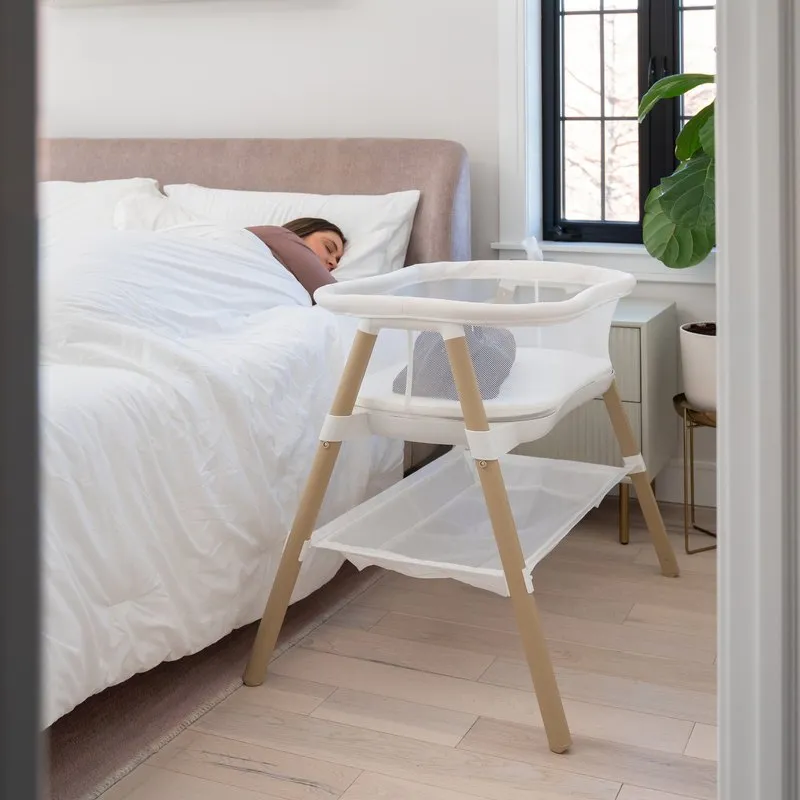
A bedside sleeper for room sharing.
- Instead of a blanketHALO SleepSack Wearable BlanketCheck price
Not weighted, and it replaces loose blankets in the crib.
In this guide
Most baby registry lists are written by companies selling you what’s on them, and few say where “how many” comes from. This one does. Quantities come from the American Academy of Pediatrics and Stanford Medicine Children’s Health where they publish one, and anything marked “our suggestion” is our own call. You’ll also find what to take off the list, the rules for hand-me-downs, and which parts are your job. For a shorter list of what you’ll actually use in the first weeks, see our newborn essentials.
How we made this list: we checked each product on its maker’s site. We haven’t tested them ourselves. Registry perks change, so check each store’s page before you rely on one.
The short answer
- Can’t wait: a rear-facing car seat, a safe sleep space, diapers, and a digital thermometer.
- Take off the list: crib bumpers, inclined sleepers, loungers, positioners, weighted sleep sacks, mesh liners.
- Can wait: a high chair, a convertible car seat, baby shoes, bath toys.
- Secondhand: no crib made before June 28, 2011, and no used car seat with an unknown history.
- Start in the second trimester.
When to start your registry
No medical group sets a date. Registry sites point to mid-pregnancy, and one suggests “between weeks 16 and 26.” The practical reason to start early is that perks run on clocks:
- Target sends its completion offer eight weeks before your expected arrival date, and the registry must be active for at least 14 days first.
- Babylist’s discount window opens 60 days before the arrival date, and the registry must be active for at least 30 days.
By our math on a 40-week due date, a registry made by about week 27 clears both. Our suggestion: start in the second trimester, and share it a few weeks before any shower.
Dad’s job: enter the arrival date correctly. The clocks run off it. See our second trimester guide.
Where to register: Amazon, Target or Babylist
This is a feature list, not a ranking. Terms change, so confirm on each store’s page.
| Amazon | Target | Babylist | |
|---|---|---|---|
| Returns | Eligible gifts from friends and family, for 365 days | New, unopened items, up to one year after the event date | Varies by store |
| Group gifts or cash | Group gifting, and a diaper fund paid as an Amazon gift card | Check Target’s page | Cash funds |
| Welcome box | Prime members, 10 items and a purchase | 10 items and a purchase; shipping fees apply | Advertised, with restrictions |
| Completion discount | Yes, in an eligibility window | Yes, redeemable twice | Babylist Shop items only |
| Other stores’ items | Check Amazon’s page | Check Target’s page | “Add any item from any store.” |
You don’t have to pick just one. Amazon also lets you set a quantity for each item, which is how you use the table below.
Dad’s job: read the returns line. “Unopened” matters if you plan to test-fit a car seat in your car.
The baby registry checklist, with quantities
The AAP calls its list “A suggested starting list to register for,” so treat these as a start. A dash means no source gives a number.
Sleep
| Item | How many | Source | More |
|---|---|---|---|
| Bassinet or bedside sleeper | 1 | Our suggestion | Bassinet sleep |
| Crib | 1 | Our suggestion | Safe sleep |
| Mattress made for that crib | 1 | Our suggestion | Safe sleep |
| Fitted crib sheets | 3 to 4 | Stanford | |
| Sleep sacks | 3 | AAP | Winter dressing |
| Receiving or swaddle blankets | 4 to 6 | AAP | How to swaddle |
| Play yard, for a second sleep space | 1 | Our suggestion | |
| White noise machine (optional) | 1 | Our suggestion | White noise machines |
| Baby monitor (optional) | 1 | Our suggestion | Monitors without Wi-Fi |
Swaddle blankets are for swaddling. “Use a fitted sheet only,” the AAP says, “nothing else should be in the crib with your baby.” A monitor is for convenience: the AAP says there’s no evidence that home monitors lower SIDS risk.
Feeding
| Item | How many | Source | More |
|---|---|---|---|
| Small bottles | 4 | Our suggestion | Best baby bottles |
| Bottle brush | 1 | Our suggestion | |
| Breast pump | 1, through insurance first | HealthCare.gov | Night feeds |
| Breast milk storage bags | - | Stanford lists them | |
| Burp cloths | 5 | Our suggestion | How to burp a baby |
| Formula | Only if that’s the plan | Ask your pediatrician | Formula by age |
Check the pump first. HealthCare.gov says “Your health insurance plan must cover the cost of a breast pump,” except grandfathered plans. It may be a rental or a new one you keep, and your plan may set whether it’s manual or electric. Call before you register for one.
Diapering
| Item | How many | Source | More |
|---|---|---|---|
| Newborn-size diapers | 3 to 4 dozen to start | AAP | How to change a diaper |
| Wipes | - | Stanford lists them | |
| Diaper rash cream | 1 | Our suggestion | |
| Diaper pail | 1 per changing area | Stanford | |
| Changing pad (optional) | 1 | Our suggestion |
The diaper math, which is ours: at the AAP’s “as many as 8 to 12 a day,” 3 to 4 dozen lasts about 3 to 6 days. Stanford says about 10 to 11 a day for the first few weeks. Register for more than you think. The AAP says “changing tables aren’t really necessary.” If you get one, it says to pick a sturdy one with a 2-inch guardrail on all four sides.
Bath
| Item | How many | Source | More |
|---|---|---|---|
| Infant tub, made on or after Oct. 2, 2017 | 1 | Our suggestion on the count | How to bathe a newborn |
| Washcloths | 4 to 6 | Stanford | |
| Hooded towels | 2 to 4 | Stanford | |
| Mild soap | 1 | Our suggestion |
Health
| Item | How many | Source | More |
|---|---|---|---|
| Digital rectal thermometer | 1 | Our suggestion on the count | Best baby thermometer |
| Nasal aspirator or bulb, plus saline | 1 | Our suggestion on the count | Clearing a stuffy nose |
| Nail clippers or emery board | 1 | Our suggestion on the count | |
| Cool-mist humidifier (optional) | 1 | Our suggestion | Best humidifier |
| Infant acetaminophen | Only as your doctor advises | Stanford lists it | Baby fever |
On the go
| Item | How many | Source | More |
|---|---|---|---|
| Rear-facing car seat | 1 | Our suggestion on the count | Installing a car seat |
| Extra base for a second car (optional) | 1 per car | Our suggestion | |
| Stroller | 1 | Our suggestion | Strollers for tall dads |
| Baby carrier | 1 | Our suggestion | Best baby carriers |
| Diaper bag | 1 | Our suggestion | Best diaper bags |
Clothes (AAP’s counts)
| Item | How many |
|---|---|
| Sleepwear sets | 3 or 4 |
| T-shirts | 6 to 8 |
| Onesies with leg snaps | 3 to 4 |
| Sweaters | 2 |
| Caps or hats | 2 |
| Socks or booties | 4 pairs |
Size up. The AAP says “Even three-month sizes may be outgrown within the first month,” and Stanford suggests mainly 0 to 3 and 3 to 6 months. And skip the shoes: “Do not put shoes on a newborn’s feet.”
Before the hospital: the one thing that can’t wait
The AAP says all infants should ride rear-facing, “starting with their first ride home from the hospital.” NHTSA says: “Test the car seat you plan to buy to make sure it fits well in your vehicle.” Then register it with the maker for recall notices, and have it checked: “Certified technicians will inspect your car seat free of charge, in most cases,” NHTSA says.
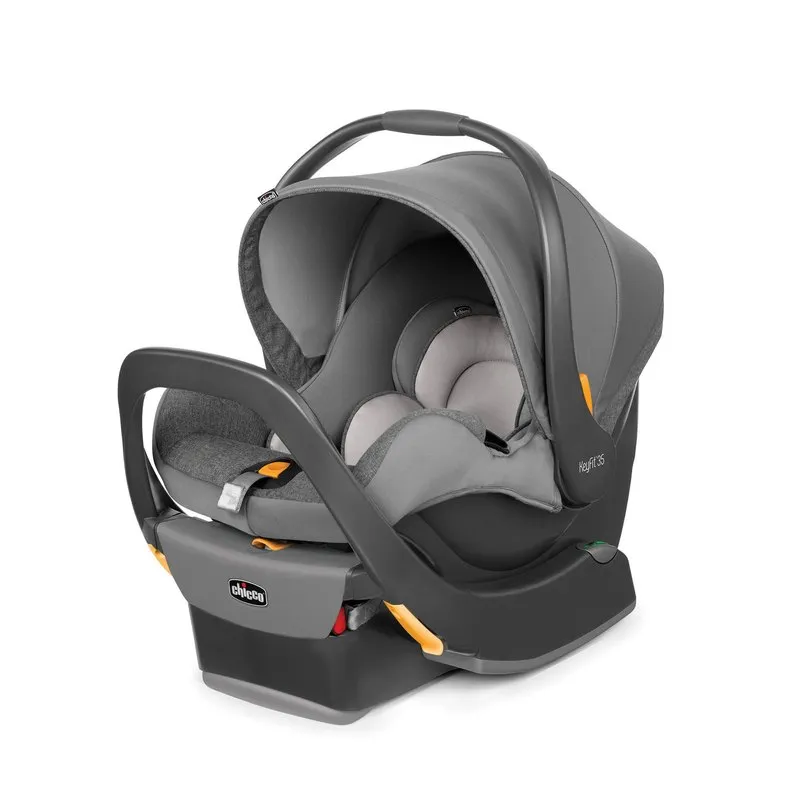
Chicco KeyFit 35 Infant Car Seat
A rear-facing-only infant car seat for babies from 4 to 35 pounds and up to 32 inches, with a newborn positioner and a built-in anti-rebound bar. The carrier weighs 10 pounds.
Pros
- Rear-facing from 4 pounds, so it fits the ride home
- Built-in anti-rebound bar
- Clicks into Chicco strollers
Cons
- For the car only: the AAP says not to let babies sleep in it outside the vehicle
Dad’s job: all of this. Do it before the third trimester ends. See how to install an infant car seat and our hospital bag checklist.
What not to put on your baby registry
The AAP’s advice: “scan your baby registry or wish list and make thoughtful edits.”
Banned under federal law. The Safe Sleep for Babies Act, signed in May 2022, bans inclined sleepers and crib bumpers. That includes padded bumpers, vinyl bumper guards and vertical slat covers, “regardless of the date of manufacture.” The AAP warns that private sellers may still post them online.
Not safe for sleep:
- Loungers, pods and nests. The AAP says these “are still linked with dozens of infant deaths every year,” and the CPSC has warned about specific loungers.
- Sleep positioners. The AAP says they “have been linked with multiple deaths.”
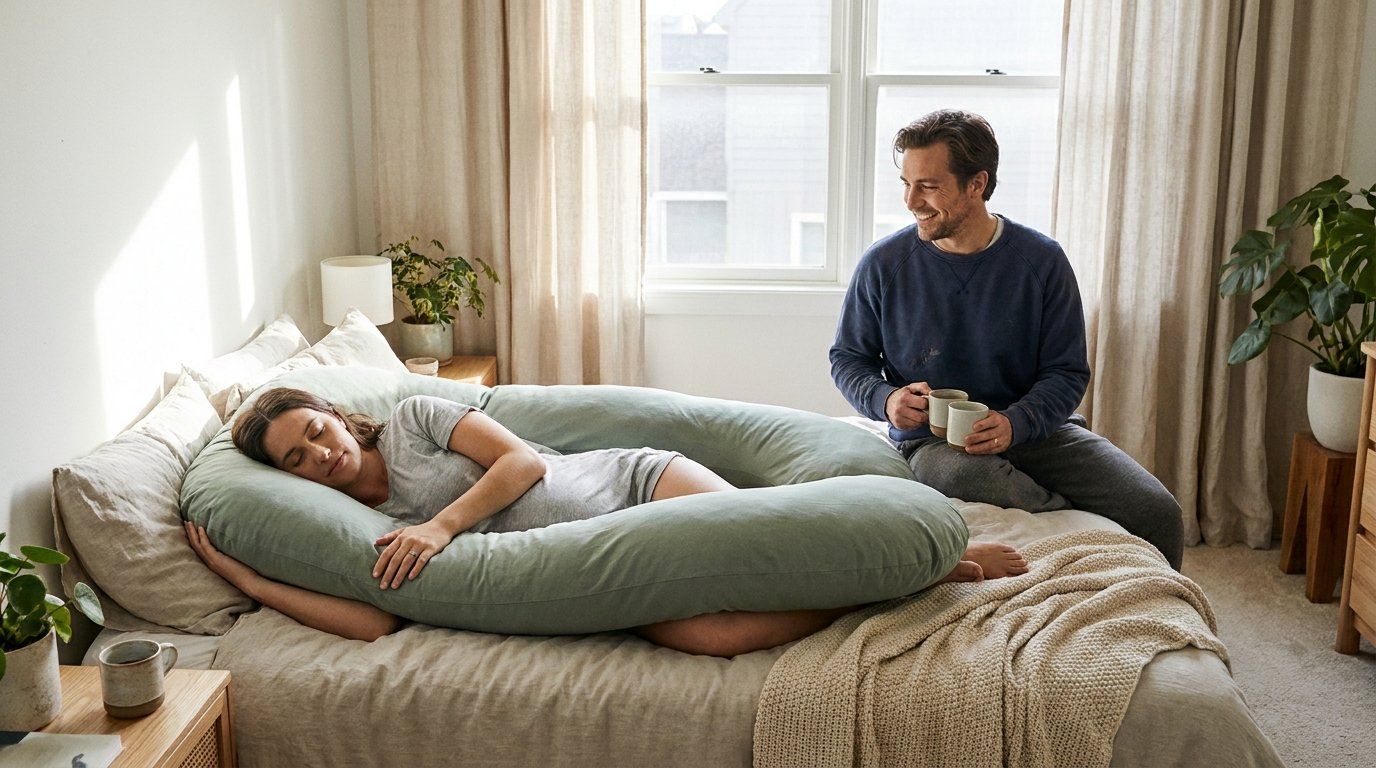
- Nursing pillows, for feeding only: “never use them with sleeping babies.”
- Swings, rockers and bouncers are fine for play as directed, but not for sleep.
Leave these off too:
- Weighted sleep sacks and swaddles. There’s no ban, but the AAP, CPSC and NIH all advise against them.
- Mesh crib liners. They’re legal, but the AAP says they’re “not necessary” and can come loose.
- Add-on mattresses and mini-bassinets. The AAP says mattresses sold separately often don’t fit tightly enough, and many mini-bassinets don’t meet sleep standards.
- Baby tents and crib tents. The CPSC has warned about a baby tent that failed its sleep product rule. Anything added to a crib breaks the fitted-sheet-only rule.
- Bath seats, which the AAP says “can easily tip over.”
- Baby walkers. The AAP has called for a full ban.
- Baby floats. The AAP says they “easily flip over.”
- Teething necklaces. The FDA has reports of deaths and serious injuries. See our teething guide.
Instead of a blanket, register for a wearable one. And a bedside sleeper keeps the baby close without sharing your bed:
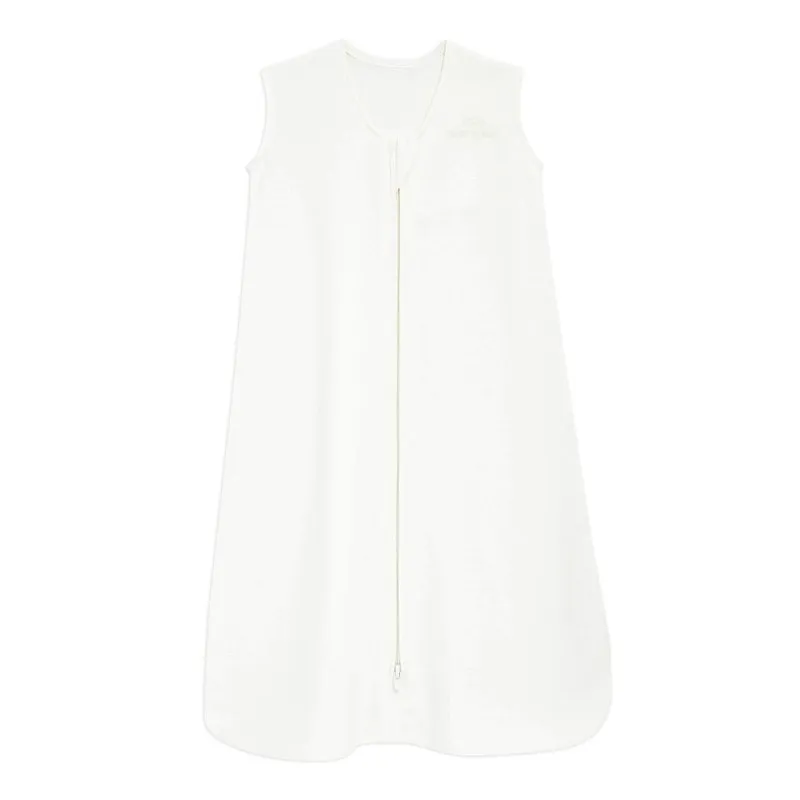
HALO SleepSack Wearable Blanket, 100% Cotton
A sleeveless wearable blanket in breathable 100% cotton (0.5 TOG) that replaces loose blankets in the crib. Not weighted. HALO says it is approved as hip healthy by the International Hip Dysplasia Institute.
Pros
- Replaces loose blankets, which the AAP says to keep out of the crib
- Not weighted
- Inverted zipper for easier diaper changes
Cons
- 0.5 TOG suits a warm room (75 to 77°F, per HALO); pick a thicker TOG for cooler rooms
HALO BassiNest Essential Sleeper
A bassinet that stands next to your bed, so the baby sleeps in your room on their own surface, with breathable mesh walls and a fitted sheet included. HALO says every US BassiNest complies with the federal bassinet standard (16 CFR part 1218), and to move the baby to a crib at 20 pounds or 5 months, whichever comes first, or once they push up on hands and knees.
Pros
- Meets the federal bassinet standard, per HALO
- Makes room sharing easy for night feeds
- Fits beside most beds
Cons
- Outgrown at 20 pounds, 5 months, or once the baby pushes up on hands and knees
- Not height adjustable, so check it lines up with your bed
A play yard gives you a second safe sleep space, and it comes with its own mattress and sheet, so there’s no add-on to buy:
Chicco Alfa Lite Lightweight Travel Playard
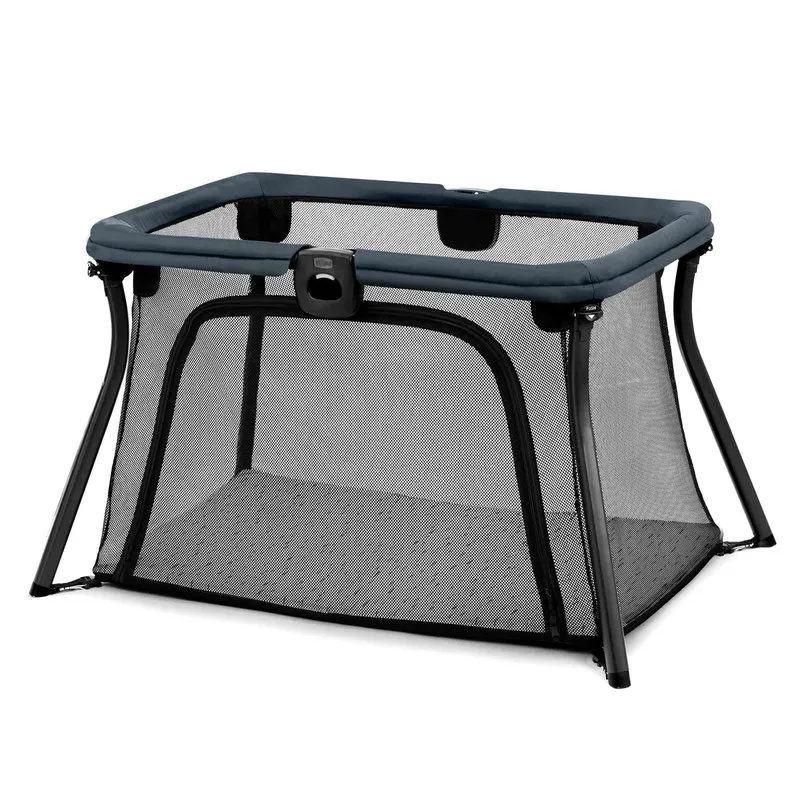
A light travel play yard for a safe sleep spot at the grandparents' house. It comes with its own waterproof mattress and a fitted sheet, and has a zip-open side panel for lowering a young baby in. Chicco's manual says to stop using it once the child reaches 35 inches or 30 pounds, or can climb out.
Pros
- Folds small for a closet
- Zip-open side for lowering the baby in
- Mattress and fitted sheet included
Cons
- The mattress sits low: a lot of bending for grandparents' backs
- Use only Chicco's mattress, nothing added
Dad’s job: do the scan before you share the link, and be the one who talks to a relative who buys a bumper set. The AAP suggests a “gentle and respectful” reply.
Secondhand, hand-me-downs and recalls
- Cribs. The CPSC says cribs made before June 28, 2011 are “very likely noncompliant, unsafe, and illegal to sell.” No drop sides, and all original parts. The CPSC says you can’t judge compliance by looking.
- Car seats. NHTSA’s checklist says a used seat may be OK if you can confirm it’s never been in a moderate or severe crash, has no recalls, has all its parts and has its instruction book. Check the label for its age. The AAP says to ask the maker how long it recommends using the seat, and to avoid used seats if you don’t know the history.
- Everything else. The CPSC says to check its website for recalls and sign up for recall notices.
Clothes are the easy win for hand-me-downs (our suggestion).
Dad’s job: run the recall search on every hand-me-down that goes near the crib.
What can wait
- High chair. Your baby needs good head control and solid food first, around 6 months.
- Convertible car seat, once they outgrow the rear-facing-only seat.
- Bath toys. The AAP says “Young infants don’t really need bath toys.”
- Bigger clothes, once you know how fast they’re growing.
Add these later, because registries stay open (our suggestion).
And a good bag for all of it:
Tactical Baby Gear Everyday Diaper Bag Backpack
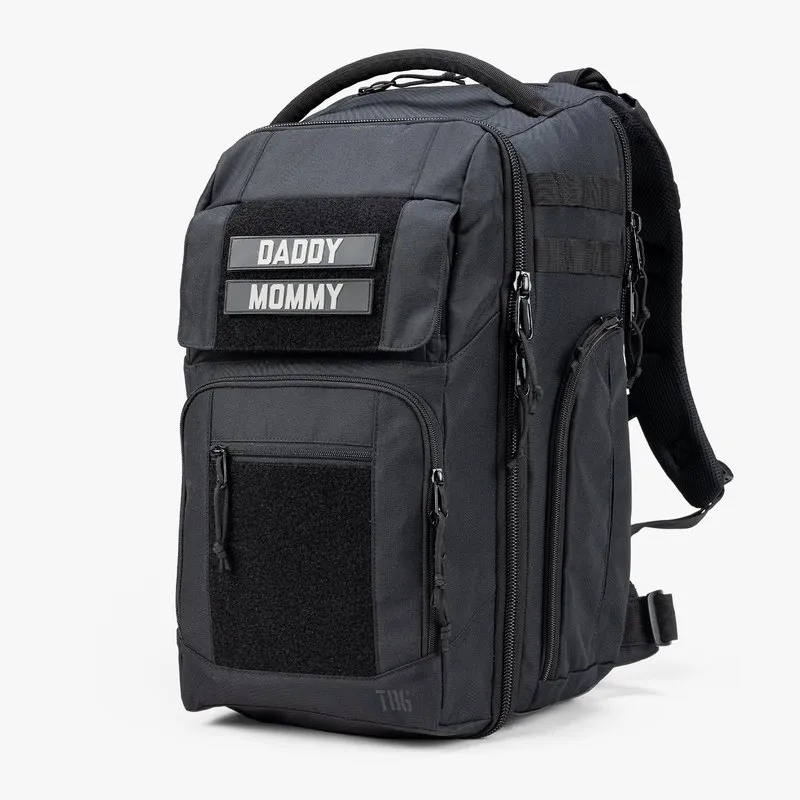
A diaper backpack "designed for dads": water-resistant 600D polyester, YKK zippers, 24.5 liters, a padded laptop or tablet sleeve, a thermal-lined bottle pocket, stroller straps and a changing pad included.
Pros
- Changing pad included
- Insulated bottle pocket
- Stroller straps built in
Cons
- Pricey for a diaper bag
- Tactical look is not for everyone
Babyproofing can wait until your baby is close to moving. When it’s time, use our babyproofing checklist.
FAQ
When should you start a baby registry?
No medical group sets a date. Registry sites point to mid-pregnancy. Perks have waiting periods, so by our math a registry made by about week 27 clears both Target’s and Babylist’s.
How many items should be on a baby registry?
Nobody authoritative sets a number. The AAP’s own list is a short starting list. Count what you need, not items.
How many diapers should I register for?
The AAP suggests 3 to 4 dozen newborn-size to start, but at 8 to 12 changes a day that’s under a week. Stanford says about 10 to 11 a day for the first few weeks, so register for more.
Is a breast pump covered by insurance?
Most plans must cover one, except grandfathered plans. It may be a rental or one you keep. Call your plan before you register for one.
What should you not put on a baby registry?
Crib bumpers and inclined sleepers, which are banned under federal law, plus loungers, sleep positioners, weighted sleep sacks and mesh liners.
Can I use a secondhand crib or car seat?
Not a crib made before June 28, 2011. A used car seat only if it passes NHTSA’s checklist and you know its history.
Do car seats expire?
Neither the AAP nor NHTSA gives a number. Check the label for the date it was made, and ask the maker how long it recommends using the seat.
Sources
- American Academy of Pediatrics (HealthyChildren.org): Choosing a layette, Inclined sleepers and other registry items to avoid, Safe sleep, Car safety seats, Changing diapers, Bathing your newborn, Making baby’s room safe and Starting solid foods
- Getting ready at home, Stanford Medicine Children’s Health
- Safe Sleep for Babies Act of 2021, Pub. L. 117-126
- U.S. Consumer Product Safety Commission: Safe sleep, Infant sleep products, Stop online sale of recalled products, lounger warning and baby tent warning
- NHTSA: Car seats and booster seats and Used car seat safety checklist; NIH Safe to Sleep: FAQ; FDA: Soothing teething pain; HealthCare.gov: Breastfeeding benefits
- Registries: Amazon and how to create a registry; Target completion offer, welcome kit and manage your registry; Babylist registry discount; MyRegistry when to start