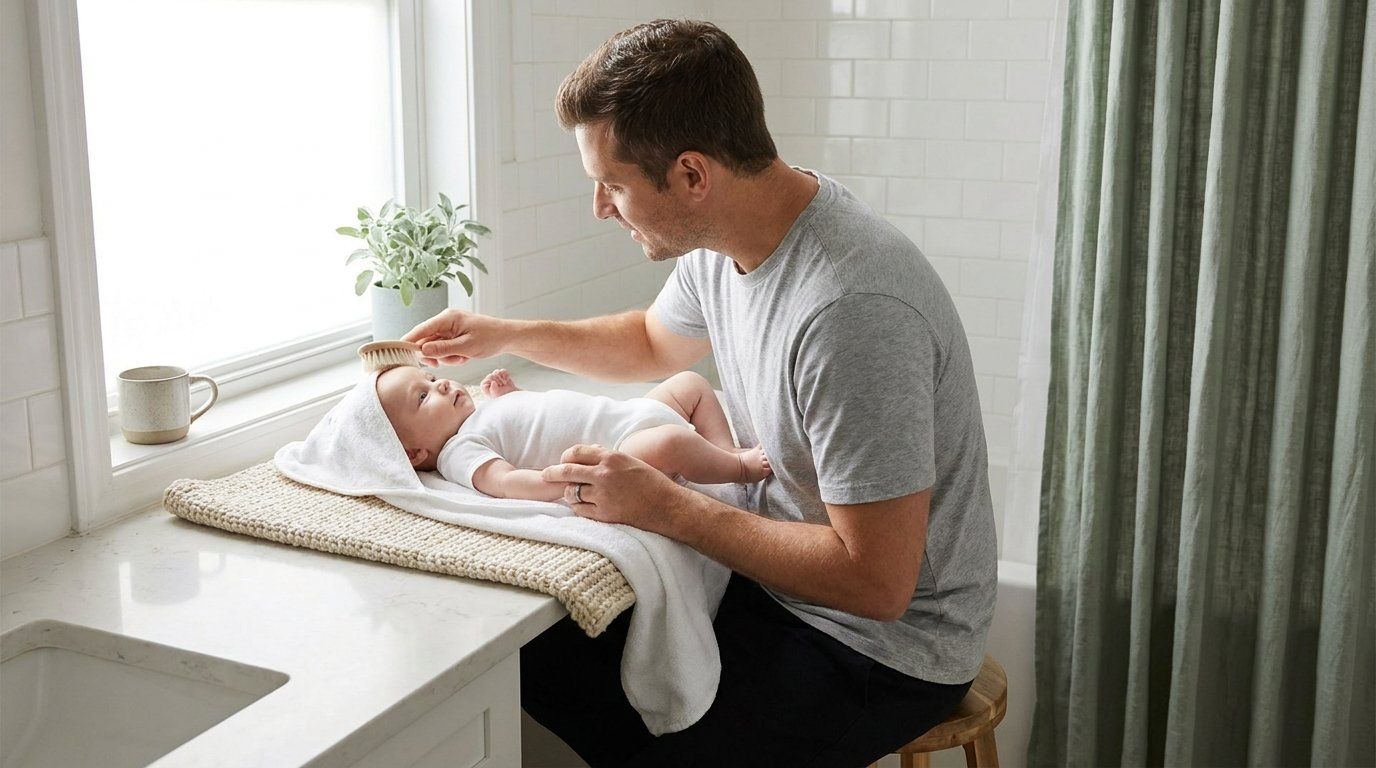
Baby Teething: Chart by Age, Real Symptoms, and What Actually Helps
Baby teething for dads: the ADA tooth chart by age, which symptoms are real, what helps sore gums, what to throw out, first tooth care, and when to call the pediatrician.
We choose everything we recommend independently. If you buy through our links, we may earn a commission. How we make money
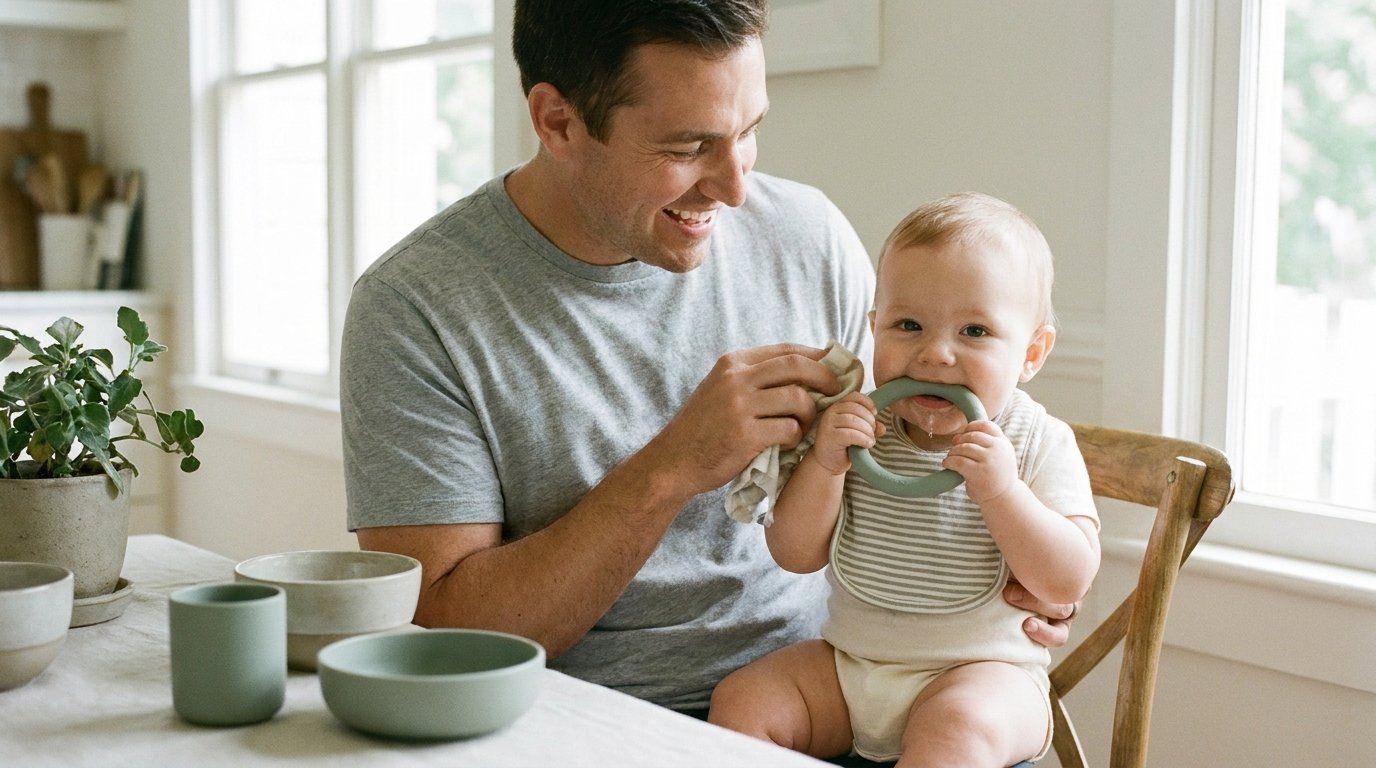
Our quick picks
- TeetherComotomo TeetherCheck price
Food-grade silicone shaped like baby fingers, rated 3+ months by Comotomo.
- First toothbrushDr. Brown's Infant-to-Toddler ToothbrushCheck price
Super-soft bristles, and Dr. Brown's says ages 0 to 3.
- First fluoride toothpastehello Kids Fluoride ToothpasteCheck price
ADA-accepted fluoride paste with no dyes or mint. The label says ask a dentist under 2.
In this guide
- The short answer
- Baby teething chart: which teeth come in when
- Real teething symptoms vs myths
- What actually helps
- The freezer rule
- Teething toys: what to buy and what to skip
- When pain medicine is OK
- What to avoid
- Drool rash
- First tooth care
- What about the fluoride news?
- First dentist visit
- When to call the pediatrician
- FAQ
- Sources
It’s 2 a.m., your baby’s shirt is soaked with drool, and a whole fist is going in the mouth. Is it teething? Maybe. Babies are born with all 20 primary teeth already in their jaws, and they come through over about two and a half years, so you’ll be asking this a lot. Here’s the tooth chart, the symptoms that are real, what helps, what to throw out, and when “it’s just teething” is the wrong call.
How we made this list: we checked products on the makers’ sites, the CPSC recall database and FDA enforcement records. We haven’t tested them ourselves, and only the toothbrush and toothpaste are things you’ll actually need.
A note before you start: this is general guidance, not medical advice. If your baby seems sick, call your pediatrician.
The short answer
- When: first teeth typically arrive between 6 and 10 months, the AAP says. Some babies have none by their first birthday.
- Real: drool, chewing, sore gums, a rash around the mouth.
- Not teething: a true fever, diarrhea, or a lot more crying. The AAP says to call your doctor.
- What helps: a clean finger, or a chilled solid teether from the fridge.
- Throw out: numbing gels, teething tablets, necklaces and bracelets.
- First tooth: a rice-size smear of fluoride toothpaste twice a day, and a dentist by the first birthday.
Baby teething chart: which teeth come in when
This is the American Dental Association’s eruption chart. Lower teeth are listed first because they usually come first.
| Tooth | Lower teeth | Upper teeth |
|---|---|---|
| Central incisor (front) | 6 to 10 months | 8 to 12 months |
| Lateral incisor (next to front) | 10 to 16 months | 9 to 13 months |
| First molar | 14 to 18 months | 13 to 19 months |
| Canine (pointy) | 17 to 23 months | 16 to 22 months |
| Second molar | 23 to 31 months | 25 to 33 months |
The AAP says the first to arrive are “almost always the lower front teeth,” and most children have all their baby teeth by age 3.
It’s a guide, not a schedule. Different AAP pages give the start as about 6 months, 6 to 10 months, and 4 to 7 months, and the ADA says 6 to 12. The AAP says “The timing may be influenced by heredity, and it doesn’t mean that anything is wrong.”
Dad’s job: stop comparing with the neighbor’s baby. Note the first tooth, because that date starts the dentist clock below.
Real teething symptoms vs myths
| Linked to teething | Not from teething |
|---|---|
| Extra drool and chewing | A true fever (AAP) |
| Sore, irritated gums | Diarrhea (AAP) |
| Rash around the mouth from drool | Crying more than usual (AAP) |
| Fussiness | Colds (AAP) |
| A slight rise in temperature | Congestion or cough (not linked in a US study) |
Teething is real but milder than its reputation. A US study of 125 babies and 475 new teeth found mild symptoms clustered in an 8-day window around each tooth, but “no symptom occurred in >35% of teething infants,” and “no symptom cluster could reliably predict the imminent emergence of a tooth.” A 2016 review of 16 studies linked teething to gum irritation, irritability and drool, plus a rise in temperature that wasn’t a fever.
Studies don’t agree on everything. A small Brazilian study of 47 babies linked diarrhea and a runny nose to teething, and the ADA lists trouble sleeping and loss of appetite as normal. The AAP is flatter: “teething does not cause fever, diarrhea or excess crying.” We’d follow the AAP, because of what’s at stake. Schmitt Pediatric Guidelines, a triage guide on the AAP’s site, says “Blaming teething for fevers can lead to a delay in seeking care for infections.”
Drool on its own proves nothing. The AAP says drool glands kick in at around 2 to 3 months, well before most first teeth.
For temperatures, use our baby fever guide. The AAP says a fever over 100.4°F “is not associated with teething.”
What actually helps
- Your finger. “Wash your hands first, then simply massage the sore spots in your child’s mouth with your fingertip or knuckle,” the AAP says. The ADA also suggests a small cool spoon or a moist gauze pad.
- A chilled solid teether. The FDA says firm and not liquid-filled, and supervise so your baby doesn’t choke. The ADA says the same.
- A cold wet washcloth. Twist it, tie a knot in one end, and chill it. Check it isn’t hard before you hand it over.
- Rubber and plastic toys that are safe to chew, the AAP says.
- Cold water in a cup, once your baby is over 6 months. Before then, see why no water.
Skip teething biscuits. The AAP says “Chunks can break off easily and can lead to choking,” and most contain sugar and salt. Gerber’s Soothe ‘n’ Chew biscuits were recalled in 2025 after complaints of infant choking.
Dad’s job: take the rough shift. Wash your hands, rub the gum, and keep one clean teether in the fridge door.
The freezer rule
Sources split on this, so here’s the simple version: fridge for anything you bought, nothing frozen solid in the mouth.
- The FDA says “Make sure the teething ring is not frozen.”
- An AAP page says frozen teethers “tend to get too hard and can cause more harm than good.”
- The AAP also allows a damp washcloth in the freezer, but says “Don’t let your baby chew directly on anything that’s frozen solid.”
Freezing can also break a toy. In September 2026, Skip Hop recalled about 22,660 Elmo silicone teethers because the eyes could detach if frozen. Comotomo says its teethers can go in the freezer. We’d still use the fridge.
Teething toys: what to buy and what to skip
Look for one solid piece, with no liquid inside, no strings, and nothing that can come off. Watch your baby while they use it.
- Liquid-filled rings. The AAP says they can tear or leak, and the liquid may carry bacteria. Lamaze’s fluid-filled ring was recalled in 2022 for possible microbial growth.
- Pull-string teething toys. The CPSC recalled several in 2026 for strings that were longer than the standard allows. Most were sold on Amazon, so check the CPSC site before you buy a no-name toy.
- Anything on a cord. HABA recalled a rainbow rattle and teething toy in 2026 after a knot could come undone.
Teether: Comotomo Teether
A single ring with four finger-shaped nubs. Comotomo says it’s 100% food-grade silicone, for 3+ months, and suggests replacing it every 3 months. The photo shows no liquid chamber, though the maker doesn’t call it one-piece or give dimensions, so check it over before each use.
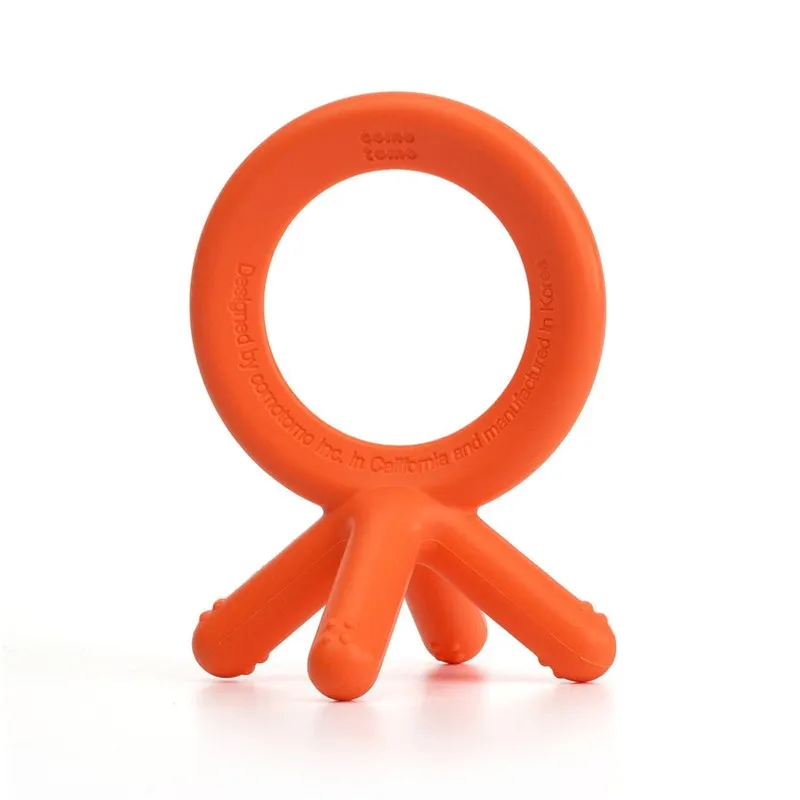
Comotomo Teether
A silicone ring with four finger-shaped nubs for sore gums. Comotomo says it's 100% food-grade silicone for 3+ months, and suggests replacing it every 3 months. Keep it in the fridge rather than the freezer.
Pros
- No liquid inside and no strings
- Finger-shaped nubs reach the back gums
- Easy to keep one chilled in the fridge
Cons
- Comotomo says freezing is fine, but the FDA says teething rings shouldn't be frozen
- Maker suggests replacing it every 3 months
When pain medicine is OK
Most of the time you won’t need it. The Schmitt guidelines say pain medicine usually isn’t needed for mild teething discomfort. The AAP says that if your baby seems very uncomfortable, ask your pediatrician.
| Age | Rule |
|---|---|
| Under 12 weeks | A fever needs immediate medical attention. Don’t treat it as teething |
| Under 6 months | No ibuprofen unless your doctor says so |
| Under 2 years | Acetaminophen only with a doctor’s guidance |
| Any age | Get the dose in mL by weight from your pediatrician. No aspirin |
The AAP says moderate use is considered safe, and frequent use isn’t. The Schmitt guidelines say one or two days.
What to avoid
- Benzocaine gels and liquids. The FDA names Anbesol, Cepacol, Chloraseptic, HurriCaine, Orabase, Orajel and Topex and says “These products should not be used for teething pain in children because they can be dangerous.” They can cause methemoglobinemia, a condition that cuts the oxygen in the blood. If your baby’s skin turns pale, gray or blue, call 911.
- Lidocaine. The FDA says the viscous solution “can cause grave harm, such as heart problems, severe brain injury and even death.”
- Numbing gels in general. The AAP says drool washes them away quickly anyway.
- Homeopathic teething tablets and gels. The ADA says lab tests found inconsistent amounts of belladonna, a toxic substance, and that they “should be avoided and thrown out.” Hyland’s tablets were recalled in 2017. The FDA says there are no FDA-approved homeopathic products.
- Herbal or “natural” drops. “Although derived from plant sources, these ingredients may be dangerous for infants,” the AAP says.
- Alcohol on the gums. The AAP says it’s quickly absorbed into a child’s bloodstream.
- Teething necklaces and bracelets, including silicone. The FDA has reports of death and serious injury, and the AAP doesn’t recommend any jewelry for infants. Lab research also found no evidence amber’s supposed active ingredient reaches the skin.
Even a product without benzocaine can go wrong. Orajel Baby cooling swabs were recalled in 2025 for fungal contamination.
Drool rash
The AAP says it often shows up around the mouth, chin and cheeks, and can spread to the neck and chest.
- Use a soft cotton bib, and take it off before naps and bedtime so your baby can breathe safely. See safe sleep.
- Wash bibs in mild, fragrance-free detergent.
- Ask your pediatrician about a barrier cream or ointment.
A rash anywhere else, or one that comes with a fever, is a reason to call. For the other end of the baby, see our diaper rash guide.
First tooth care
Before teeth: “Wipe the gums with a clean, damp washcloth or gauze pad after each feeding,” the AAP says.
First tooth: the AAP says “it’s time to start using fluoride toothpaste.” Use a smear the size of a grain of rice until age 3, at least twice a day, and make brushing the last thing at night. The American Academy of Pediatric Dentistry agrees.
Why the tube disagrees. Fluoride toothpaste labels say to ask a dentist or doctor for children under 2, and a CDC page says to use plain water and ask first under 2. We follow the AAP and AAPD here. If the label worries you, ask your pediatrician or dentist at the next visit.
Other things that protect those teeth:
- Fluoride varnish. The AAP says all children should get it every 6 months until age 5, and that health plans should cover it. Ask at the well visit.
- No bottle in bed. The AAP says it lets the sugars in formula and breast milk sit on teeth. See best baby bottles.
Dad’s job: own the bedtime brush. It takes two minutes, and it’s yours no matter how your baby eats.
First toothbrush: Dr. Brown’s Infant-to-Toddler Toothbrush
Dr. Brown’s says it’s for ages 0 to 3, with super-soft bristles, and the elephant ears keep the brush head off the counter. At this age, you do the brushing. The bundled sets often come with fluoride-free paste, so buy the brush alone.
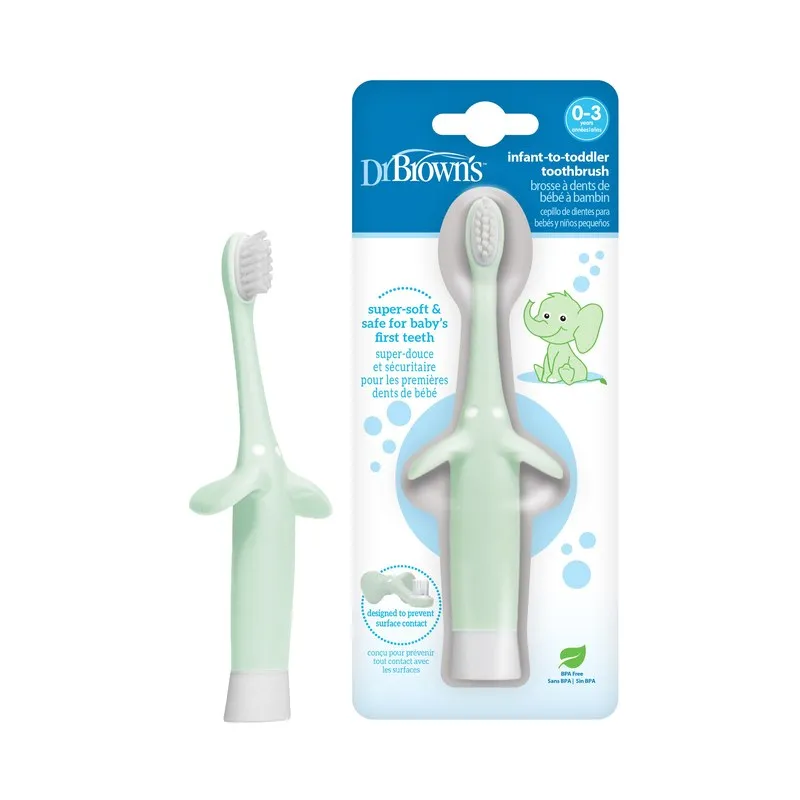
Dr. Brown's Infant-to-Toddler Toothbrush
A small toothbrush with super-soft bristles, intended for ages 0 to 3, Dr. Brown's says. The elephant ears let the brush sit down without the head touching the surface. A parent still does the brushing.
Pros
- Super-soft bristles
- Sized for small mouths
- Elephant ears keep the head off the counter
Cons
- Bundled sets often include fluoride-free paste, so buy the brush alone
First fluoride toothpaste: hello Kids Fluoride Toothpaste
A sodium fluoride paste with the ADA Seal of Acceptance. hello says it has no dyes or spicy mint. The maker says ages 2 and up and the label says ask a dentist or doctor under 2, so check with your pediatrician first. hello also sells fluoride-free pastes in similar tubes, so read the front. A 2023 recall covered a label mix-up, and it’s closed now.
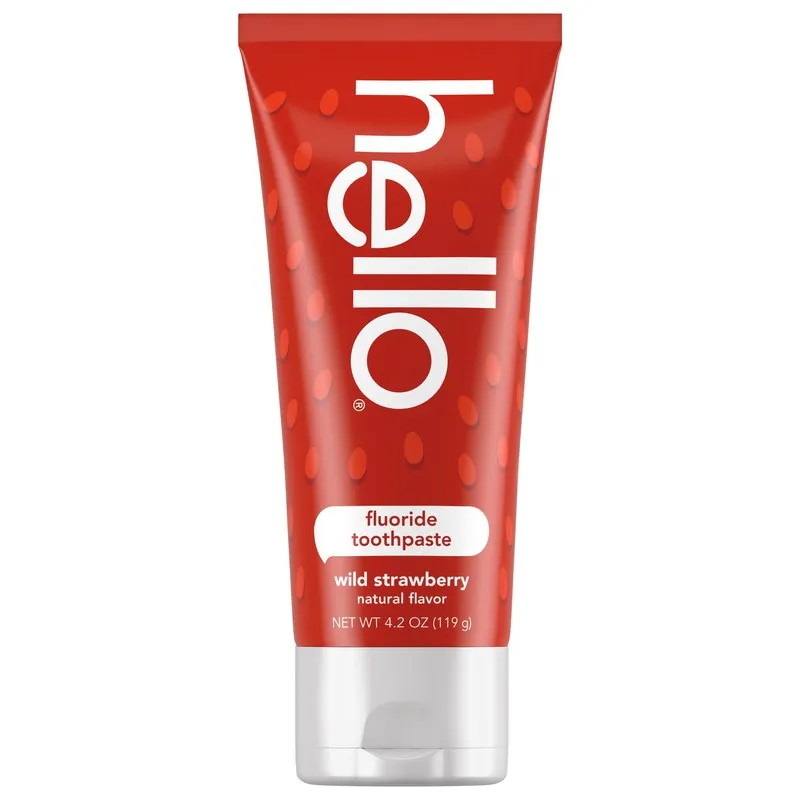
hello Kids Fluoride Toothpaste, Wild Strawberry
A sodium fluoride kids' toothpaste with the ADA Seal of Acceptance. hello says it has no dyes or spicy mint. The maker says ages 2 and up and the label says ask a dentist or doctor under 2, so check with your pediatrician before using a rice-size smear on a first tooth.
Pros
- ADA Seal of Acceptance
- Contains fluoride, which the AAP recommends from the first tooth
- No dyes or spicy mint, hello says
Cons
- Label says ask a dentist or doctor under 2
- hello also sells fluoride-free pastes in similar tubes, so read the front
What about the fluoride news?
In October 2025 the FDA moved to restrict unapproved fluoride drops and tablets that children swallow. That action was about those prescription products. It wasn’t about toothpaste, and we found no FDA action on toothpaste. The AAP and AAPD still recommend fluoride toothpaste.
Water fluoride varies by town, so if you have a question about your water or supplements, ask your pediatrician.
First dentist visit
“See your child’s dentist by their first birthday or within six months of their first tooth,” the AAP says. A family dentist is fine for routine care, the AAP adds, and the AAPD prefers a pediatric dentist.
Dad’s job: book it the week the first tooth shows up.
When to call the pediatrician
- A fever, using the numbers in our fever guide.
- Diarrhea that lasts more than a day.
- More crying, more often than usual.
- Your baby looks or acts very sick.
- Heavy drooling with illness, fever, or trouble swallowing.
- A rash that isn’t just around the mouth.
Call 911 if your baby is suddenly drooling and shows signs of choking or trouble breathing, or if their skin turns pale, gray or blue.
FAQ
When do babies start teething?
First teeth typically arrive between 6 and 10 months, the AAP says. Some babies have none by their first birthday.
Does teething cause a fever?
No true fever. The temperature can rise slightly, but 100.4°F or higher has another cause, so see our fever guide.
Does teething cause diarrhea?
The AAP says no, and says to call if it lasts more than a day. One small study did find a link, but don’t assume it.
Is teething gel safe?
No. The FDA says benzocaine products shouldn’t be used for teething pain, and that gels offer little to no benefit.
Can I give Tylenol for teething?
Ask your pediatrician first. Acetaminophen under 2 takes a doctor’s guidance, and ibuprofen isn’t for babies under 6 months unless your doctor says so.
Are frozen teethers OK?
Keep them in the fridge, not the freezer. The FDA says a teething ring shouldn’t be frozen.
When do I start fluoride toothpaste?
At the first tooth, the AAP says: a rice-size smear twice a day. The tube says to ask a dentist or doctor under 2, so bring it up at the next visit.
Sources
- American Academy of Pediatrics (HealthyChildren.org): Teething pain, Baby’s first tooth, Teething: 4 to 7 months, Drooling, Brushing up on oral health, Preventing tooth decay, Fluoride FAQ, Amber necklaces, Acetaminophen and Ibuprofen; Teething symptom checker (Schmitt Pediatric Guidelines, not AAP policy)
- American Dental Association: Teething, ADA Seal listing, ADA News on fluoride; American Academy of Pediatric Dentistry: FAQ and Fluoride policy
- FDA: Soothing teething pain, Homeopathic products, Benzocaine letter, Fluoride drug products; recall records from FDA enforcement data; CDC: Oral health tips
- CPSC: Little Rawr pull-string recall, Skip Hop teether recall, HABA rattle recall
- Studies: Macknin et al. 2000, Massignan et al. 2016, Ramos-Jorge et al. 2011, Nissen et al. 2019
- Product pages: Comotomo Teether, Dr. Brown’s toothbrush, hello Kids toothpaste, DailyMed label