Best White Noise Machines for Babies (and How to Use Them Safely)
The best white noise machines for babies, plus the safety rules most guides skip: how loud is too loud, how far from the crib, timers vs all night, and cords. Picks for the nursery and for travel.
We choose everything we recommend independently. If you buy through our links, we may earn a commission. How we make money
Our quick picks
- Best for the nurseryHatch BabyCheck price
Sound machine and night light with a big volume button and app control.
- Best no-app machineYogasleep Dohm ClassicCheck price
Real fan sound, turn-the-cap volume, no screen.
- Best for travelYogasleep Hushh 2Check price
Pocket-size, up to 34 hours of battery, with a timer.
In this guide
A white noise machine is one of the few baby gadgets that many tired parents swear by. The AAP lists womb-like sounds, “such as a white noise device, the humming sound of a fan,” among ways to calm a fussy baby. But the same machines can get loud, and most buying guides skip that part. This guide covers what the evidence says, how to use a machine safely, and four picks for the nursery and travel, checked against maker pages and the CPSC recall database.
The short answer
- It can help a newborn settle, especially in the early weeks.
- Low volume: if you’d raise your voice to talk at arm’s length, it’s too loud.
- Far away: across the room, never in or on the crib.
- Cords out of reach: at least 3 feet from the crib.
- Nursery pick: Hatch Baby. Simple pick: Yogasleep Dohm Classic. Travel: Hatch Go or Yogasleep Hushh 2.
Does white noise help babies sleep?
Sometimes, and mostly early on. In a small 1990 trial in London with 40 newborns, 80% fell asleep within five minutes with white noise, compared with 25% without. A 2018 study of 40 colicky babies in Turkey found white noise cut daily crying time and increased sleep. But a 2025 meta-analysis of 12 trials (356 of the participants were infants and toddlers) found mixed results for young children: more total sleep over 24 hours and fewer wakings, but no clear effect on how long they slept at night. The authors note the studies vary a lot and have quality limits.
So: worth trying, not magic. (For your own sleep on the off shift, see our best mattress for new dads.) For the bigger picture on settling a baby, see how to get baby to sleep in a bassinet and how to soothe a crying newborn.
How loud is too loud?
A 2014 study in Pediatrics measured 14 infant sleep machines at maximum volume. At 30 cm (about a foot), all of them were louder than 50 dBA, the recommended noise limit for hospital nurseries, and three were louder than 85 dBA, the level that “risks noise-induced hearing loss” for adults over 8 hours. All but one were still over 50 dBA at 200 cm (about 6.5 feet). The study measured the machines, not babies’ hearing, and only at full volume. But the authors’ advice is simple: as far away as possible, never in the crib or on the rail, the lowest volume possible, and for a short time.
The AAP says the same thing in plain terms: “If you use a sleep machine, place it as far away from the baby’s head as possible and use it for a short time only.” It also says the adult 85-decibel workplace limit “should not be assumed as safe for children.”
The arm’s-length test. The AAP’s noise guidance says too loud “can mean having to raise your voice to speak with someone just an arm’s length away.” Hatch’s own setup tip uses the same check. If you can talk normally next to the machine, the volume is fine.
Some sites say the AAP recommends a set distance like 7 feet or a 50 dB limit. We couldn’t find either number in any AAP or CDC document. Hatch suggests starting its machine at 30% volume, then using the arm’s-length check.
All night or on a timer?
Experts disagree. The 2014 study’s authors recommend running a machine for a short time, until the baby is soundly asleep. Some pediatricians, including Harvey Karp, recommend keeping it on all night so the baby isn’t disturbed by a sudden change. Others argue volume matters more than time. The AAP’s noise statement suggests thinking of “the dose of noise”: the longer it runs, the quieter it should be.
A practical middle ground: keep it low and far away, and use a timer if your baby stays asleep once it stops.
Where to put it (and the cords)
- Across the room, ideally near the door to block hallway noise. Hatch says to place its machine at least 3 feet from the sleep space and not to perch it on the crib.
- Never in or on the crib. The AAP says nothing but a fitted sheet should be in the crib with your baby.
- Cords at least 3 feet away. The CPSC says to keep cords “at least three feet away from any part of the crib, bassinet, play yard or other safe sleep environment.” It counted seven babies and toddlers strangled by baby monitor cords since 2002.
- Ignore the clip. Some portable machines are sold to clip onto cribs, car seats and strollers. Clipped to the stroller canopy or a carrier, it sits right by the baby’s head. Hang it away from the baby, or set it across the room from the travel crib.
- Battery remotes and button cells: the AAP says button batteries can burn through the esophagus within 2 hours if swallowed. Keep remotes out of reach and battery compartments taped or screwed shut.
Our picks
Best for the nursery: Hatch Baby
A sound machine and soft night light with a big button for volume and sounds, controlled by an app over 2.4GHz Wi-Fi. The night light is handy for late-night feeds and diaper changes. Hatch’s extra sleep content is a subscription after the first 3 months, but it doesn’t auto-renew, and the basic lights and sounds still work without it. Hatch’s 2024 power adapter recall applied to the older Rest 1st generation, not this model.
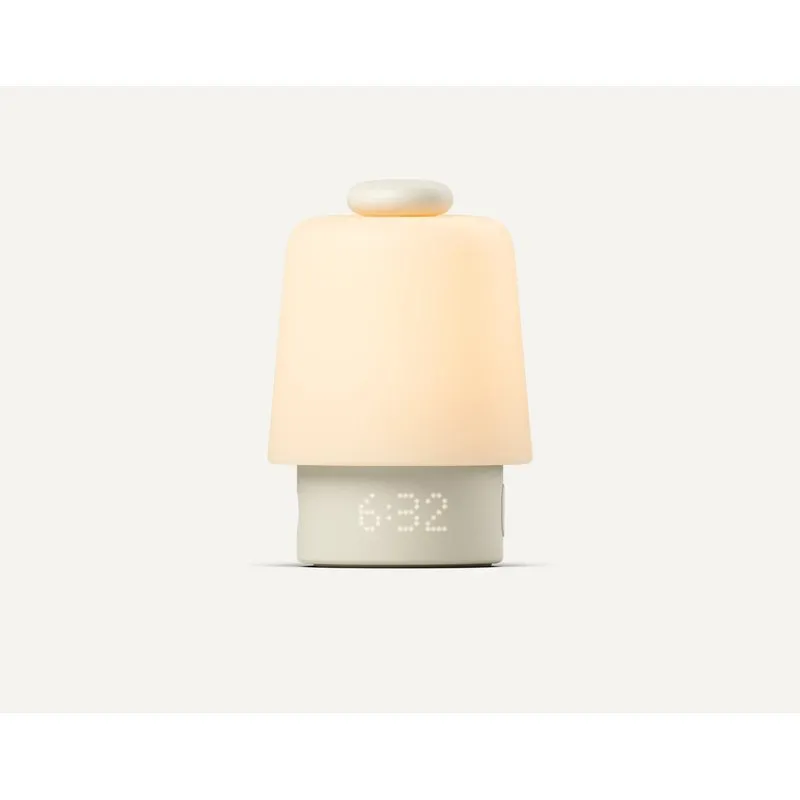
Hatch Baby (sound machine and night light)
A sound machine and soft night light for late-night feeds and diaper changes, with a big button for volume and sounds, controlled by an app. It needs a 2.4GHz Wi-Fi connection. Hatch's extra sleep content is a subscription after the first 3 months; it doesn't auto-renew, and basic lights and sounds keep working without it.
Pros
- Night light for 3 a.m. feeds without the big light
- Big button to start sounds without your phone
- The subscription is optional after 3 months
Cons
- Needs Wi-Fi
- Hatch says to keep it at least 3 feet from the baby's sleep space
Best no-app machine: Yogasleep Dohm Classic
The old-school choice: a real fan motor makes the sound, “without any digital audio,” with two speeds and a tone dial. You change the volume by turning the cap. Yogasleep says it measures up to 57.4 decibels at six feet on high, so it’s easy to keep low. No app, no charging, no screen; just mind the 7-foot power cord.
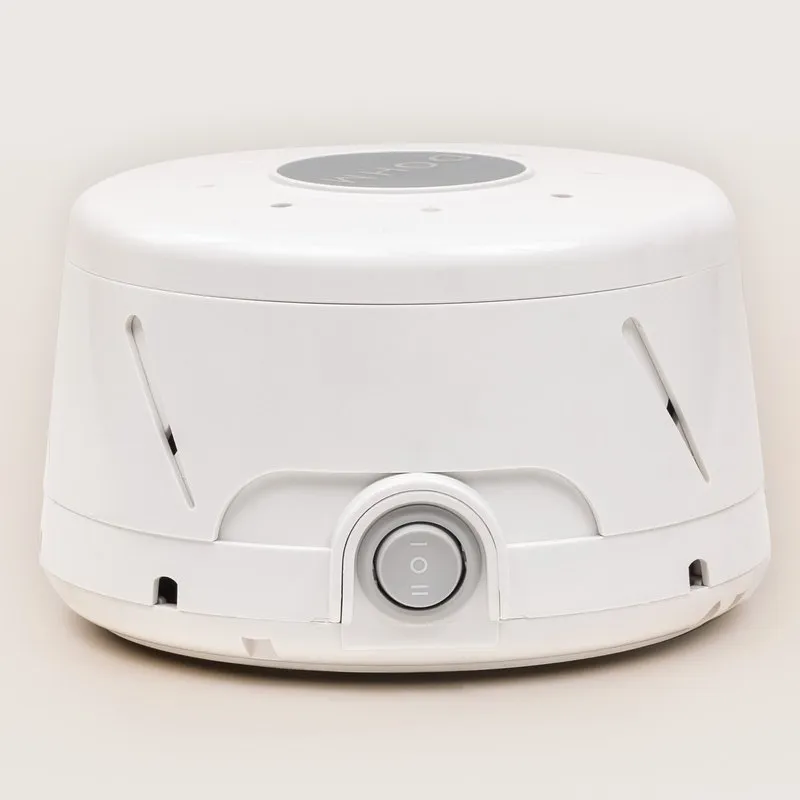
Yogasleep Dohm Classic
The original fan-based sound machine: a real fan motor makes the sound, with no digital audio, two speeds and a tone dial. Yogasleep says it measures up to 57.4 decibels at six feet on high. Turn the cap to change the volume. It plugs into the wall: no app, no charging, no screen.
Pros
- Real fan sound, no digital loops
- Simple: no app, Wi-Fi or screen
- Volume is easy to keep low by turning the cap
Cons
- Plugs into the wall only, so keep the 7-foot cord out of reach
- No timer or night light
Best for travel: Yogasleep Hushh 2
Pocket-size, with six sounds, a 30, 60 or 120-minute auto-off timer, a toddler lock and up to 34 hours of battery on a USB-C charge, Yogasleep says. Good for naps on the go and hotel rooms. Skip the clip-on-the-crib use and put it across the room.
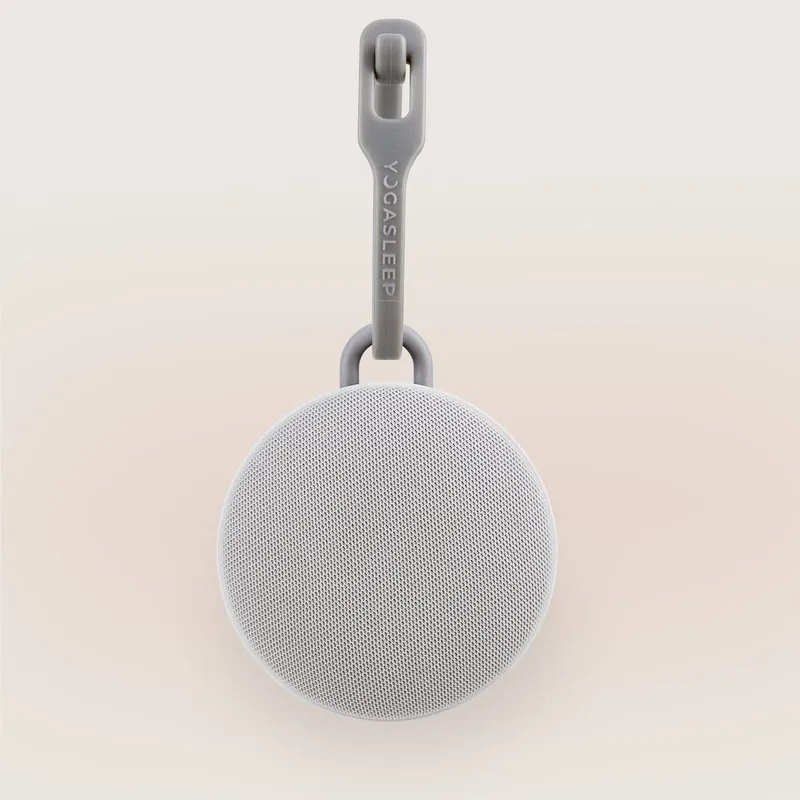
Yogasleep Hushh 2 Portable Sound Machine
A pocket-size white noise machine with 6 sounds, a timer and up to 34 hours of battery on one USB-C charge, according to Yogasleep. Small enough for the diaper bag.
Pros
- Up to 34 hours of battery
- USB-C charging
- Fits in a diaper bag
Cons
- Keep it away from the baby's ears and out of the crib
Also great for travel: Hatch Go
Ten sounds including white noise, heartbeat and ocean, 12 volume levels and up to 15 hours of battery, with no app, Wi-Fi or Bluetooth, Hatch says. Hatch markets it for clipping onto strollers and carriers; hang it away from the baby’s head instead.
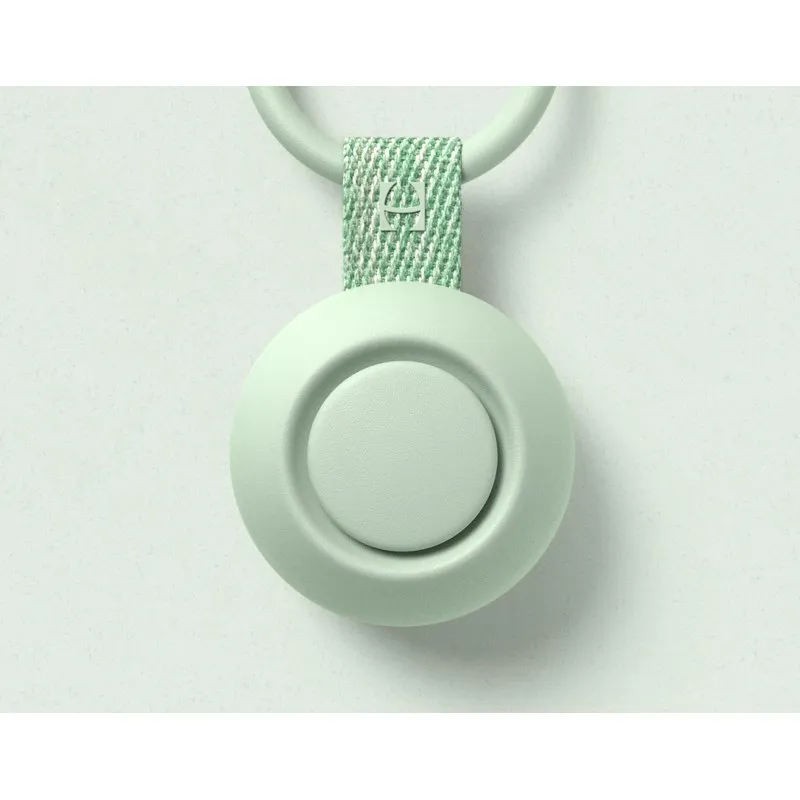
Hatch Go Portable Sound Machine
A small rechargeable sound machine with 10 sounds, including white noise, heartbeat and ocean, and 12 volume levels. Hatch says the battery lasts up to 15 hours and it needs no app, Wi-Fi or Bluetooth. Good for travel cribs and hotel rooms.
Pros
- Up to 15 hours of battery, per Hatch
- No app or Wi-Fi needed
- 12 volume levels
Cons
- Hatch suggests clipping it to strollers and carriers: keep it well away from the baby's head instead
- Sold mainly through Hatch
What to look for
- A low minimum volume and fine volume steps, so you can keep it quiet.
- Continuous play or a timer, depending on what works for your baby.
- Cord length or battery, depending on where it goes.
- No app needed if you’d rather skip Wi-Fi and data; see the privacy section in best apps for new dads.
- A known brand, checked on the CPSC recall site. Sound machine recalls have included power adapters and batteries that overheat with the wrong charger.
FAQ
Is white noise safe for babies?
It can be, used carefully. Keep the volume low enough that you can talk normally at arm’s length, place the machine as far from the baby’s head as possible (never in or on the crib), and keep cords at least 3 feet away. A study found infant sleep machines can be too loud at full volume close up.
How loud should white noise be for a baby?
Quiet. A study used the 50 dBA hospital nursery limit as a reference and found every machine tested exceeded it at full volume about a foot away. The AAP’s simple test: if you’d have to raise your voice to talk to someone an arm’s length away, it’s too loud.
How far should a sound machine be from the crib?
As far as possible, the AAP says. Across the room is best. Keep it and its cord at least 3 feet from the crib, as the CPSC advises for cords, and never put it in or on the crib.
Should white noise play all night?
Experts disagree. The study authors and the AAP suggest using it for a short time; some pediatricians recommend all night. If it runs all night, keep it especially low and far away.
What is the best white noise machine for a baby?
For the nursery, the Hatch Baby, which adds a night light and app control. For a simple machine with no app, the Yogasleep Dohm Classic. For travel, the Yogasleep Hushh 2 or Hatch Go.
Does white noise help with colic?
It may. A small study of colicky babies found white noise reduced crying and increased sleep, and the AAP lists a white noise machine or fan among things to try for colic.
Sources
- Hugh SC, et al. Infant sleep machines and hazardous sound pressures. Pediatrics, 2014; NEJM Journal Watch summary; White noise: not the right noise?, Children’s Hospital of Philadelphia
- Spencer JA, et al. White noise and sleep induction. Arch Dis Child, 1990. Sezici E, Yigit D. Comparison between swinging and playing of white noise among colicky babies. J Clin Nurs, 2018. Ding et al. Impact of white noise on sleep quality across age groups. Sleep Med, 2025.
- American Academy of Pediatrics: How Noise Affects Your Child, AAP noise policy statement (2023), How to Calm a Fussy Baby, Colic and How to Keep Your Sleeping Baby Safe
- Noise-induced hearing loss, NIH NIDCD; Guidelines for Community Noise, World Health Organization (1999)
- U.S. Consumer Product Safety Commission: baby monitor cord safety, Hatch Rest 1st gen adapter recall and Love To Dream portable sleep machine recall
- Product pages: Hatch Baby, Hatch Go and adapter recall notice, Hatch; Dohm Classic and Hushh 2, Yogasleep