How to Swaddle a Baby: A Dad's Step-by-Step Guide
How to swaddle a baby with a blanket, step by step, plus the rectangle blanket method, swaddle sacks, the hip rule, when to stop swaddling and the mistakes to avoid.
We choose everything we recommend independently. If you buy through our links, we may earn a commission. How we make money
In this guide
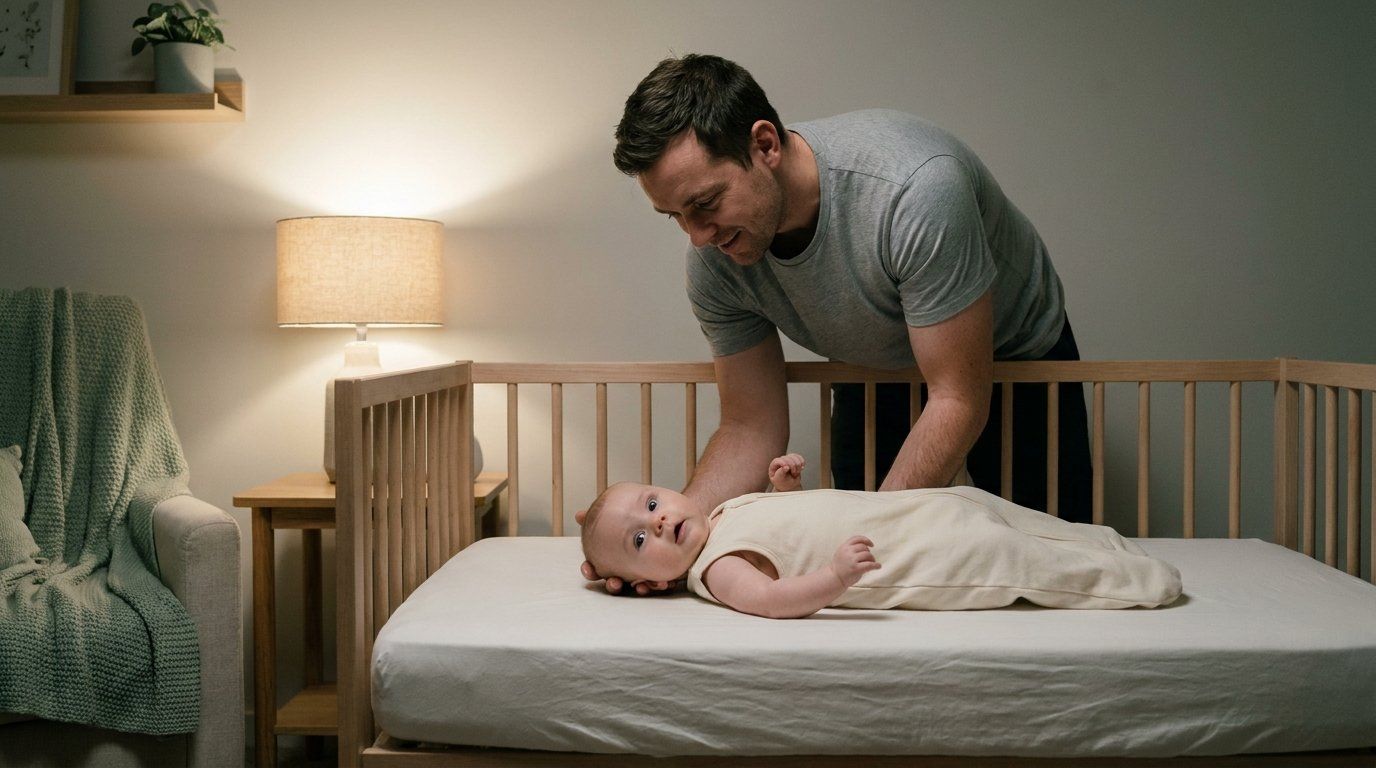
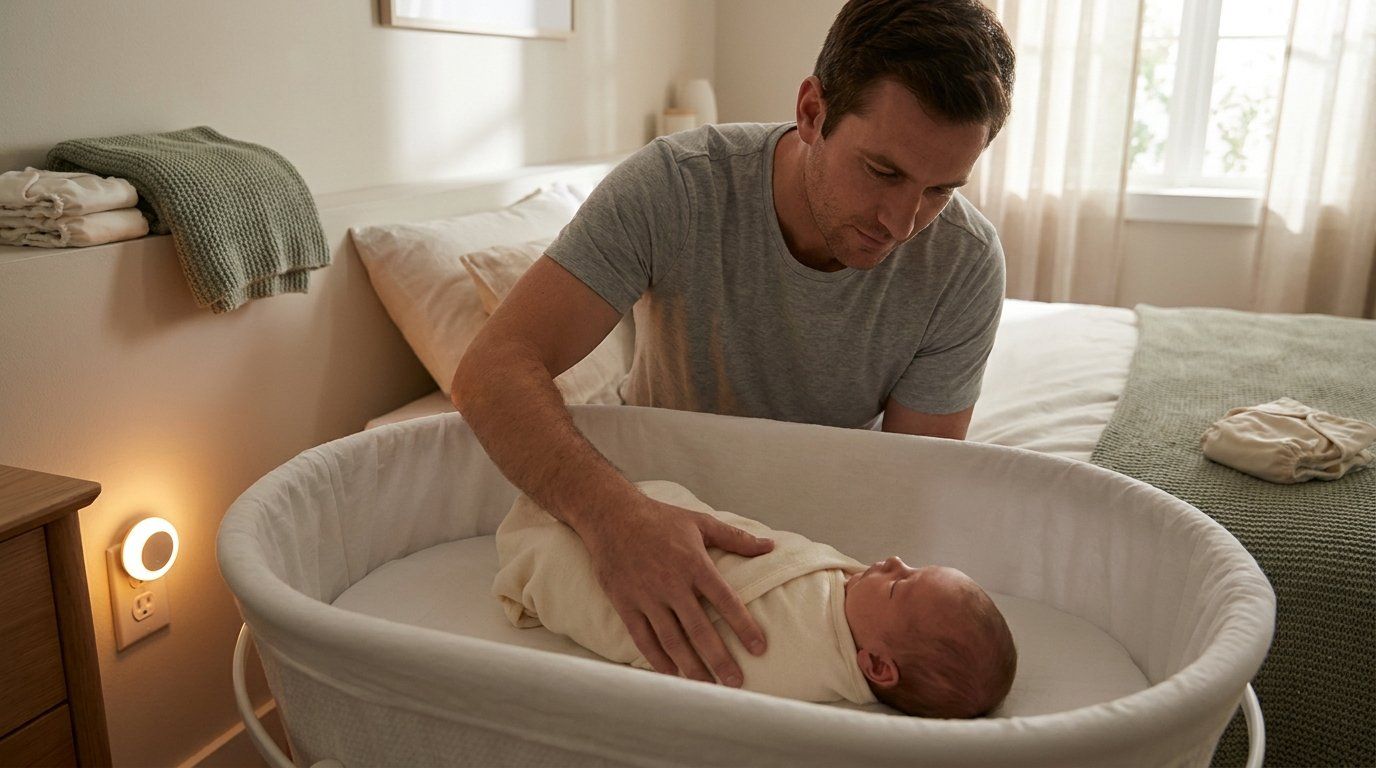
Swaddling is one of the first baby skills most dads get asked to do, usually at 2 a.m. and usually after watching a nurse do it in four seconds. It can help: the AAP says that “When done correctly, swaddling can be an effective technique to help calm infants and promote sleep.” The key words are done correctly. This guide covers the blanket fold step by step, swaddle sacks, the hip rule, when to stop, and the safety rules from the AAP, the NIH and the CPSC.
A note before you start: this is general guidance, not medical advice for your baby. If your baby was born early or has a hip or health condition, ask your pediatrician how to swaddle, or whether to.
The short answer
- Thin blanket, snug chest, loose hips. Two or three fingers of room at the chest; legs free to bend up and out.
- On the back, every time, in their own crib or bassinet.
- Face and head uncovered, no hat indoors.
- Stop at the first signs of rolling, which can start as early as 2 months. If that lands in the middle of a rough stretch, see the 4-month sleep regression guide.
- Nothing weighted, ever.
- Swaddling doesn’t prevent SIDS. It’s a calming tool, not a safety device.
How to swaddle a baby with a blanket, step by step
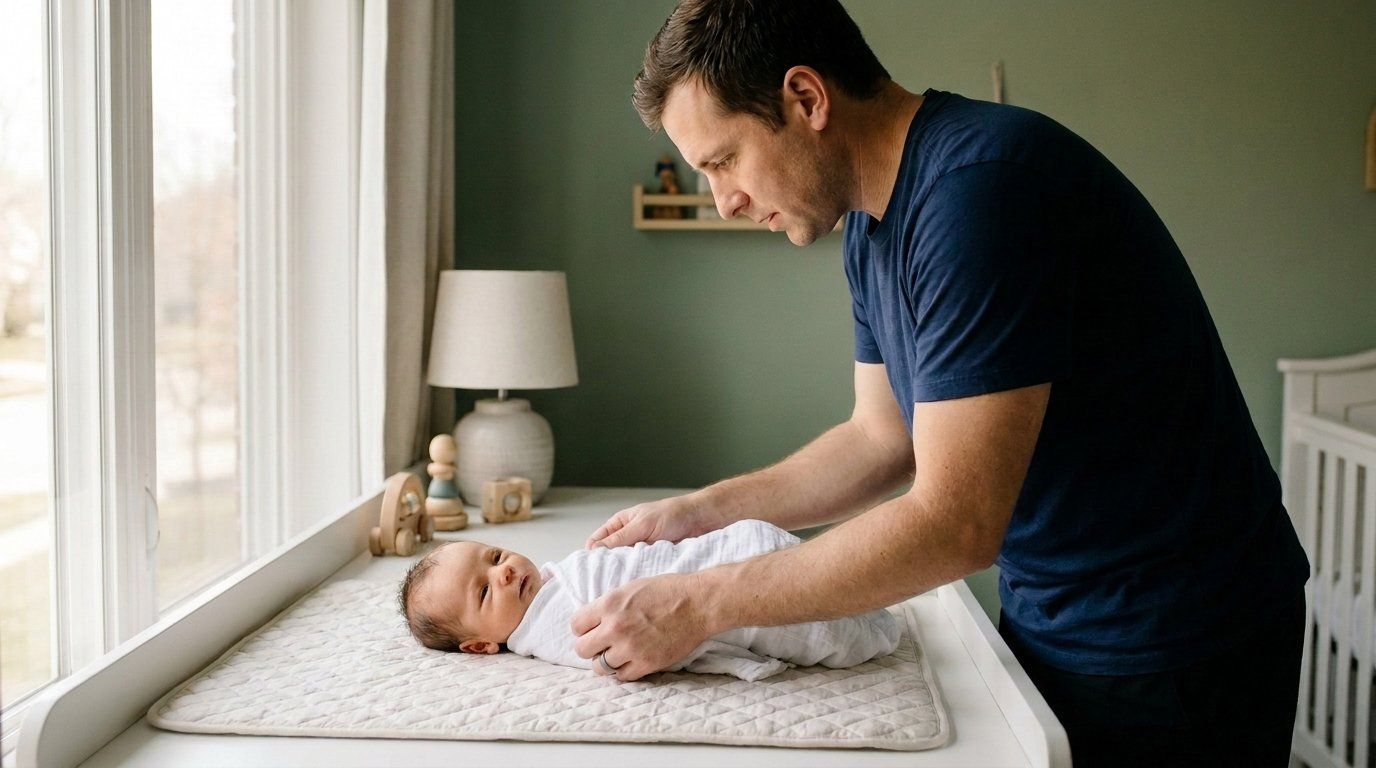
The AAP says to “Use only a thin blanket for swaddling.” A large, square muslin or receiving blanket works best. Here is the AAP’s diamond method:
- Lay the blanket out like a diamond and fold the top corner down so it almost reaches the middle.
- Place the baby on their back in the center, arms at their sides, head just above the folded edge and shoulders just below it.
- Wrap one side. Take one side corner over the baby’s shoulder and across the body, and tuck it underneath on the opposite side.
- Bring the bottom up. Fold the bottom corner up over the feet. If it reaches the face, the AAP says “you can simply fold it back down until their face is no longer covered.”
- Wrap the other side. Pull the last corner over the other shoulder and across the body, and tuck it under.
- Check the fit. The AAP says you should be able to fit two or three fingers between the swaddle and the baby’s chest, and the hips should be able to move.
The AAP’s other version, also used by Nationwide Children’s Hospital, wraps both sides first and then folds or twists the bottom loosely and tucks it under one side. Both work. The AAP says the order above, bottom up before the last corner, “helps to keep your handiwork from coming undone quite as easily,” and that “variations are perfectly acceptable.”
With a rectangle blanket: the International Hip Dysplasia Institute says to place the baby’s shoulders at the top of the long side, then twist or fold the bottom end and tuck it behind the baby, “ensuring that both legs are bent up and out.”
Arms in or out? Either. The AAP says “There is no evidence with regard to SIDS risk related to the arms swaddled in or out,” and that wrapping the body with the arms left out is fine too.
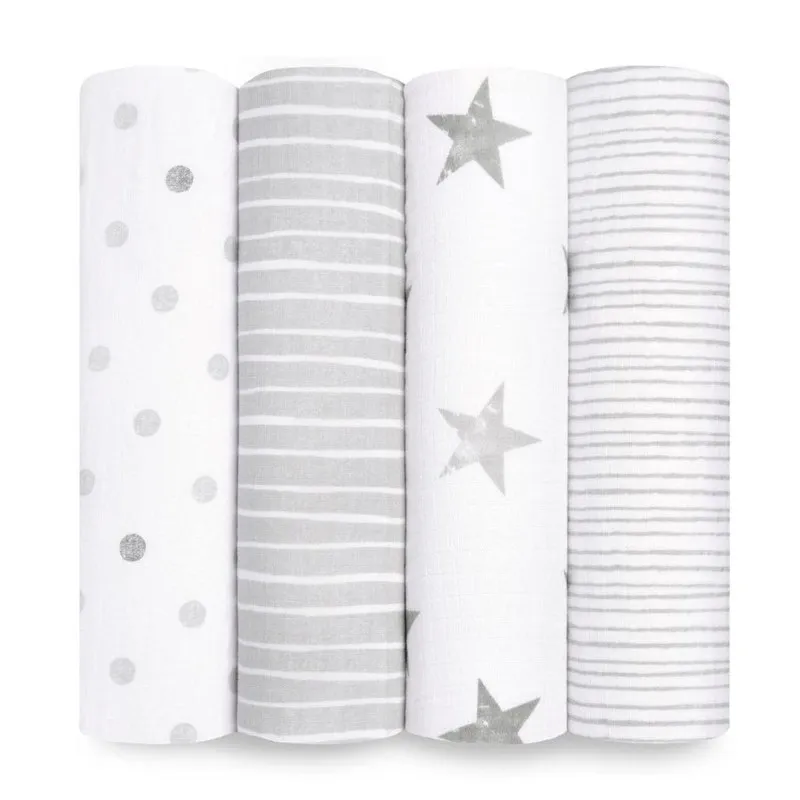
aden + anais essentials Cotton Muslin Swaddle Blankets, 4 Pack
Thin, breathable 100% cotton muslin blankets, 44 by 44 inches, for the classic blanket swaddle. The large square size makes the diamond fold easy to learn. Four in a pack, so there's always a clean one.
Pros
- Thin muslin, which fits the AAP's thin-blanket advice
- Big enough to tuck securely
- Doubles as a burp cloth or changing pad cover
Cons
- A blanket swaddle can come undone: check it, and stop swaddling at the first signs of rolling
- Takes practice to get snug at the chest and loose at the hips
Practice with the pros. The AAP says the best swaddlers it has seen are the nurses in the newborn nursery. Ask one to show you before you leave the hospital, then do one swaddle yourself while they watch.
Dad’s job: own the swaddle. Practice on the baby during the day, when nobody is crying, so the 2 a.m. version is muscle memory.
The hip rule: snug at the chest, loose at the legs
This is the mistake that’s easy to make and hard to see. The AAP says “Studies have found that straightening and tightly wrapping a baby’s legs can lead to hip dislocation or hip dysplasia.” The International Hip Dysplasia Institute puts it plainly: “The baby’s legs should not be tightly wrapped straight down and pressed together.”
What a good swaddle looks like:
- Chest: snug, with room for two or three fingers.
- Hips and legs: the legs can bend up and out at the hips, like a frog.
- Bottom of the blanket: folded or twisted loosely, not pulled tight around the thighs.
The hip institute adds that swaddle sacks should have a loose pouch for the legs, and warns that “even some of these commercial products can confine the legs if they are tightened around the thighs.”
Swaddle sacks: the easier option
If the blanket keeps coming undone, a wearable swaddle with wings or Velcro and a roomy sack at the bottom is easier at night. A blanket that unwraps becomes a loose blanket in the crib, which the AAP says “could cover your baby’s face and increase the risk of suffocation.”
The same rules apply to a swaddle sack: on the back, snug at the chest, loose at the hips, and stop at the first signs of rolling. The AAP says sacks that “compress the arms, chest and body” stop at rolling too, while plain sleep sacks that don’t swaddle “can be used as long as you want.”
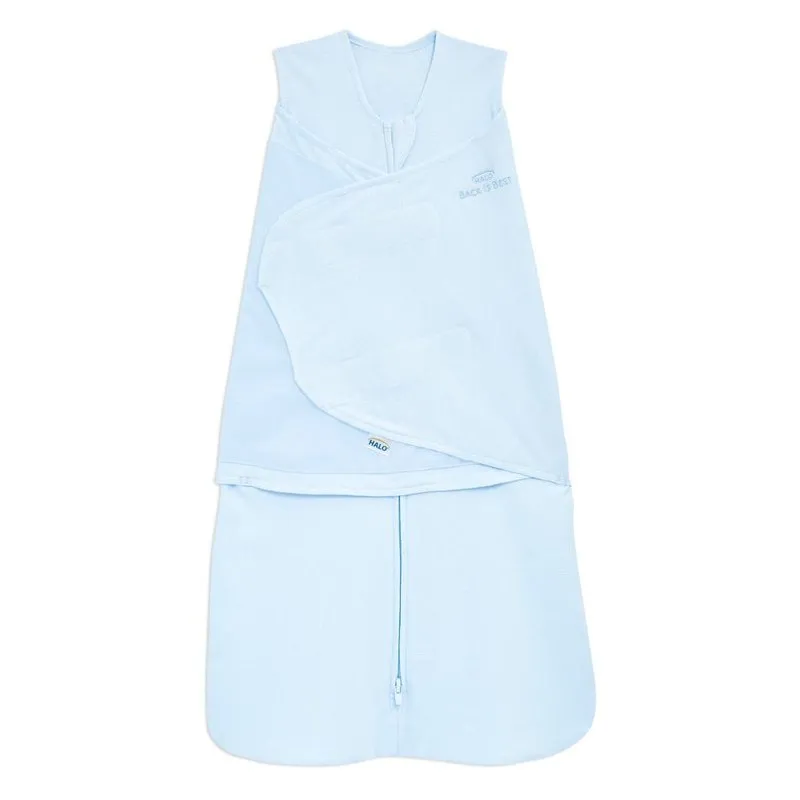
HALO SleepSack Swaddle, 100% Cotton
A wearable swaddle: adjustable wings wrap the arms and chest, and a loose sack covers the legs, so there's no blanket to come undone. HALO says the 3-way design allows arms in, hands to face or arms out, and that it is approved as hip healthy by the International Hip Dysplasia Institute. 100% cotton, rated 1.5 TOG.
Pros
- Wings can't unravel into a loose blanket the way a wrap can
- Roomy sack lets the legs bend up and out
- Double zipper for night diaper changes
Cons
- Like any swaddle, stop using it once the baby shows signs of rolling
- 1.5 TOG is warm: check the chest for sweat
For arms-up designs and “transition” swaddles, we didn’t find any AAP or NIH guidance either way, so follow the same rolling rule.
When to stop swaddling
Stop at the first signs that your baby is trying to roll over, not on a birthday. The AAP says:
- “Stop swaddling as soon as your baby shows any signs of trying to roll over.”
- Rolling usually happens around 3 to 4 months, “but it can happen earlier.” Some babies start working on it as early as 2 months.
- “The risk of suffocation is higher if your baby rolls to their stomach while they’re swaddled.”
The NIH’s Safe to Sleep campaign adds that once a baby starts to roll on their own, “swaddling increases the risk of suffocation and strangulation.” Watch for the baby turning onto their side, rocking, or kicking a leg over during tummy time. When you see it, switch to a plain sleep sack that leaves the arms free. Our winter dressing guide covers warmer sacks for cold rooms.
Dad’s job: when one of you sees the first roll attempt, that night’s swaddle is the last one. Agree on that ahead of time.
Swaddling safety: the mistakes to avoid
Not on the stomach or side. The NIH says the back position “is especially important” for swaddled babies, because a swaddled baby “may have trouble moving out of the stomach or side positions.” A 2016 review of studies in Pediatrics found the risk linked to swaddling was highest for babies placed on their stomach.
Not in your bed. The AAP says your baby is safest in their own crib or bassinet, “not in your bed,” and recommends avoiding bed sharing “under any circumstances.” See safe sleep for newborns for the full rules.
Not too hot. The AAP says swaddling “can increase the chance your baby will overheat.” Signs: “sweating, damp hair, flushed cheeks, heat rash and rapid breathing.” Take a layer off underneath, use a lighter blanket, and skip the hat indoors.
Nothing weighted. The AAP says “Do not use weighted swaddles or weighted blankets, which can place too much pressure on a baby’s chest and lungs.” The NIH says there’s not enough evidence that weighted swaddles are safe, and the CPSC’s safe sleep list says not to use them either. That includes tucking a bag of rice or anything heavy inside the swaddle.
Not in a swing. A 2026 federal safety standard for infant swings adds the warning “Never use blankets or swaddles when using this product.”
It doesn’t prevent SIDS. The AAP and NIH both say swaddling doesn’t reduce the risk of SIDS. The AAP also notes that swaddling may make it harder for a baby to wake up, and that “decreased arousal can be a problem.” That’s why the back-only and stop-at-rolling rules matter.
Does swaddling actually help?
Often, yes, for young babies. The NIH says “some babies are calmer and sleep better when they are swaddled.” A small study at Washington University found swaddling cut down startles and full wake-ups during naps, and the AAP describes the startle (Moro) reflex that makes babies jerk and flail.
It isn’t magic for crying. In a Dutch trial of 398 babies who cried a lot, swaddling added no benefit overall, though babies younger than 8 weeks did better with it. If your baby fights the swaddle, try arms out, or stop. For other ways to calm a baby, see how to soothe a crying newborn.
Daycare may say no. The AAP says some child care centers don’t swaddle, partly because babies who aren’t usually swaddled may have a harder time waking when swaddled at an older age. Some states restrict it in licensed child care. Ask your center before the first day.
FAQ
How tight should a swaddle be?
Snug at the chest, with room to fit two or three fingers between the swaddle and the baby’s chest, the AAP says. The hips should be loose enough for the legs to bend up and out. A swaddle that’s loose enough to come undone is too loose.
Should a baby’s arms be in or out of the swaddle?
Either is fine. The AAP says there’s no evidence on SIDS risk for arms in versus out. Some babies settle better with their arms out, and leaving them out is one way to ease off swaddling.
When should you stop swaddling a baby?
At the first signs of trying to roll over. The AAP says that usually happens around 3 to 4 months, but some babies start as early as 2 months. Switch to a sleep sack that leaves the arms free.
Can a swaddled baby sleep on their side or stomach?
No. A swaddled baby should always be placed on their back. The NIH says swaddled babies may have trouble moving out of the stomach or side position, which raises the risk of sleep-related death.
Can you swaddle a baby with a rectangle blanket?
Yes. The International Hip Dysplasia Institute says to place the baby’s shoulders at the top of the long side, wrap the sides, then twist or fold the bottom and tuck it behind the baby with both legs bent up and out.
Are weighted swaddles safe?
No. The AAP, the NIH and the CPSC all say not to use weighted swaddles, weighted sleep sacks or weighted blankets for babies.
Does swaddling prevent SIDS?
No. The AAP and NIH say swaddling doesn’t reduce the risk of SIDS. If you swaddle, always place the baby on their back and stop at the first signs of rolling.
Sources
- Swaddling: Is it Safe?, Goodnight, Sleep Tight, How to Keep Your Sleeping Baby Safe, Inclined Sleepers and Other Baby Registry Items to Avoid, Bag of rice on a baby’s tummy and How to Calm a Fussy Baby, American Academy of Pediatrics (HealthyChildren.org)
- Ways to Reduce Baby’s Risk and FAQ, NIH Safe to Sleep
- Hip-Healthy Swaddling, International Hip Dysplasia Institute
- Swaddling: From Birth to Two Months, Nationwide Children’s Hospital
- Safe Sleep, U.S. Consumer Product Safety Commission, and Safety Standard for Infant Swings, Federal Register (2026)
- Pease AS, et al. Swaddling and the Risk of Sudden Infant Death Syndrome: A Meta-analysis. Pediatrics, 2016. Gerard CM, et al. Physiologic studies on swaddling. Pediatrics, 2002. van Sleuwen BE, et al. Comparison of behavior modification with and without swaddling as interventions for excessive crying. J Pediatr, 2006.
- SleepSack Swaddle, 100% Cotton, HALO, and essentials Cotton Muslin Swaddle, 4 Pack, aden + anais