Safe Sleep for Newborns: What Dads Need to Know
The safe sleep rules for newborns in plain language, from the ABCs to room sharing, swaddling and the couch danger that catches tired dads, plus what to buy and what to skip.
We choose everything we recommend independently. If you buy through our links, we may earn a commission. How we make money
In this guide
Safe sleep for newborns comes down to a short list of rules, and every one of them matters at 3 a.m. when you’re exhausted and the baby has finally gone quiet on your chest. In 2024, about 3,400 babies in the US died suddenly and unexpectedly, according to the CDC, many of them during sleep. This guide covers the rules from the American Academy of Pediatrics (AAP) in plain language, the situations that put tired dads most at risk, and what to buy and what to skip.
A note before you start: these are the AAP’s 2022 recommendations, which the CDC supports. Ask your pediatrician if your baby has a medical condition that changes them.
The short answer
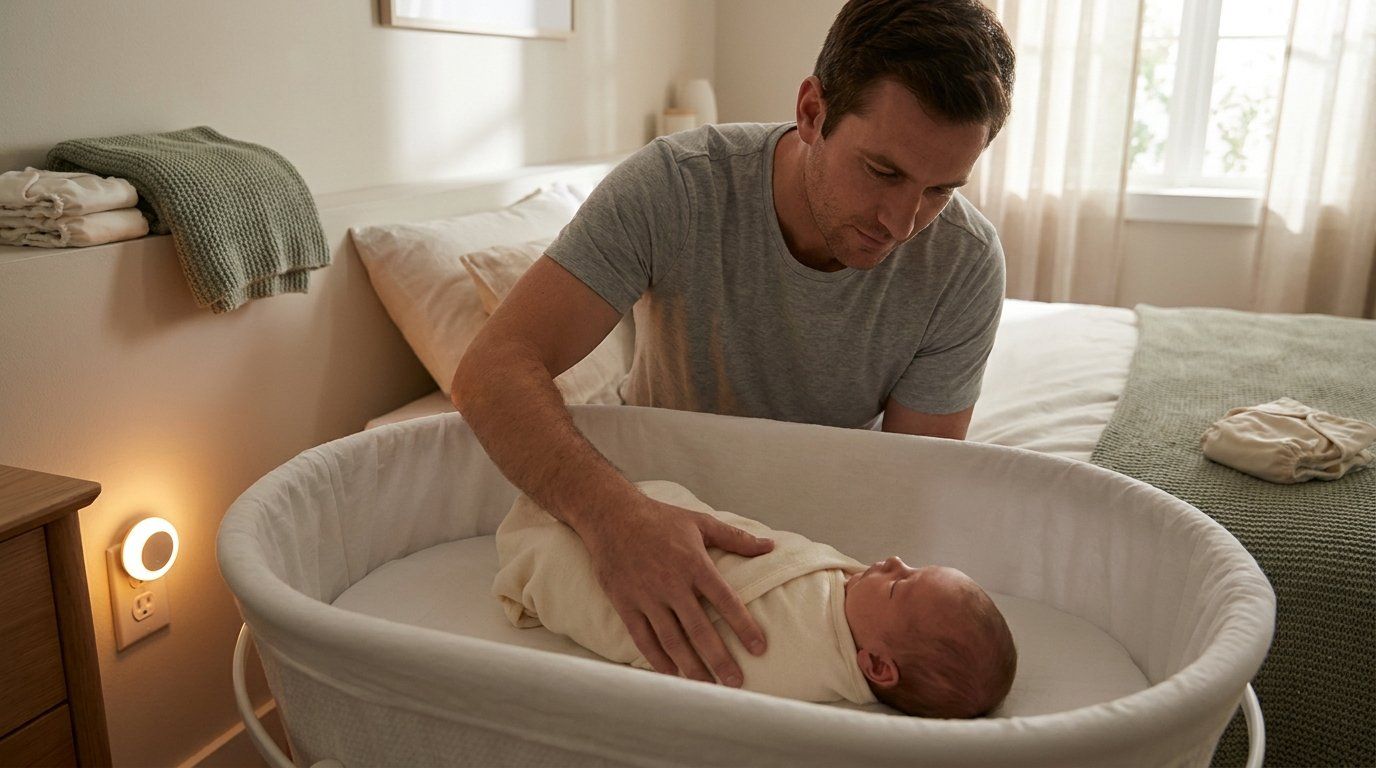
- Alone, Back, Crib. Every sleep, naps included: on their back, alone, in a crib, bassinet or play yard.
- Firm, flat, bare. A firm, flat mattress with a fitted sheet. Nothing else: no pillows, blankets, bumpers or toys.
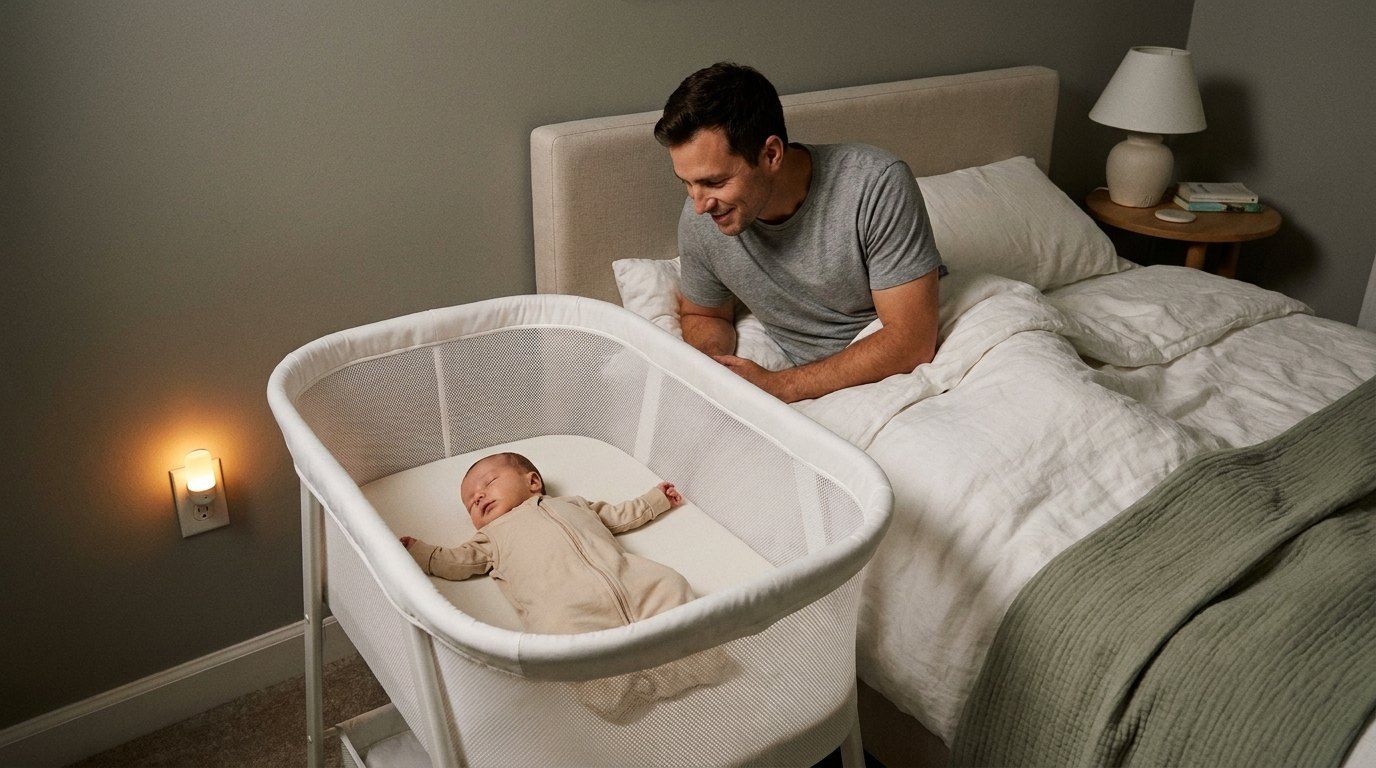
- Same room, not the same bed, for at least the first 6 months.
- Never sleep with the baby on a couch or armchair. The AAP says the risk of death is up to 67 times higher.
- Use a sleep sack instead of a blanket, and keep the baby from overheating.
- Car seats, swings and carriers are not for sleep. Move the baby to a flat surface as soon as you can.
Why this matters
The CDC counted about 3,400 sudden unexpected infant deaths in the US in 2024: 1,351 from sudden infant death syndrome (SIDS), 1,099 from unknown causes and 947 from accidental suffocation and strangulation in bed. The National Institute of Child Health and Human Development (NICHD) says 90% of SIDS deaths happen before 6 months, with the most between 1 and 4 months.
That last part is the stretch when you’re most tired. The rules below are built for exactly that time.
The ABCs of safe sleep
A is for Alone. The baby sleeps in their own space, with nothing in it but a fitted sheet. The Consumer Product Safety Commission (CPSC) puts it as “Bare is Best.” The AAP’s list of things to keep out includes pillows, pillow-like toys, quilts, comforters, mattress toppers, loose sheets, blankets, toys and bumper pads.
B is for Back. Every sleep, naps and nights. The AAP says side sleeping is just as dangerous as stomach sleeping, and that babies will not choke when they’re on their backs. The NICHD warns that a baby who usually sleeps on their back but is put down on their stomach or side, for a nap at grandma’s, for example, can face up to 45 times the risk of SIDS. Once a baby can roll both ways on their own, the NICHD says you can leave them in the position they choose, as long as you put them down on their back.
C is for Crib. A crib, bassinet or play yard that meets federal safety standards, with a mattress that’s:
- Firm: it springs back quickly when you press it.
- Flat: like a table, not a hammock.
- Level: not on an incline. The AAP says any surface inclined more than 10 degrees isn’t safe.
The AAP adds a D: Don’t smoke or vape, in the home or in the car, even outside.
Share a room, not a bed
The AAP recommends keeping the baby’s crib or bassinet in your room for at least the first 6 months. It says room sharing can lower the risk of SIDS by as much as 50%. A bassinet right next to your side of the bed also makes night feeds and checks easier.
Bed sharing is different. The AAP says it cannot support bed sharing under any circumstances, including with twins. The risk is highest when:
- The baby is younger than 4 months: 5 to 10 times higher, according to the AAP.
- The baby was born early or small: 2 to 5 times higher.
- The adult is exhausted, has been drinking, has used marijuana or other drugs, or took medicine that makes them drowsy: more than 10 times higher.
- Either parent smokes or vapes, or she smoked during pregnancy.
The couch: the danger for tired dads
This is the one to remember. The AAP says the risk of a sleep-related death is up to 67 times higher when a baby sleeps with someone on a couch, soft armchair or cushion. The NICHD calls couches and armchairs extremely dangerous when an adult falls asleep while feeding, comforting or snuggling a baby.
It happens to good, careful parents. On HealthyChildren.org, pediatrician Samuel Hanke tells how he sat on the couch to soothe his three-week-old son, Charlie. He describes it as baby asleep on dad’s chest, dad asleep too, and when he woke, Charlie didn’t.
If you’re doing a night feed or soothing the baby, and you feel sleep coming:
- Don’t sit on the couch or recliner. The AAP says to avoid feeding the baby on a couch or armchair.
- Set an alarm to go off every few minutes, as the AAP and NICHD suggest, or ask your partner to stay up with you.
- Feeding in bed? The AAP says to put the baby back in their own sleep space before you go to sleep. If there’s any chance you’ll doze off with the baby in your bed, first remove pillows, blankets and sheets that could cover the baby’s face or cause overheating.
- If you do fall asleep, move the baby back to their own sleep space as soon as you wake up. The NICHD says the longer an adult shares a bed with a baby, the higher the risk.
Skin-to-skin and chest naps. Skin-to-skin is great for babies and dads, while you’re awake and alert. When the session is over, or you start to feel drowsy, put the baby down on their back in their own sleep space. More in our guide to skin-to-skin for dads, and tips for staying awake in night feeds for dads.
Swaddles, sleep sacks and keeping warm
Use a sleep sack instead of a blanket. The AAP and NICHD recommend a wearable blanket to keep the baby warm without loose bedding. The AAP’s rule of thumb: dress the baby in one layer more than you’re wearing.
Don’t let the baby overheat. The AAP lists signs like sweating, a hot chest or flushed skin, and says babies don’t need a hat indoors once you’re home from the hospital.
Swaddling:
- The AAP says there’s no evidence that swaddling lowers the risk of SIDS, but if you swaddle, always put the baby on their back.
- Stop swaddling at the first signs that the baby is trying to roll over. The AAP says that usually happens at 3 to 4 months, but some babies start working on it as early as 2 months.
- Keep it loose at the hips so the legs can bend up and out, and leave room for two or three fingers at the chest.
- A plain sleep sack that doesn’t wrap the arms can be used as long as you like.
No weighted sleep sacks, swaddles or blankets. The CPSC, AAP and NICHD all say not to use them. The NICHD explains that a baby’s ribcage is still developing, so added weight could make breathing harder, and that there’s not enough evidence they’re safe.
More ways to lower the risk
- Offer a pacifier at sleep time. The AAP says it helps even if it falls out after the baby is asleep. If she’s breastfeeding, wait until breastfeeding is going well, and don’t force it if the baby refuses.
- Breast milk. The AAP says at least 2 months of feeding at least partly with breast milk significantly lowers the risk. You can help by taking the burping, changing and settling after feeds.
- Vaccines. The NICHD says vaccinated babies are at lower risk of SIDS.
- Tummy time while awake. Supervised tummy time every day, building up to 15 to 30 minutes a day by about 7 weeks, according to the AAP. Great for dads: lie down face to face. See tummy time by age.
What to buy, and what to skip
Worth buying: a crib, bassinet or play yard that meets federal standards, a firm mattress that fits, fitted sheets and a couple of sleep sacks. That’s it.
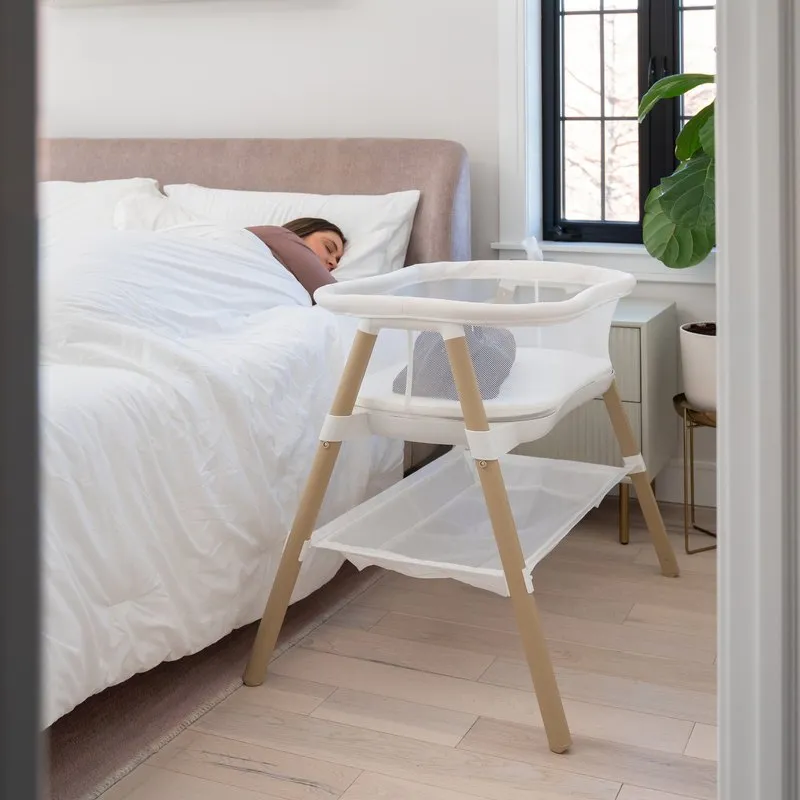
HALO BassiNest Essential Sleeper
A bassinet that stands next to your bed, so the baby sleeps in your room on their own surface, with breathable mesh walls and a fitted sheet included. HALO says every US BassiNest complies with the federal bassinet standard (16 CFR part 1218), and to move the baby to a crib at 20 pounds or 5 months, whichever comes first, or once they push up on hands and knees.
Pros
- Meets the federal bassinet standard, per HALO
- Makes room sharing easy for night feeds
- Fits beside most beds
Cons
- Outgrown at 20 pounds, 5 months, or once the baby pushes up on hands and knees
- Not height adjustable, so check it lines up with your bed
A bassinet that stands right next to your side of the bed, which makes room sharing for the first 6 months easy. HALO says every US BassiNest meets the federal bassinet standard. Stop using it when the baby pushes up on hands and knees or reaches 20 pounds.
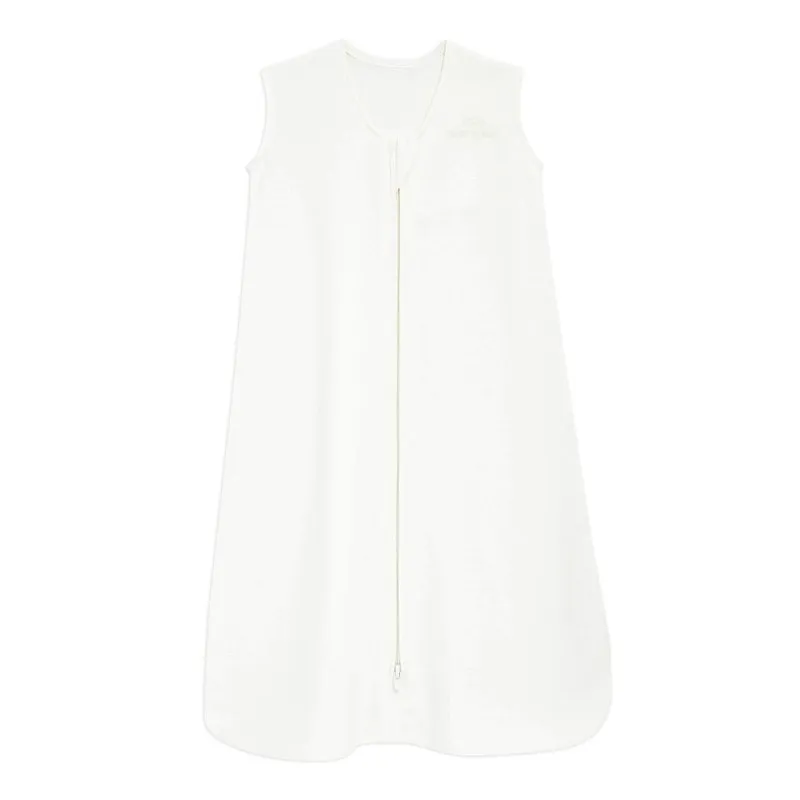
HALO SleepSack Wearable Blanket, 100% Cotton
A sleeveless wearable blanket in breathable 100% cotton (0.5 TOG) that replaces loose blankets in the crib. Not weighted. HALO says it is approved as hip healthy by the International Hip Dysplasia Institute.
Pros
- Replaces loose blankets, which the AAP says to keep out of the crib
- Not weighted
- Inverted zipper for easier diaper changes
Cons
- 0.5 TOG suits a warm room (75 to 77°F, per HALO); pick a thicker TOG for cooler rooms
A sleeveless cotton sleep sack that replaces loose blankets. It isn’t weighted, and HALO says it’s approved as hip healthy.
Skip these:
- Crib bumpers and inclined sleepers. Both are banned under the federal Safe Sleep for Babies Act, signed May 16, 2022. The CPSC still warns about padded bumpers sold online, so don’t buy them secondhand or from marketplace sellers.
- Sleep positioners and wedges. The FDA says not to use infant positioners because they could harm your baby, and that no product claiming to prevent SIDS has ever been cleared or approved by the FDA for that use.
- Anything that goes in the crib: pillows, blankets, quilts, toys.
- Products that promise to prevent SIDS, including heart rate and oxygen monitors. The AAP says there’s no evidence these devices lower the risk. They’re fine to use if you want one, but not as a substitute for the rules above. If you use an audio or video monitor, the NICHD says to keep it at least 3 feet from the crib. See baby monitors without Wi-Fi.
Naps in the car seat or swing. The AAP says car seats, swings and carriers aren’t for routine sleep, especially for babies under 4 months. It’s generally fine for a baby to doze in the car seat while you’re driving, but once you’re home, move them to a flat, firm surface on their back as soon as you can.
Make sure everyone knows the rules
Dads aren’t always told this stuff. A 2023 survey of fathers in Georgia found that most said they usually put the baby to sleep on their back, but fewer than half said they kept soft bedding away, and only about a third said the baby slept on an approved sleep surface. Share the rules with your partner, grandparents and any sitter, and check the crib before every sleep.
FAQ
What are the safe sleep rules for newborns?
The AAP’s ABCs: the baby sleeps Alone, on their Back, in a Crib, bassinet or play yard, on a firm, flat surface with only a fitted sheet. Share a room, not a bed, for at least 6 months, use a sleep sack instead of a blanket, and never sleep with the baby on a couch or armchair.
Can a newborn sleep on dad’s chest?
Holding a baby skin-to-skin while you’re awake and alert is great. The danger is falling asleep. The AAP says the risk of death is up to 67 times higher when a baby sleeps with an adult on a couch or armchair. If you feel drowsy, put the baby on their back in their own sleep space.
Is co-sleeping safe?
The AAP says it cannot support bed sharing under any circumstances. Room sharing, with the baby in their own crib or bassinet next to your bed, is the safe version and can lower the risk of SIDS by as much as 50%.
When should I stop swaddling?
At the first signs that your baby is trying to roll over. The AAP says rolling usually starts at 3 to 4 months, but some babies start working on it as early as 2 months. Switch to a sleep sack that leaves the arms free.
Can a baby sleep in a car seat?
Dozing in the car seat while you drive is generally fine, the AAP says, but car seats and swings aren’t for routine sleep. Move the baby to a firm, flat sleep space on their back as soon as you get home.
How long should the baby sleep in our room?
The AAP recommends room sharing for at least the first 6 months.
Sources
- Sleep-Related Infant Deaths: Updated 2022 Recommendations for Reducing Infant Deaths in the Sleep Environment, Moon et al., American Academy of Pediatrics, Pediatrics, 2022
- How to Keep Your Sleeping Baby Safe: AAP Policy Explained, Safe Sleep: Back is Best, Swaddling: Is it Safe?, Baby Products to Avoid, Safe Sleep Tips for Sleep-Deprived New Parents, Safe Sleep: Charlie’s Story, Preventing SIDS and Back to Sleep, Tummy to Play, American Academy of Pediatrics (HealthyChildren.org)
- Data and Statistics for SUID and SIDS and Providing Care for Babies to Sleep Safely, Centers for Disease Control and Prevention
- Ways to Reduce Baby’s Risk, Frequently Asked Questions and Breastfeeding and Safe Sleep, Safe to Sleep campaign, National Institute of Child Health and Human Development
- Safe Sleep, U.S. Consumer Product Safety Commission, and Safe Sleep for Babies Act: crib bumpers and inclined sleepers (16 CFR 1309 and 1310)
- Recommendations for Parents and Caregivers About the Use of Baby Products, U.S. Food and Drug Administration
- Fathers, Breastfeeding, and Infant Sleep Practices: Findings From a State-Representative Survey, Parker et al., Pediatrics, 2023
- BassiNest Essential Sleeper and SleepSack Wearable Blanket, 100% Cotton, HALO