Best Baby Carriers for Dads (That Moms Can Wear Too)
The best baby carriers for dads, checked on each maker's site: carriers both parents can share, newborn-ready picks with no insert, a mesh carrier for hot days, a newborn wrap, a hip seat and a hiking pack.
We choose everything we recommend independently. If you buy through our links, we may earn a commission. How we make money

Our quick picks
- Best for sharingBabyBjörn Baby Carrier HarmonyCheck price
Waist from 21 to 63 inches, newborn-ready with no insert, mesh.
- Best for hot weatherLÍLLÉbaby Complete All SeasonsCheck price
Zip-down mesh panel for warm days, six positions.
- Best for hikingOsprey Poco LTCheck price
Framed pack with a sunshade, for babies 6 months and up who sit on their own.
In this guide
A baby carrier is the gear that lets a dad do things: walk the dog, make coffee, get the baby to sleep with both hands free. The best baby carrier for a dad is usually one his partner can wear too, so we looked for carriers that adjust quickly between two very different bodies, work from the newborn weeks without extra inserts, and keep the baby in a hip-healthy position. Every spec below comes from the maker’s own site, and we checked each one for recalls on the CPSC’s database.
If you’re over about 6 feet or wear a bigger size, start with our baby carriers for big and tall dads, which compares waist ranges in inches.
The short answer
- Best for sharing: BabyBjörn Harmony.
- Best for hot weather: LÍLLÉbaby Complete All Seasons.
- Best newborn-to-toddler with no insert: Boba X.
- Simplest: Tula Original (no facing out).
- Most positions: Ergobaby Omni Classic.
- Best for newborn snuggles: Boba Classic Wrap.
- Best hip seat: Tushbaby.
- Best for hiking: Osprey Poco LT, from 6 months.
What makes a carrier good for dads
It shares well. Most couples are different heights and builds. Look for one size that covers both of you and straps you can adjust in seconds. The CPSC says to adjust the carrier “for a comfortable, secure fit before placing an infant in the carrier,” so a carrier that’s quick to readjust is one you’ll actually re-fit at every handoff. Some makers suggest each parent buy their own size when you’re very different sizes; the picks below are one-size carriers that cover a wide range instead.
It works from day one. “Newborn ready” should mean the carrier adjusts down for a 7-pound baby without a separate infant insert you’ll lose.
It’s good for the hips. The International Hip Dysplasia Institute says the healthiest position has the thighs supported and the knees slightly higher than the bottom, called the M position. It recommends facing in for the first six months, and says facing out “may not be harmful.”
It meets the federal standard. Soft carriers sold in the US must meet the CPSC’s mandatory standard (ASTM F2236), and wraps and slings have their own (ASTM F2907). Buy new if you can: the CPSC suggests it, and says to check buckles and straps for broken parts.
It’s cool enough. Babies are warm. A mesh panel helps on summer walks.
Our picks
Best for sharing: BabyBjörn Baby Carrier Harmony
BabyBjörn sizes the Harmony from XS to XXL, with a waistband from 21 to 63 inches, and says its carriers are “easy to adjust, so you can share babywearing duties without any fuss.” It’s newborn-ready from 7 pounds with no insert, carries up to 40 pounds, and has four positions. BabyBjörn says facing out starts at around 5 months and back carry waits until the baby turns one. The 3D mesh is the coolest fabric in this list.
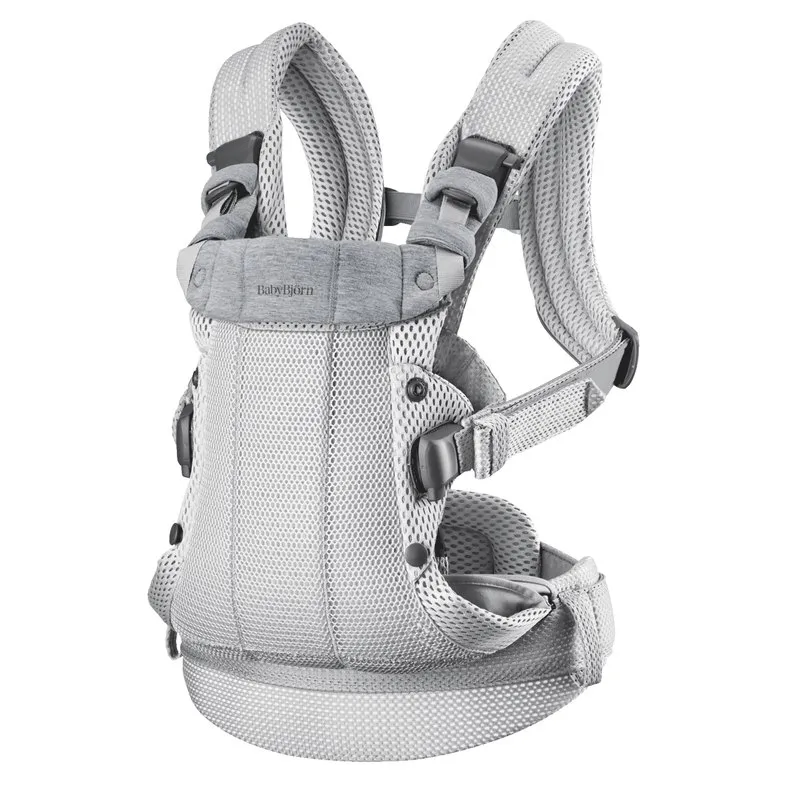
BabyBjörn Baby Carrier Harmony
The widest waist range we found from any maker: BabyBjörn says the waistband stretches from 21 to 63 inches, XS to XXL, with no extender. It carries babies from 7 to 40 pounds in four positions and works from day one without an infant insert.
Pros
- Waistband to 63 inches with nothing extra to buy
- Acknowledged as hip healthy by the International Hip Dysplasia Institute
- 3D mesh for warmer days
Cons
- Tops out at 40 pounds, a little earlier than most
- No hip carry position
Best for hot weather: LÍLLÉbaby Complete All Seasons
A zip-down front panel reveals mesh for warm days, and the straps can be worn straight or crossed. It carries babies from 7 to 45 pounds and has structured lumbar support. LÍLLÉbaby says to wait until 6 months and strong head control before facing out or carrying on the hip. For the curled-up fetal carry, you need its infant pillow, sold separately; the inward-facing position for newborns doesn’t.
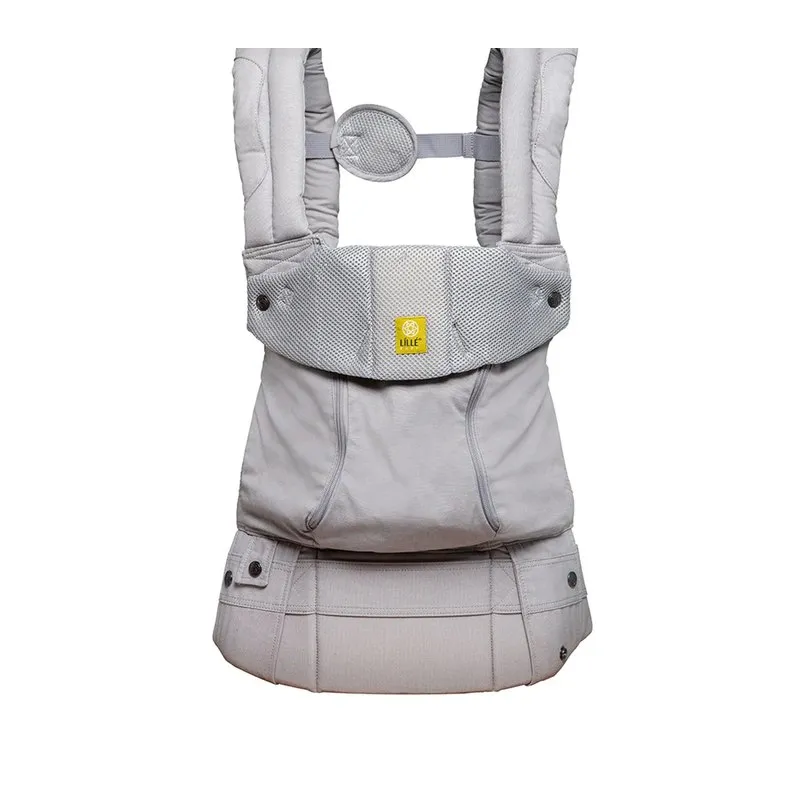
LÍLLÉbaby Complete All Seasons
A six-position carrier with a zip-down mesh panel for hot days. LÍLLÉbaby says the waist goes to 52 inches, or up to 61.5 inches with its waist extension strap, and the straps adjust "small to tall". For babies from 7 to 45 pounds.
Pros
- Six positions, including facing out and hip
- Zip-down panel for heat
- Waist extension adds up to 9.5 inches
Cons
- Past 52 inches you need the extension, sold separately
Best newborn-to-toddler with no insert: Boba X
Boba says the Boba X fits babies from 7 to 45 pounds, from birth to 36 months and beyond, with “no infant insert needed” and a waist belt from 25 to 58 inches. It’s made to “make it easy to switch between wearers,” and does front and back carries. It’s cotton twill, not mesh, so it’s warmer in summer.
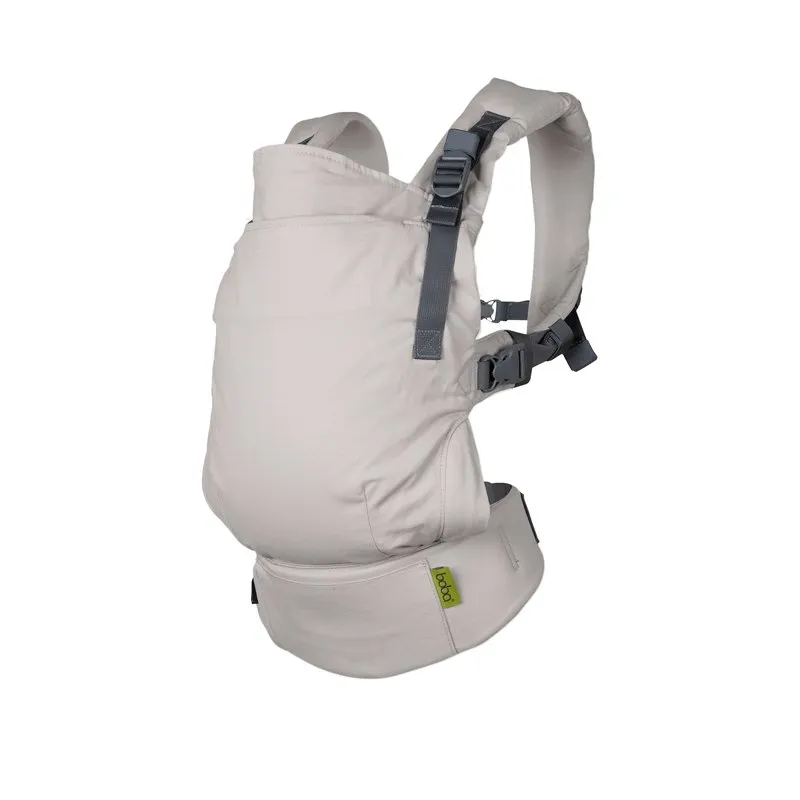
Boba X Baby Carrier
Boba lists a 25 to 58 inch waist belt, aimed at both petite and plus-size wearers, and a seat that adjusts so no infant insert is needed. It carries babies from 7 to 45 pounds, newborn to toddler.
Pros
- Waist belt to 58 inches out of the box
- Certified hip healthy by the International Hip Dysplasia Institute
- Seat and panel adjust as the baby grows
Cons
- Past a 58-inch waist, the BabyBjörn Harmony goes further
Simplest: Tula Original
Two positions, inward facing and back carry, with quick-adjust straps Tula says are made for “multiple wearers,” from petite to 4XL. It’s newborn-ready from 7 pounds and carries up to 45. Tula says it isn’t designed for facing out, which keeps things simple, and suggests waiting for consistent head and neck control before a back carry.
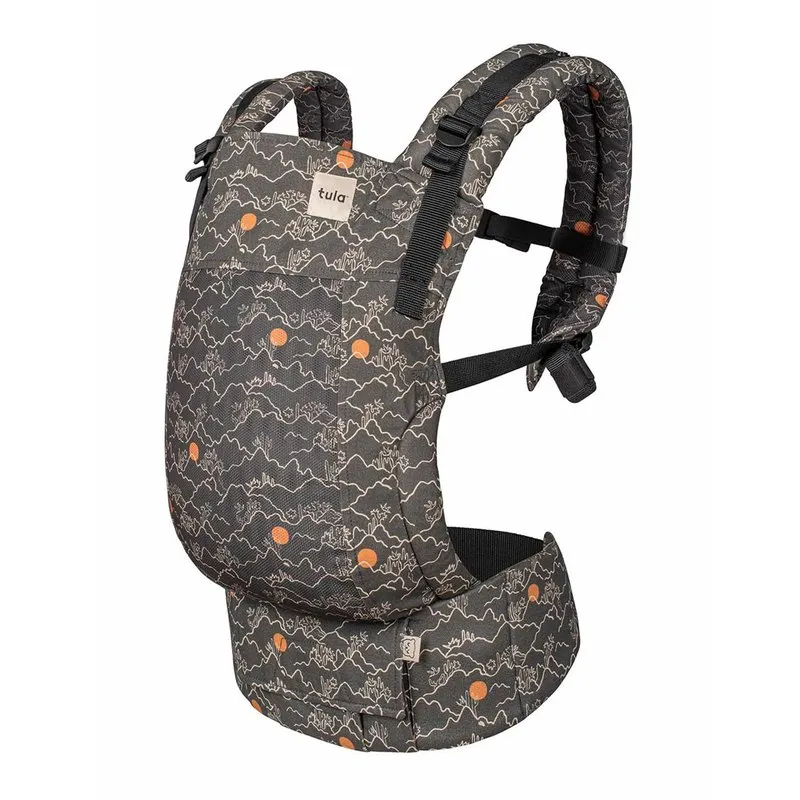
Tula Original Baby Carrier
The carrier formerly called the Tula Free-to-Grow. Tula sizes it from petite to 4XL and calls it newborn ready, for babies from 7 to 45 pounds, in two positions: facing in and on your back. Tula's waist belt extender adds 10 inches.
Pros
- Simple: two positions
- Wide padded waistband
- 10-inch extender available
Cons
- No facing-out or hip carry
Most positions: Ergobaby Omni Classic
Four positions (inward, outward, back and hip), from 7 to 45 pounds, with straps that cross for “parents with narrower or wider shoulders” and lumbar support. Ergobaby says a newborn should weigh at least 7 pounds and be 20 inches tall for the newborn carry. Ergobaby sells it in its own store; on Amazon, you’ll mostly find its Omni 360 and Omni Dream siblings.
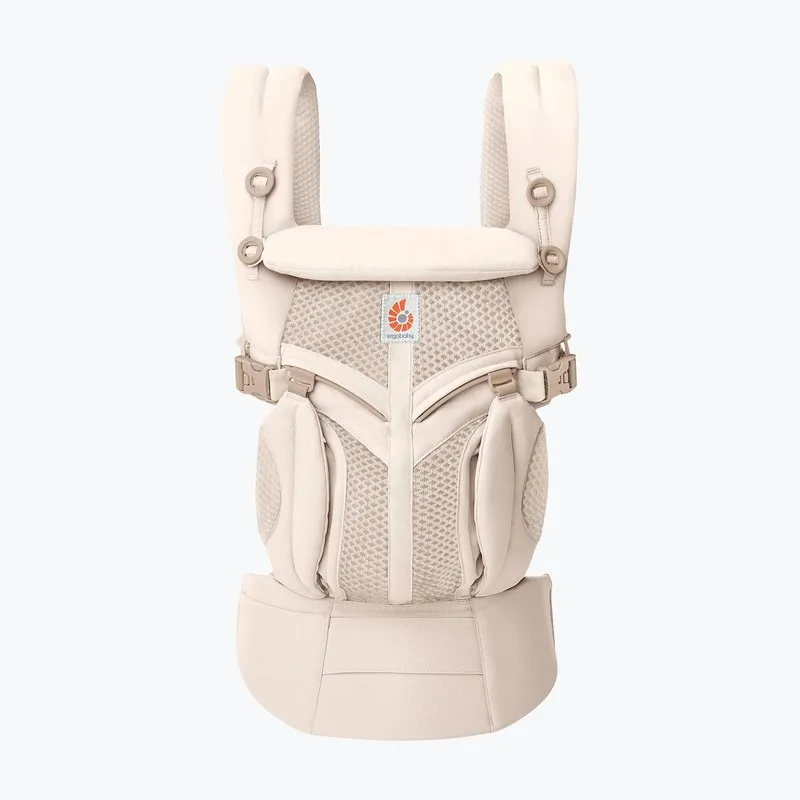
Ergobaby Omni Classic
Ergobaby's current four-position, newborn-ready carrier for babies from 7 to 45 pounds. Ergobaby sizes it from petite to 4XL and offers strap options for parents with narrower or wider shoulders; its waistbelt extender adds about 6 inches.
Pros
- Strap options for wide shoulders
- Newborn-ready, no infant insert
- Extender adds about 6 inches
Cons
- Ergobaby doesn't publish the waist range in inches
Best for newborn snuggles: Boba Classic Wrap
A stretchy wrap is the coziest carrier for the first months, and one size fits both parents. Boba says you tie it once and slip the baby in and out, that it fits from 7 pounds, and that it works best up to 20 pounds. The CPSC treats wraps like slings, so the sling safety rules below apply in full: face visible, chin up, extra care under 4 months.
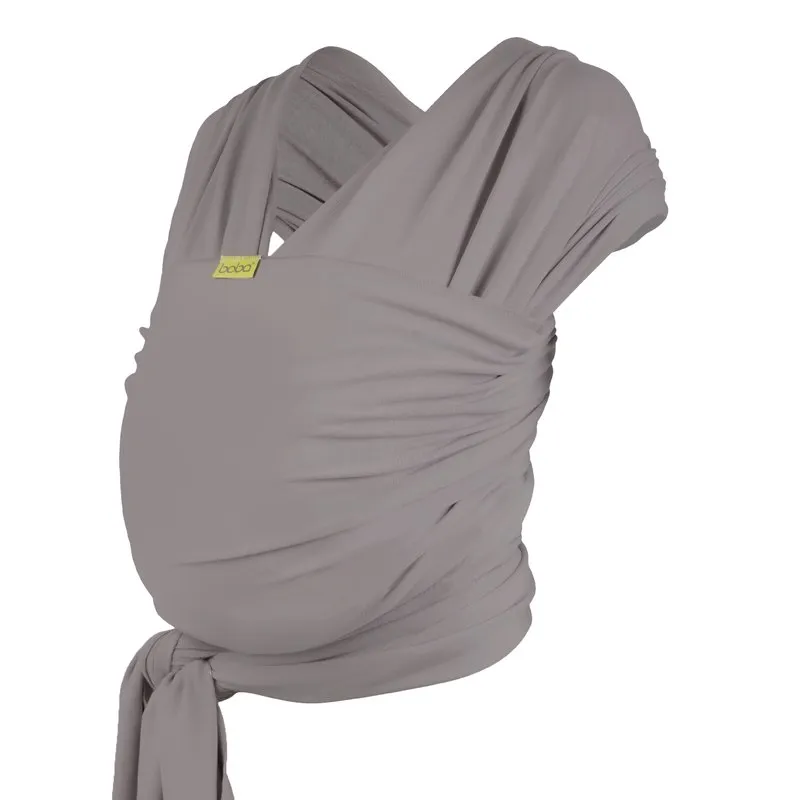
Boba Classic Baby Wrap
A one-size stretchy wrap, about 5.5 yards long, in a 95% cotton French terry with 5% spandex. Boba says it fits babies from 7 pounds and works best up to 20 pounds, that you tie it once and then slip the baby in and out, and that its wraps are certified hip healthy by the International Hip Dysplasia Institute.
Pros
- One size, so both parents can wear the same wrap
- Snug and soft for the newborn months
- Tie it once, then take the baby in and out
Cons
- Best for the first months: Boba says it works best up to 20 pounds
- Heavier cotton knit is warm in summer
- Takes a few practice runs to learn the wrap
Best hip seat: Tushbaby
Not a full carrier, but a padded seat on a belt that takes the baby’s weight off your arm for quick carries around the house. Tushbaby says to “Keep one arm around child at all times.” From birth it’s for feeding support only; Tushbaby lists face-to-face and side carries from 4 months and forward-facing from 6 months.
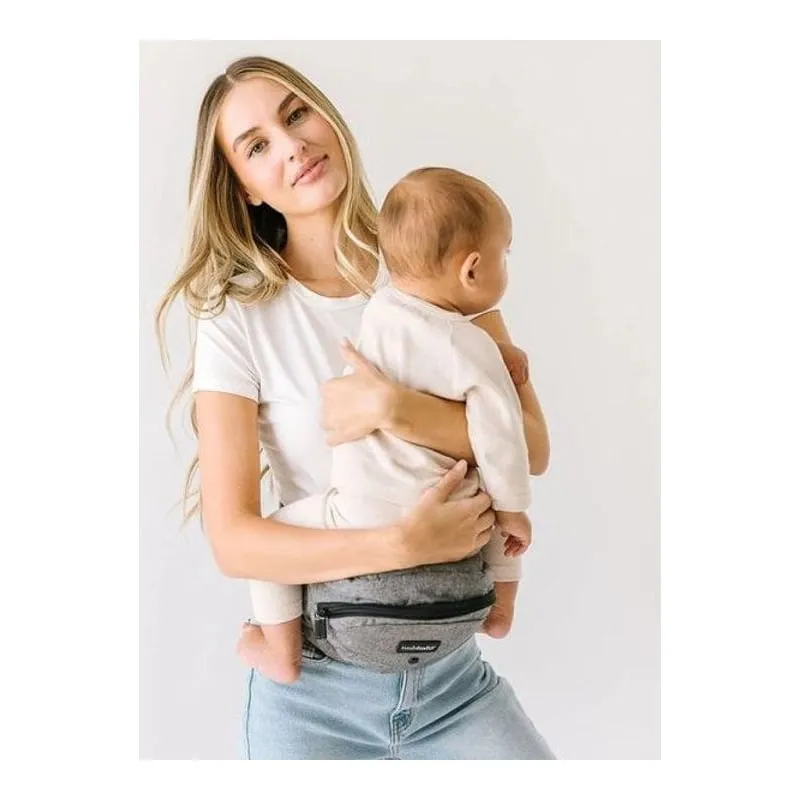
Tushbaby Hip Carrier
A hip seat that takes the baby's weight onto his hips instead of one tired arm, with up to five storage pockets, including a phone holder and a bottle holder. Tushbaby rates it from newborn to 36 months and up to 45 pounds, for waists from 23 to 44 inches, with an extender for bigger dads. From birth it is for feeding support only; the other carry positions start once the baby has head and neck control, around 4 months.
Pros
- Fits bigger waists with the extender
- Pockets mean no diaper bag for short trips
Cons
- A hip seat, not a full carrier: he still keeps one arm on the baby
Best for hiking: Osprey Poco LT
A framed backpack carrier for trail days once the baby is older. Osprey’s manual says not to use it with a child less than six months old, under 16 or over 40 pounds, or who “cannot sit upright unassisted.” That matches the CPSC, which says frame carriers are for children who sit up on their own and weigh 16 to 50 pounds. It has a built-in UPF 50 sunshade, weighs 5.56 pounds and folds flat. The AAP says a backpack frame should be padded and a sunshade “is also a good idea.”
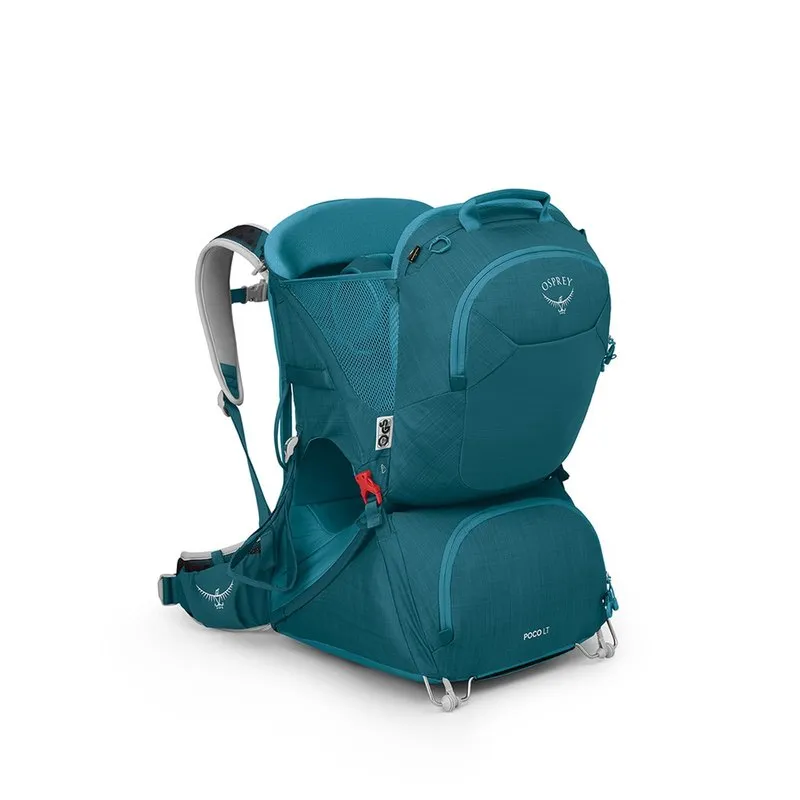
Osprey Poco LT Child Carrier
A framed hiking carrier with a built-in UPF 50 sunshade and 6 inches of torso adjustment, weighing 5.56 pounds. Osprey's manual says it's for children who can sit up unassisted, are at least six months old and weigh 16 to 40 pounds.
Pros
- Built-in sunshade
- Adjustable fit for different-size parents
- Sternum strap with a rescue whistle
Cons
- Only once your baby can sit up unassisted
- A big, pricey piece of gear for occasional hikers
If you’re buying a used hiking pack, check the model on the CPSC’s recall site first. In 2025, Deuter recalled Kid Comfort carriers sold from March 2023 through March 2025 because the kickstand hinges can crack. More trail ideas are in hobbies for dads with young kids.
Compare the carriers
| Carrier | Baby weight | Newborn without insert | Positions | Fabric |
|---|---|---|---|---|
| BabyBjörn Harmony | 7 to 40 lb | Yes | 4 | 3D mesh |
| LÍLLÉbaby Complete All Seasons | 7 to 45 lb | Yes (insert for fetal carry) | 6 | Zip-down mesh panel |
| Boba X | 7 to 45 lb | Yes | Front, back | Cotton twill |
| Tula Original | 7 to 45 lb | Yes | 2 | Mesh |
| Ergobaby Omni Classic | 7 to 45 lb | Yes | 4 | Mesh |
| Boba Classic Wrap | From 7 lb, best to 20 lb | Yes | Front | Cotton knit |
| Tushbaby | Up to 45 lb | Feeding support only | Hip seat | Padded seat |
| Osprey Poco LT | 16 to 40 lb | No (6 months and up) | Back | Framed pack |
Babywearing safety: the rules for every carrier
The AAP and CPSC give the same core rules:
- See the face. The AAP says “Make sure you can always see their face,” with the neck straight and the chin “not pressed into their chest.”
- Keep the airway clear. “Make sure that their mouth and nose are not blocked by fabric or your body,” the AAP says, and check on the baby often.
- Extra care under 4 months. The CPSC has warned about slings for babies younger than 4 months; it identified at least 14 deaths linked to sling carriers, 12 of them in babies that young. It says to make sure the face is “not covered and is visible at all times.”
- Premature babies: the AAP says babies born early or with breathing problems should not go in backpacks or other upright carriers. Ask your pediatrician.
- Bend at the knees. The AAP says bend at the knees, not the waist, “Otherwise, the baby may tip out of the carrier, and you may hurt your back.”
- Sleep belongs on a flat surface. If the baby falls asleep in the carrier, the AAP says to move them to a firm sleep surface on their back as soon as you can. See safe sleep for newborns.
- Check the gear. Look over buckles, straps and seams for wear, especially on hand-me-downs.
In winter, your coat over the carrier counts as one of the baby’s layers; see how to dress a baby for winter.
Dad’s job: do the face check every few minutes on a walk, and re-fit the straps every time the carrier changes hands.
FAQ
What is the best baby carrier for dads?
For most couples, the BabyBjörn Harmony: one size covers XS to XXL with a 21 to 63 inch waistband, it’s newborn-ready with no insert, and it has a cool mesh body. For hot climates, the LÍLLÉbaby Complete All Seasons; for hiking with an older baby, the Osprey Poco LT.
Can mom and dad use the same baby carrier?
Yes, if it adjusts to both of you. Look for one-size carriers with a wide waist range and quick-adjust straps, and readjust it to the new wearer before the baby goes in, as the CPSC advises. If you’re very different sizes, some makers suggest separate carriers.
When can a baby face out in a carrier?
It depends on the maker: BabyBjörn says around 5 months, and LÍLLÉbaby and Tushbaby say 6 months, with good head control. The International Hip Dysplasia Institute recommends facing in for the first six months. The Tula Original doesn’t face out at all.
Do baby carriers cause hip problems?
Not when the baby’s thighs are supported and the hips are in the M position, with the knees a little higher than the bottom. The International Hip Dysplasia Institute supports babywearing in that position and says short-term use of a narrow-based carrier is unlikely to affect hip development.
When can I use a hiking backpack carrier?
When the baby can sit upright on their own. The CPSC says frame carriers are for children who sit upright unassisted and weigh 16 to 50 pounds, and Osprey says the Poco LT is for babies at least six months old.
Can a baby sleep in a carrier?
They often fall asleep in one, and that’s fine while you watch them. The AAP says to move a sleeping baby to a firm sleep surface on their back as soon as you can.
Sources
- Baby Carriers and How to Keep Your Sleeping Baby Safe, American Academy of Pediatrics (HealthyChildren.org)
- Soft Infant and Toddler Carriers, Sling Carriers and Frame Child Carriers, Code of Federal Regulations; Infant slings warning, Deuter Kid Comfort recall, U.S. Consumer Product Safety Commission
- Baby Carriers and Other Equipment and Babywearing, International Hip Dysplasia Institute
- Product pages: Baby Carrier Harmony, BabyBjörn; Complete All Seasons, LÍLLÉbaby; Boba X and Classic Baby Wrap, Boba; Original Carrier, Tula; Omni Classic, Ergobaby; Hip Carrier, Tushbaby; Poco LT, Osprey