Best Infant Car Seat: What Actually Matters and What We'd Buy
The best infant car seat for first-time dads: what safest really means, the December 2026 side impact date, infant vs convertible, load legs, planes, the two-hour rule, and three seats we'd buy.
We choose everything we recommend independently. If you buy through our links, we may earn a commission. How we make money
Our quick picks
- MainstreamChicco KeyFit 35Check price
Rear-facing from 4 to 35 lb, the highest weight limit of our picks, with an anti-rebound bar.
- Stroller systemUPPAbaby Mesa V3Check price
Maker states it meets the new side impact standard, with a baseless install.
- Lightest carryNuna PIPA aire rxCheck price
6.2 lb without canopy and inserts, FAA certified with or without a base.
In this guide
- What “safest” and “crash tested” actually mean
- Side impact: the December 5, 2026 date
- Infant seat or convertible from birth?
- What actually matters when you buy
- Our picks
- Base, baseless and a second base
- Load legs and anti-rebound bars: what the evidence shows
- Flying with a car seat
- Preemies and small babies
- Car seats and sleep: the two-hour rule
- Expiry, used seats, recalls and add-ons
- FAQ
- Sources
You’ll need this before you can leave the hospital, and you’ll probably be the one installing it. Here’s the fact that makes shopping easier: “all car seats meet the same U.S. federal safety standards,” Safe Kids says. The AAP goes further: “The best seat is the one that fits your child’s size, is correctly installed, fits well in your vehicle, and is used properly every time you drive.” So our picks differ on carry weight, fit and install, not on a safety grade.
How we made this list: we read the makers’ pages and manuals and checked NHTSA and CPSC recall records by brand and model. We haven’t crash tested or installed these seats ourselves.
What “safest” and “crash tested” actually mean
Every seat sold in the US has to pass federal crash testing, so “crash tested” on a box tells you very little. That test is a baseline. “A higher price does not mean the seat is safer or easier to use,” the AAP says, and Safe Kids says cheaper seats meet the same standards but may have fewer comfort features.
NHTSA’s star ratings are about ease of use, not crash results. Some review sites run their own crash tests, and those can be useful, but they aren’t a federal grade.
Dad’s job: ignore the word “safest” on the box.
Side impact: the December 5, 2026 date
Federal rules are adding a side impact standard, FMVSS 213a, for seats made for children up to 40 pounds. NHTSA pushed the compliance date to December 5, 2026, and it applies to seats made on or after that date. Early compliance is optional, so a seat on the shelf today isn’t failing anything.
Claims like “Side Impact Protection” are the maker’s wording. UPPAbaby says the Mesa V3 meets 213a. If this matters to you, check the manufacture date on the label.
Infant seat or convertible from birth?
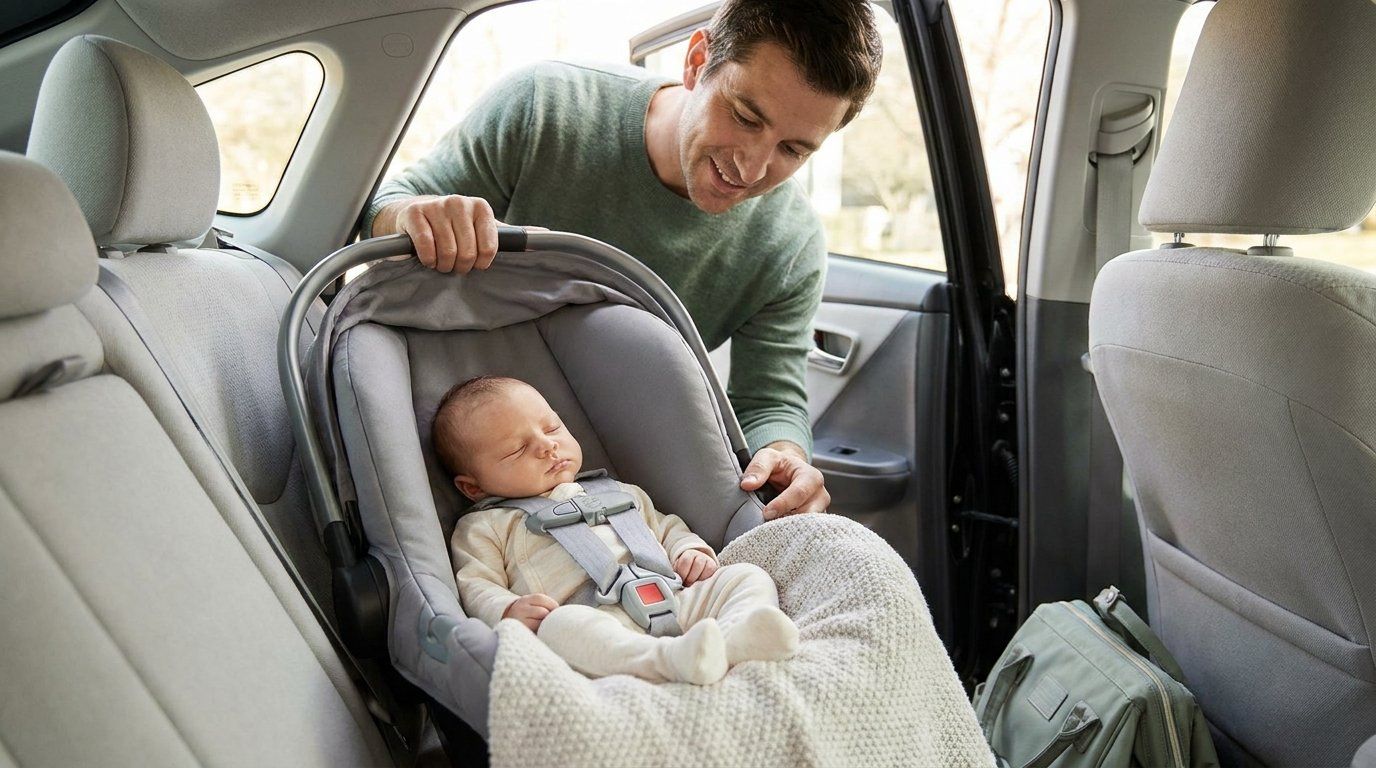
“All infants should ride rear-facing, starting with their first ride home from the hospital,” the AAP says, and stay rear-facing as long as possible, up to the seat’s limits.
| Infant seat | Convertible | |
|---|---|---|
| Carry it | Yes, it has a handle | No, it stays in the car |
| Base | Clicks in and out of a base | No separate base |
| Rear-facing limit | About 22 to 35 pounds | Up to 40 to 50 pounds, often |
| Very small babies | Usually fit better, the AAP says | Check the weight and fit |
A carrier makes getting in and out of the car easier, but the AAP says it’s for travel only. Once your baby outgrows it, you’ll need a convertible installed rear-facing anyway. We haven’t covered convertibles here.
What actually matters when you buy
- It’s approved for your baby’s weight. All three picks start at 4 pounds.
- It fits your car. Test fit it before the return window closes.
- You can carry it. The carrier gets heavier fast once there’s a baby in it.
- You’ll install it right. Safe Kids says to pick and practice around the fourth or fifth month of pregnancy, and a certified technician can check your work.
Dad’s job: test fit it in the car you’ll actually drive home. Our install guide walks through it, and it belongs on your registry checklist.
Our picks
We checked NHTSA recall campaigns and the CPSC database by brand and model in November 2026, and found no recall naming these three seats. Before you buy, run your exact model on NHTSA’s recall page, since we could only reach its data through a campaign-by-campaign search. Models with recent recalls that we skipped include the Britax B-Safe Gen 2 family and the Graco SnugRide Turn & Slide.
Mainstream: Chicco KeyFit 35
Rear-facing from 4 to 35 pounds and up to 32 inches, with a built-in anti-rebound bar. The carrier weighs 10 pounds and the base 8.5. Its manual says it’s certified for aircraft and says “DO NOT use this Child Restraint if it is more than 6 years old.” A 2008 recall covered older KeyFit and KeyFit 30 bases, not the KeyFit 35.
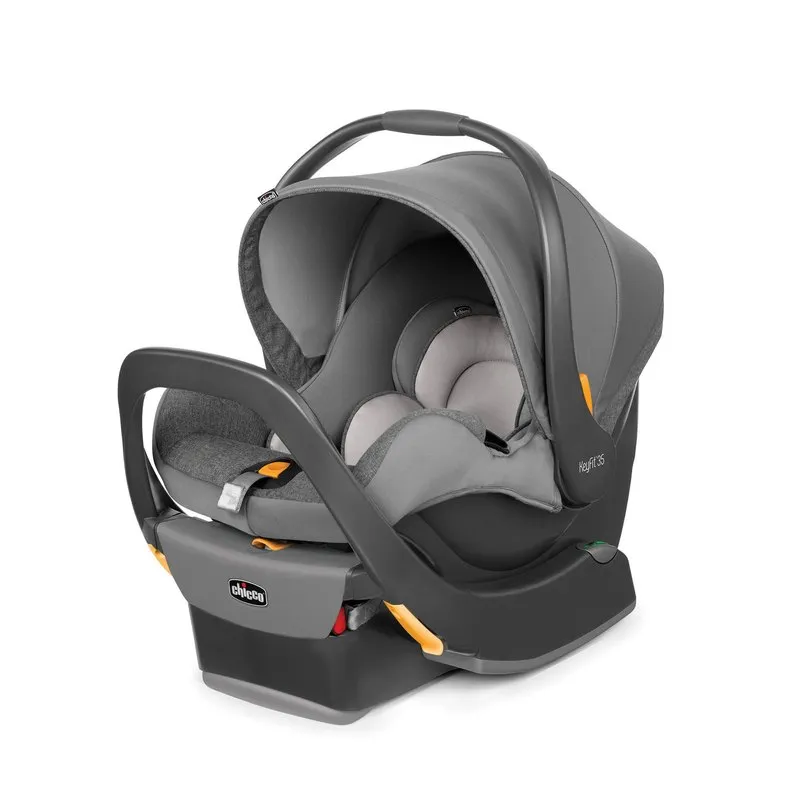
Chicco KeyFit 35 Infant Car Seat
A rear-facing-only infant car seat for babies from 4 to 35 pounds and up to 32 inches, with a newborn positioner and a built-in anti-rebound bar. The carrier weighs 10 pounds.
Pros
- Rear-facing from 4 pounds, so it fits the ride home
- Built-in anti-rebound bar
- Clicks into Chicco strollers
Cons
- For the car only: the AAP says not to let babies sleep in it outside the vehicle
An extra base helps if you have two cars. The AAP notes you can buy more than one.
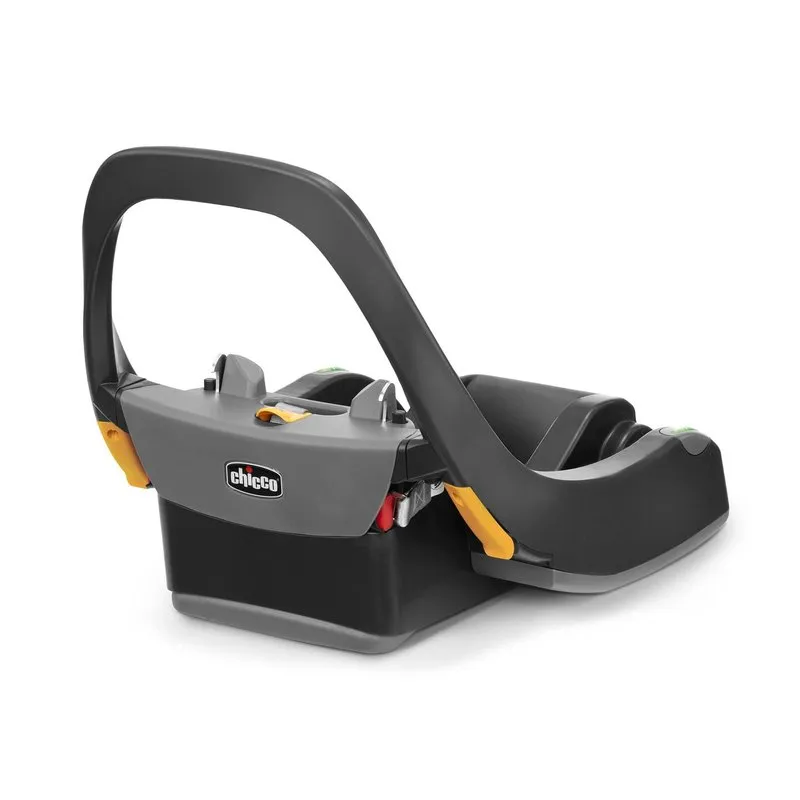
Chicco KeyFit 35 Base
An extra stay-in-car base for a second car, so the KeyFit carrier clicks in without a new install each time. Chicco says it accepts the KeyFit, KeyFit 30 and KeyFit 35 infant car seats, with a spring-loaded leveling foot and steel-reinforced lock-offs for seat belt installs.
Pros
- Same base as the one in the box, so the carrier clicks into either car
- Leveling foot and bubble levels for the angle
- Lock-offs hold the seat belt for you
Cons
- Not compatible with KeyFit Max carriers
- Still needs a full install and the 1-inch test in the second car
Stroller system: UPPAbaby Mesa V3
From birth, 4 to 30 pounds and up to 32 inches. The seat is 9.9 pounds and the base is 9. UPPAbaby says it’s FAA certified and “Meets FMVSS 213a and 213b standards,” and it installs without the base using European belt routing. The manual says to stop using it after 7 years.
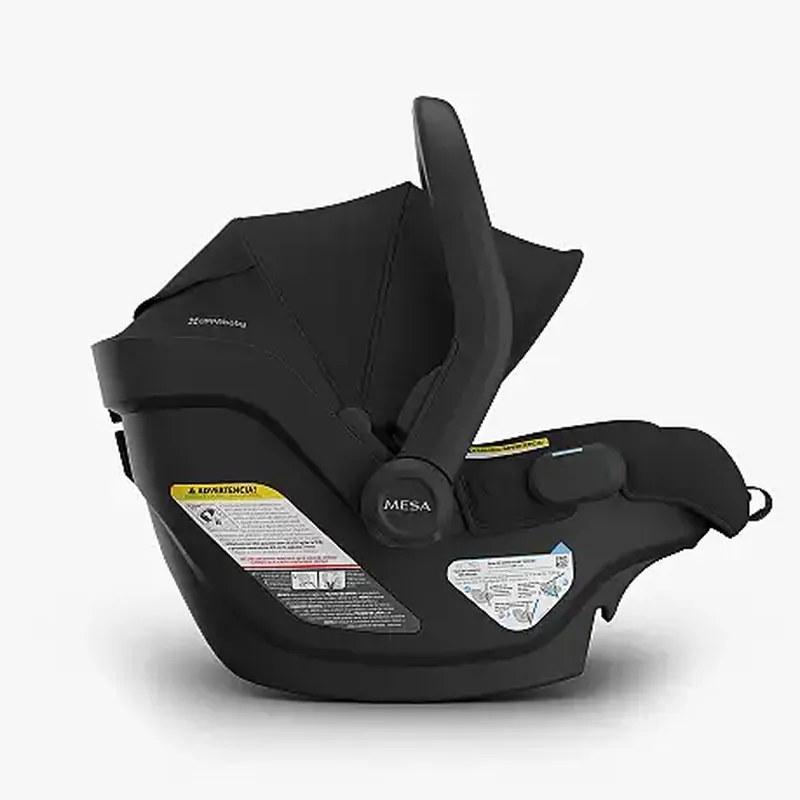
UPPAbaby Mesa V3 Infant Car Seat
A rear-facing-only infant seat from birth, 4 to 30 pounds and up to 32 inches, UPPAbaby says. The seat weighs 9.9 pounds and the base 9. UPPAbaby states it meets FMVSS 213a and 213b and is FAA certified, and the manual says to stop using it 7 years after manufacture.
Pros
- Maker states it meets the new side impact standard
- Baseless install with European belt routing
- 7-year life, per the manual
Cons
- Lower weight limit than the KeyFit 35
- No load leg
Lightest carry: Nuna PIPA aire rx
4 to 30 pounds and 16 to 30 inches, which is the shortest height limit of the three. Nuna says it’s 6.2 pounds without the canopy and inserts, and FAA certified with or without a base. The base has a steel stability leg. Expiry is printed on the label under the base. Some listings are third-party, so check who’s selling it.
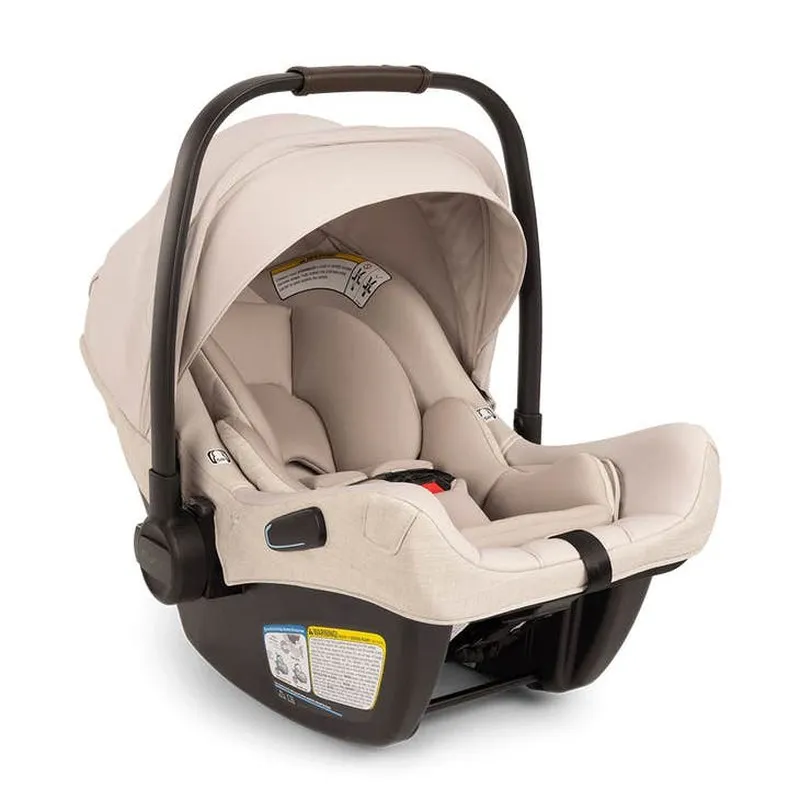
Nuna PIPA aire rx Infant Car Seat
A light rear-facing-only infant seat for 4 to 30 pounds and 16 to 30 inches. Nuna says it weighs 6.2 pounds without canopy and inserts, is FAA certified with or without a base, and comes with a steel stability leg on the base.
Pros
- Lightest carry of our picks
- Stability leg on the base, per Nuna
- Installs without a base for taxis and planes
Cons
- 30-inch height limit is the shortest of our picks
- Check availability, since some listings are third-party
For strollers that fit taller dads, see best strollers for tall dads.
Base, baseless and a second base
A base stays buckled in your car, and the seat clicks in. That’s the point of an infant seat. A baseless install uses the seat belt, which is what you need for taxis, rental cars and planes, if your seat allows it.
Dad’s job: practice a baseless install once in your driveway, before the first time you need it at an airport.
Load legs and anti-rebound bars: what the evidence shows
The AAP says “Load legs reduce forward rotation in the initial phase of a crash, and anti-rebound bars protect the child during the second phase of a crash from rearward rotation.” It describes them without saying you need them.
The evidence on load legs is sled tests with dummies. A 2026 study of six infant seats found large drops in test head injury numbers with a load leg, though the authors disclosed ties to Britax and on some models the leg collapsed in testing, including one Nuna Pipa. Children’s Hospital of Philadelphia researchers also found benefits in angled crash tests. We found no real-world injury data, and no study giving a benefit size for anti-rebound bars.
Dad’s job: treat these as tie-breakers. A correct install matters more.
Flying with a car seat
The FAA and AAP recommend that children under 40 pounds be fastened in certified child restraints when flying. Look for the label: “This restraint is certified for use in motor vehicles and aircraft.” Not all seats are. The FAA says buying your child a ticket is the only way to guarantee you can use one. A rear-facing seat goes by the window.
Preemies and small babies
Babies need a seat approved for their weight. “Babies born preterm should be screened while still in the hospital to make sure they can sit safely in a semi-reclined position,” the AAP says. A 2026 analysis questioned how much routine screening helps, but that’s a study, so follow your NICU’s plan.
Car seats and sleep: the two-hour rule
You’ll read that a baby can’t be in a car seat for more than 2 hours. Blogs and retailers credit this to the AAP or to pediatricians. We couldn’t find it in AAP policy, and we couldn’t check NHTSA’s site.
Here’s what the AAP does say: “Try to take a break every 2 to 3 hours for a day trip.” “While on the move, babies can sleep in a properly installed car seat in the car.” But car seats “should not be considered a safe place to sleep for the baby outside of the car.” If your baby falls asleep in one, the AAP says to move them to a firm sleep surface on their back as soon as possible. See safe sleep for newborns.
Expiry, used seats, recalls and add-ons
- Expiry: usually 6 to 10 years, Safe Kids says. Check the label and manual.
- Used seats: “Avoid used car seats if you don’t know the seat’s history,” the AAP says. A seat that’s been in a crash or is missing parts, labels or instructions is unsafe, Safe Kids says.
- Register it. The registration card can only be used to tell you about a recall.
- No bulky coats. See how to dress a baby for winter.
- No add-ons that didn’t come with the seat. The AAP says they aren’t covered by any federal safety standards.
FAQ
What is the safest infant car seat?
The AAP says no one seat is best or safest. All US seats meet the same federal standard. The right one fits your baby and car and gets installed correctly every time.
Does a more expensive car seat keep my baby safer?
The AAP says a higher price doesn’t mean safer or easier to use.
Do I need an infant seat, or can I use a convertible from birth?
Either can work if it fits your baby. Infant seats carry and click into a base, and convertibles stay in the car. Very small babies usually fit better in infant seats.
Is the two-hour car seat rule real?
It isn’t AAP policy that we could find. The AAP suggests a break every 2 to 3 hours on a day trip and says seats aren’t a safe place to sleep outside the car.
Are load legs worth it?
Sled tests with dummies show lower injury numbers. That’s test data, and the AAP describes the feature without saying you need it.
Can I use an infant car seat on a plane?
Yes, if the label says it’s certified for motor vehicles and aircraft. The FAA says a ticket is the only guarantee you can use it.
How long do infant car seats last?
Usually 6 to 10 years, Safe Kids says. The KeyFit 35 says 6 and the Mesa V3 says 7. Check your label.
Sources
- American Academy of Pediatrics (HealthyChildren.org): Car safety seats: information for families, 2026 product listing, How long to ride rear-facing, Hours in a car seat, Use carriers in the car, Flying with baby, Safe sleep
- Federal: 49 CFR 571.213, 571.213a, 571.213b, 2026 NHTSA final rule; FAA on flying with children; NHTSA recall records: 08C007000, 26C003000, 26C006000
- Safe Kids Worldwide: Buying a seat, FAQs, Installing, Find a technician; Safe Ride News recall list
- Studies: Load legs in infant seats, Frontiers 2026, CHOP sled tests, King et al. 2026
- Product pages: Chicco KeyFit 35 and manual, UPPAbaby Mesa V3 and manual, Nuna PIPA aire rx and manual