Best Bassinet for Newborns: What's Safe, What's Hype, and What We'd Buy
The best bassinet for a newborn, picked for dads: what makes one safe, standalone vs bedside vs play yard, what smart bassinets really do, when to stop using it, and which models we'd buy.
We choose everything we recommend independently. If you buy through our links, we may earn a commission. How we make money
Our quick picks
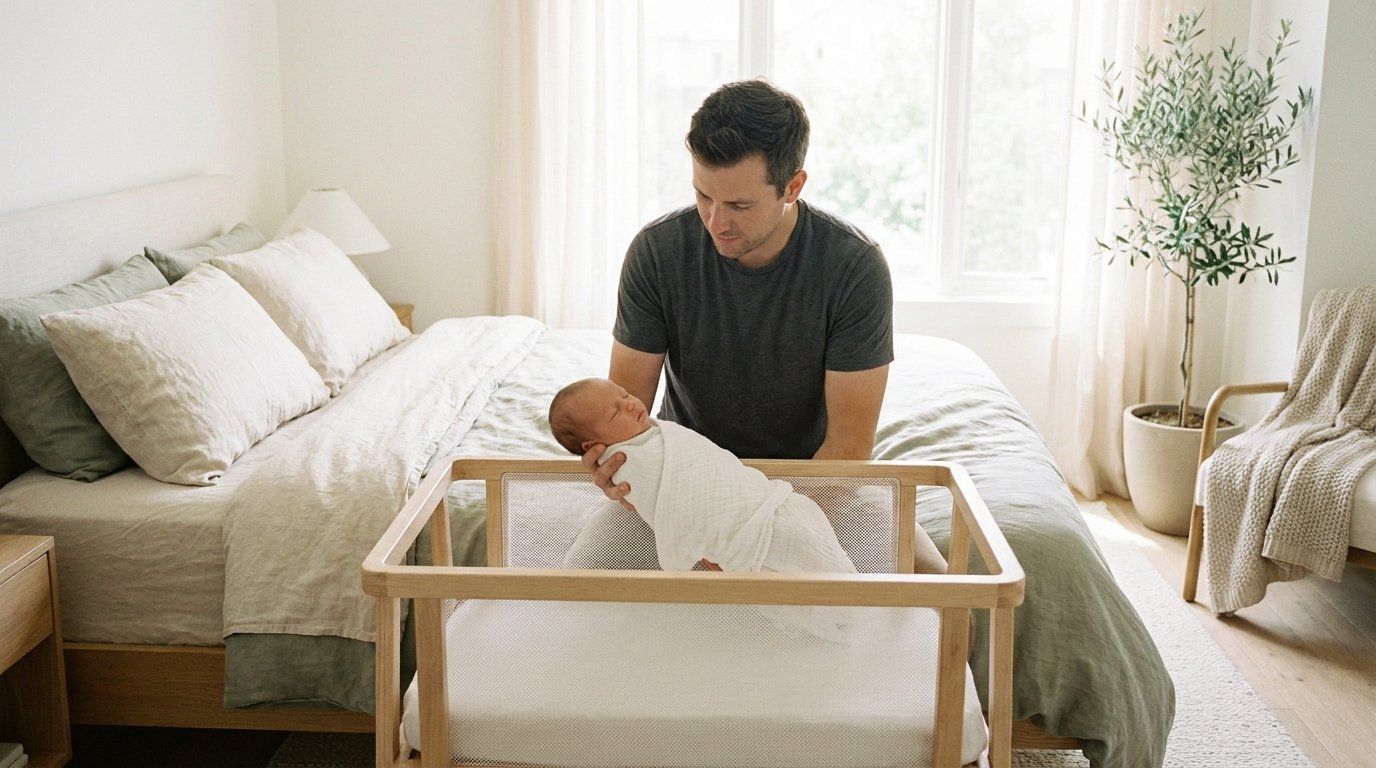
- Beside the bedHALO BassiNest EssentialCheck price
Stands next to your bed, with mesh walls and a fitted sheet included.
- Bedside sleeperChicco Close to YouCheck price
Sits against your bed, with a firm, flat mattress, up to 20 lb.
- Lasts the longestChicco Lullaby ZipCheck price
Bassinet level to 15 lb, then a play yard to 30 lb.
In this guide
Your job here is simple: pick where your baby will sleep before your baby arrives, and know when that spot stops being safe. The best bassinet isn’t the softest or the smartest. It’s the one that meets the federal standard, fits your room, and gets used with nothing in it but a fitted sheet.
How we made this list: we read the makers’ pages and manuals and checked each model against the CPSC recall database. We haven’t tested them ourselves.
A note before you start: this is general guidance, not medical advice. If your baby was born early or has a health condition, ask your pediatrician about the sleep setup.
No bassinet on this list claims to prevent SIDS. “There are currently no products that can prevent SIDS because there is no known way to prevent SIDS,” the NIH says.
What makes a bassinet safe
Three checks, in the store or on the listing:
- A federal standard. Every bassinet and cradle sold in the US has to meet a mandatory CPSC standard, updated in February 2026. Bedside sleepers and play yards have their own standards.
- Firm, flat, bare. The AAP says “A firm surface means that it shouldn’t indent when your baby is lying on it,” and “Any surface that inclines more than 10 degrees isn’t safe for your baby to sleep on.” The CPSC’s rule: “nothing but a fitted sheet in a crib, bassinet or play yard.”
- A printed stop-use limit. You should be able to find the weight and milestone limit before you buy.
Dad’s job: read the stop-use line on the label before the box comes home. For the full rules, see safe sleep for newborns.
Standalone, bedside sleeper or play yard bassinet
| Type | How it works | Watch out for |
|---|---|---|
| Standalone | Sits beside the bed and moves between rooms | Check it lines up with your bed height if you want easy reach |
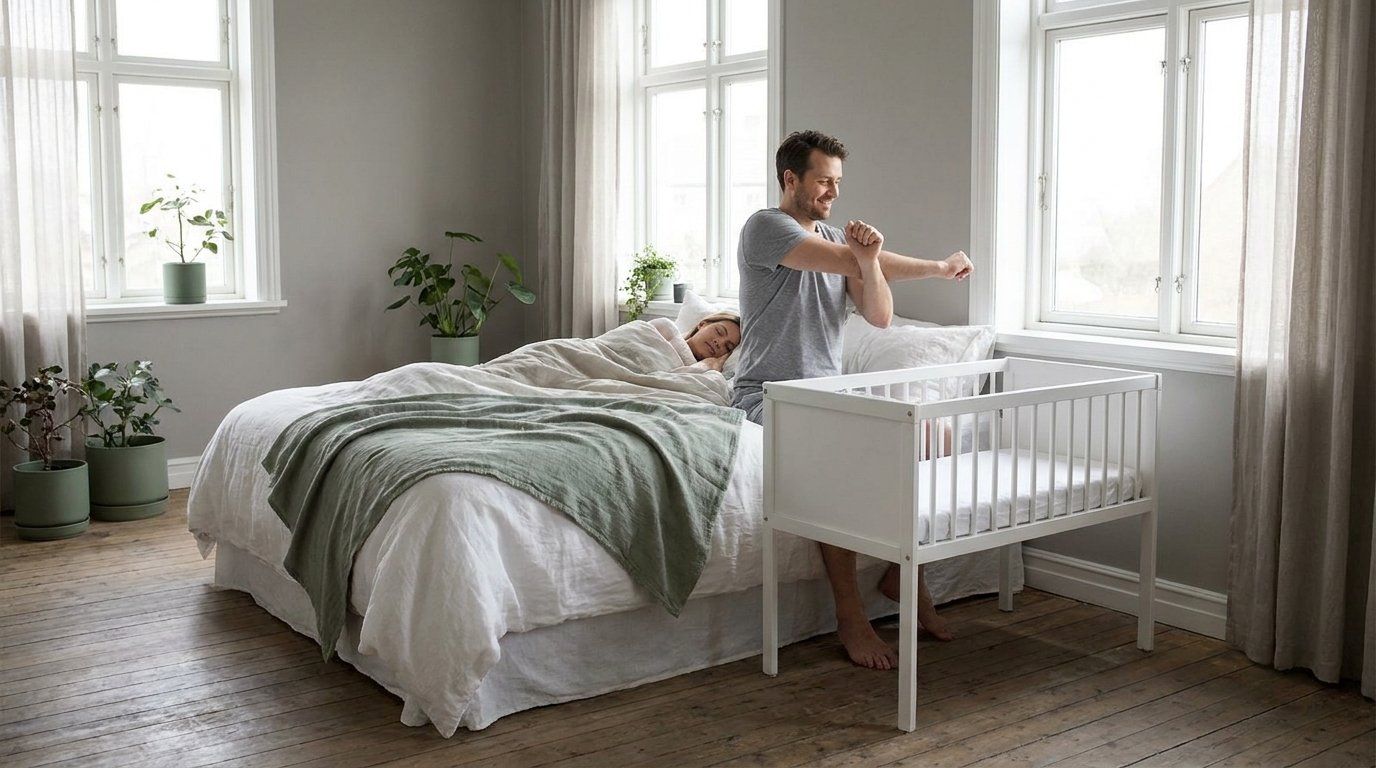
| Bedside sleeper | Attaches to your bed | The attachment has to be right. In 2026 the CPSC announced a recall of about 110,400 AirClub bassinets because of a gap to the adult bed |
| Play yard with bassinet | A raised bassinet level in a play yard | Often a lower weight limit, but the play yard keeps working after |
“Co-sleeper” is just a product name. The AAP lists a co-sleeper as a safe option, and separately says to avoid bed sharing “under any circumstances.”
Dad’s job: measure your bed height, then install and test the bedside straps yourself.
The gap nobody plans for
The federal rule describes bassinets as not intended for use “beyond the age of approximately five months or when a child is able to push up on his hands and knees.” The AAP says to room share “for at least the first 6 months of life,” which it says can cut SIDS risk by as much as 50%.
So there’s a gap. Plan for a crib or play yard in your room when the bassinet ends. Older CPSC data shows why the limit matters: from 2012 to 2013, 55% of infants injured in bassinet falls were past the 5-month limit.
For the move itself, see how to get your baby to sleep in a bassinet. The 4-month sleep regression can land right around then.
Smart bassinets: what you’re actually paying for
The big name is the Happiest Baby SNOO, and it’s worth being precise about it.
- What the FDA authorized: the SNOO bassinet used together with the SNOO sack, to keep babies on their backs, from birth to 6 months for babies not yet rolling consistently.
- What it didn’t: “the device is not intended to prevent or reduce the risk of SIDS/SUID,” the FDA says. Federal rules require a prominent warning saying so.
- What the FDA’s review listed as the most common risks: flat head and reflux.
- 2026 problems: a June 15, 2026 FDA warning letter cited the SNOO over unreviewed changes, including extra-small and extra-large sacks. The FDA then listed Class 2 recalls on those sack sizes and on four refurbished units.
Those recalls are narrow, and they don’t name new bassinets used with the small, medium and large sacks. But our rule is no picks with a recall, and the warning letter is broader, so we left it off this list. If you’re considering one, read the FDA letter first.
The AAP’s general warning applies to anything sold as a SIDS fix: “There’s just no evidence that this is true.” For sound at bedtime, a white noise machine is the cheap version.
The mattress it came with is the only one
“Mattresses sold separately from cribs, bassinets and play yards are usually not tight enough to keep infants from suffocating or getting trapped,” the AAP says. The 2025 federal update brought aftermarket bassinet mattresses under the standard because they can pose entrapment and suffocation hazards.
“Do not use supplemental padding in a play yard and never stack mattresses,” the CPSC says. Even if the pad feels thin and hard to you, leave it. Firm is the point.
Used bassinets, and why “sold on Amazon” proves nothing
Recent CPSC recalls and warnings have hit AirClub, Papablic, Tuyedoqe and ZHORANGE, all sold on Amazon, for falls, entrapment or strangulation. The AAP says many mini-bassinets “do not meet infant sleep safety standards, even though they may seem convenient or safe.” Compact and travel bassinets have to meet the federal bassinet rule too.
Going used? The AAP says to check the CPSC website for recalls, and to skip anything without instructions, with missing hardware or that’s broken. It also warns that banned items “can still be found in resale shops.” Older Graco play yards, for example, came with an inclined sleeper accessory that was later recalled.
Dad’s job: look up the exact model on CPSC.gov and SaferProducts.gov. For a SNOO, check the FDA’s recall database too.
When to stop using it
Whichever comes first:
- The maker’s weight limit.
- Your baby can push up on hands and knees.
- About 5 months, per the federal rule’s description.
Our bassinet guide covers the next step.
Our picks
All passed a CPSC recall check by brand and model in November 2026. Three of the four are from Chicco because several other makers’ sites blocked us from checking specs, and we don’t list what we can’t check.
Beside the bed: HALO BassiNest Essential
A standalone sleeper that stands next to your bed, with mesh walls. HALO says it complies with the federal bassinet standard and says to move your baby at 20 pounds or 5 months, whichever comes first, or once they push up on hands and knees.
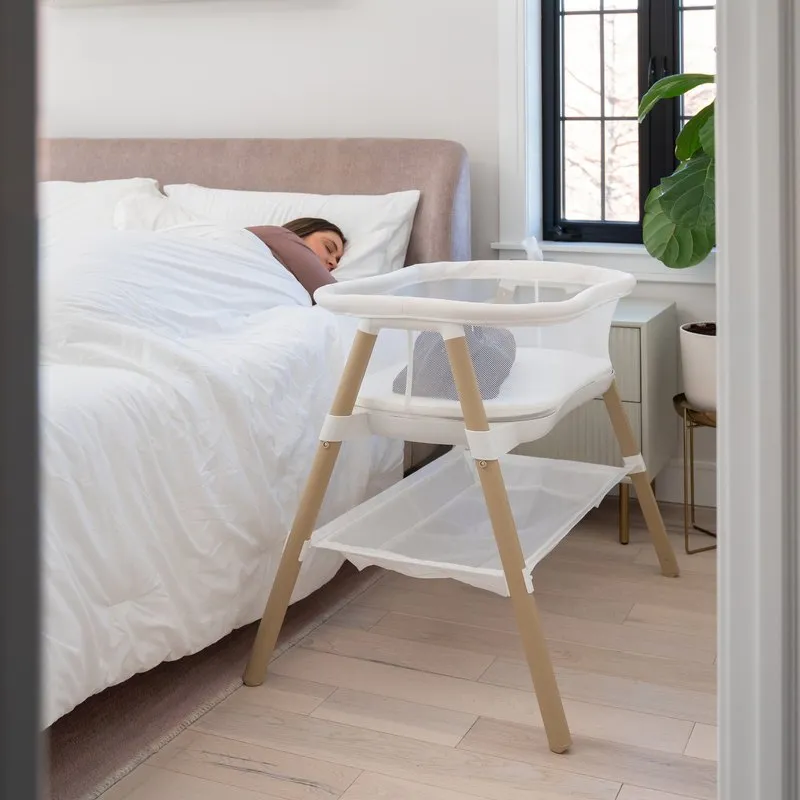
HALO BassiNest Essential Sleeper
A bassinet that stands next to your bed, so the baby sleeps in your room on their own surface, with breathable mesh walls and a fitted sheet included. HALO says every US BassiNest complies with the federal bassinet standard (16 CFR part 1218), and to move the baby to a crib at 20 pounds or 5 months, whichever comes first, or once they push up on hands and knees.
Pros
- Meets the federal bassinet standard, per HALO
- Makes room sharing easy for night feeds
- Fits beside most beds
Cons
- Outgrown at 20 pounds, 5 months, or once the baby pushes up on hands and knees
- Not height adjustable, so check it lines up with your bed
Bedside sleeper: Chicco Close to You
Chicco says it’s “designed for infants up to 20 lbs. or until infant begins to push up on hands and knees, whichever comes first,” with “A firm, flat mattress.” It also works as a changing table. Vibration and melodies aren’t a reason to buy it.
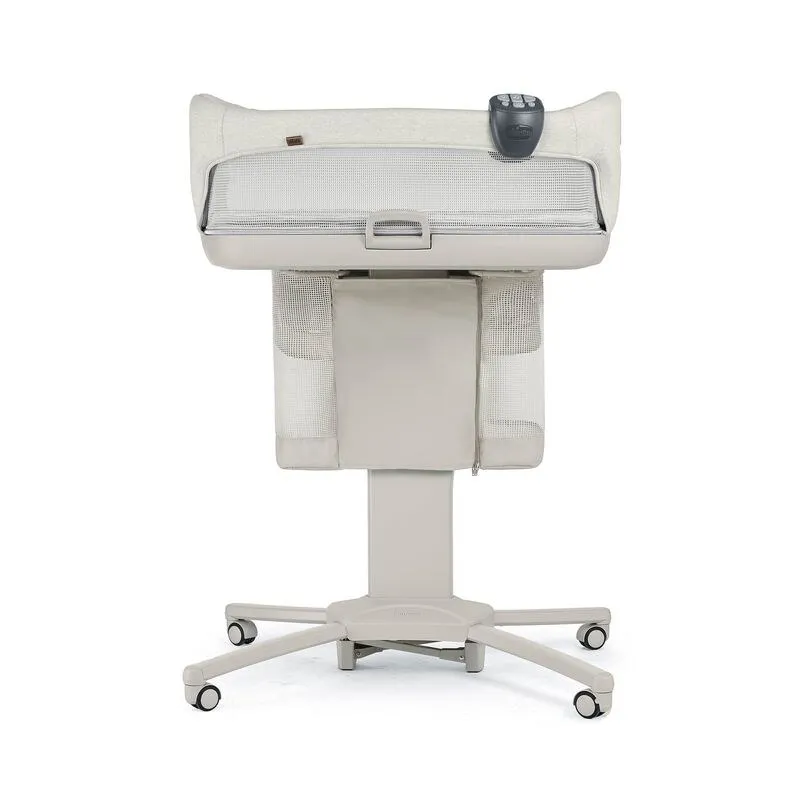
Chicco Close to You 3-in-1 Bedside Bassinet
A bedside sleeper and bassinet with a firm, flat mattress. Chicco says it's for infants up to 20 pounds or until they begin to push up on hands and knees, whichever comes first. It also works as a changing table.
Pros
- Sits right against your bed for night feeds
- Firm, flat mattress, Chicco says
- Higher weight limit than a play yard bassinet
Cons
- The bed attachment has to be installed exactly as the manual says
- Motion and melodies aren't proven to help sleep
Lasts the longest: Chicco Lullaby Zip
A bassinet level up to 15 pounds or push-up, then a play yard up to 30 pounds, 35 inches or climbing out. That covers the gap after the bassinet stage. The manual says “Use ONLY the mattress provided by Chicco.”
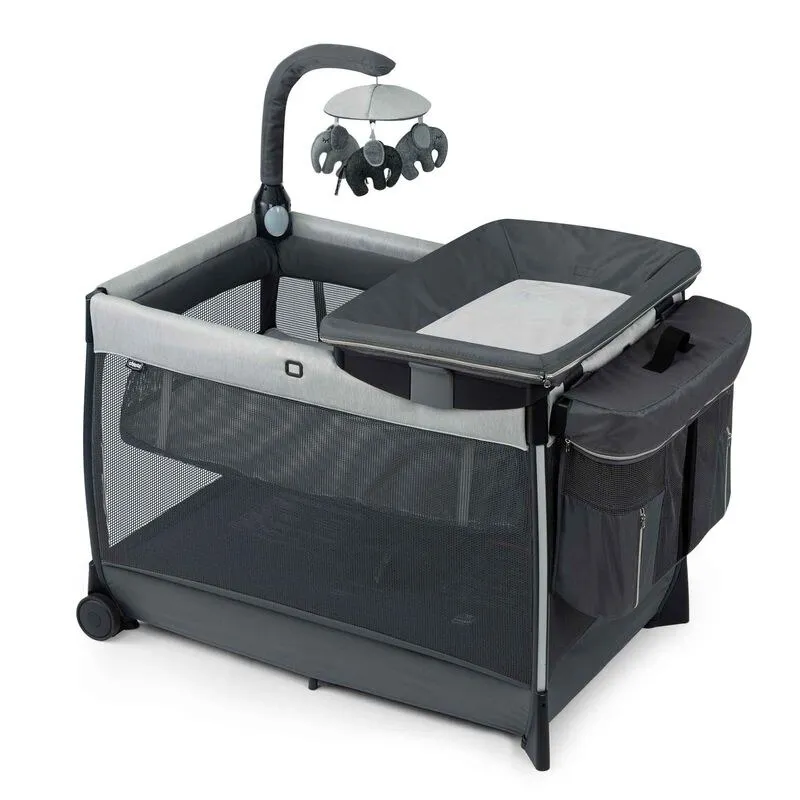
Chicco Lullaby Zip All-in-One Portable Playard
A play yard with a zip-in bassinet level. Chicco's limits are up to 15 pounds or push-up on hands and knees for the bassinet, and up to 30 pounds, 35 inches or climbing out for the play yard. It keeps working after the bassinet stage ends.
Pros
- Still useful after the bassinet stage
- Covers the gap until room sharing ends
- Folds for travel
Cons
- Bassinet limit is lower, at 15 pounds
- Use only Chicco's mattress, per the manual
Portable: Chicco LullaGo Anywhere SE
A 12-pound standalone bassinet with “a firm, flat sleep surface and mesh side panels,” for infants up to 20 pounds or until they push up on hands and knees.
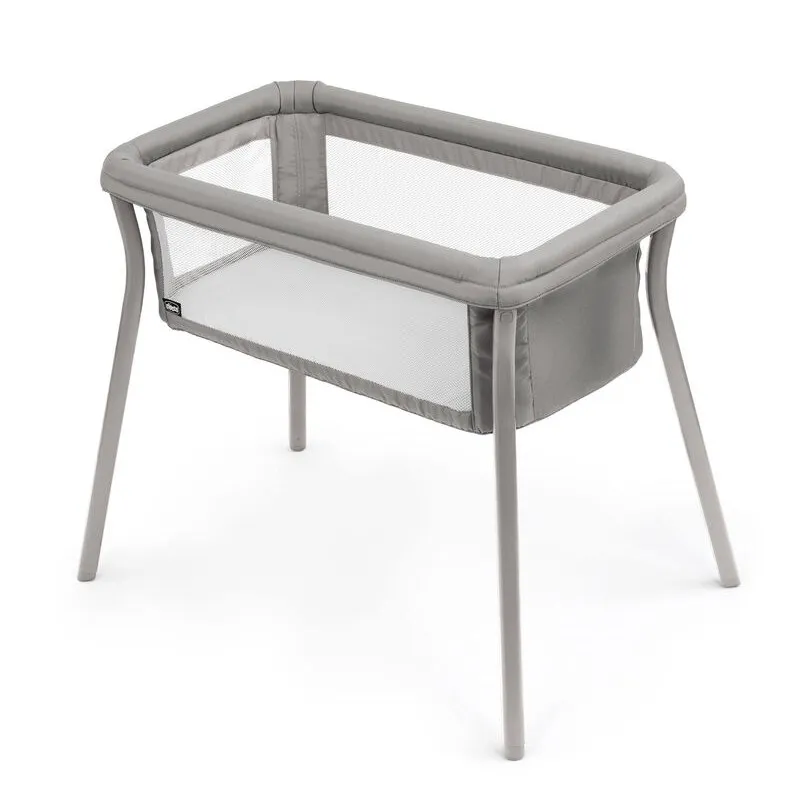
Chicco LullaGo Anywhere SE
A standalone portable bassinet that weighs 12 pounds, with a firm, flat sleep surface and mesh side panels, Chicco says. It's for infants up to 20 pounds or until they begin to push up on hands and knees, whichever comes first.
Pros
- 12 pounds, so it moves from room to room
- Mesh sides
- Simple, with nothing to plug in
Cons
- Doesn't attach to your bed
- Outgrown in a few months
For the rest of the list, see the baby registry checklist.
FAQ
How long can a baby sleep in a bassinet?
Until about 5 months, push-up on hands and knees, or the maker’s weight limit, whichever comes first.
Is a bedside sleeper safe?
If it meets the federal bedside sleeper standard and is attached as the maker says. The hazard is a gap to the adult bed.
Is a co-sleeper the same as bed sharing?
No. The AAP lists a co-sleeper as a safe sleep product and says to avoid bed sharing under any circumstances.
Can I buy a different mattress for the bassinet?
Use the one it came with. Federal rules now cover aftermarket bassinet mattresses because of entrapment and suffocation hazards.
Does the SNOO prevent SIDS?
No. The FDA says it isn’t intended to prevent or reduce SIDS, and it requires a warning saying so.
Is a used bassinet OK?
Only with the exact model checked for recalls, all the hardware and instructions, and its own mattress.
Can my baby sleep in the play yard after the bassinet?
Yes. A play yard that meets the standard is a safe sleep space. Use its own mattress and nothing else.
Sources
- CPSC: Bassinets and cradles, Bedside sleepers, Infant sleep products, Safe sleep; rules: 16 CFR 1218, 16 CFR 1222, 16 CFR 1221, 16 CFR 1310, 2013 rule, 2025 update
- Recalls and warnings: AirClub, Papablic, Tuyedoqe, Hiccapop mattresses, Graco accessory
- American Academy of Pediatrics (HealthyChildren.org): Safe sleep and Registry items to avoid; NIH Safe to Sleep: FAQ and Reduce the risk
- FDA on the SNOO: De Novo order, De Novo summary, FDA roundup, March 2023, 21 CFR 880.5690, 2026 warning letter, recalls Z-3175-2026 and Z-2882-2026
- Product pages: HALO BassiNest Essential, Chicco Close to You, Chicco Lullaby Zip and manual, Chicco LullaGo Anywhere SE