Christmas With a Newborn: A Dad's Guide to the First One
How to do Christmas with a newborn: the fever rule, visitors and vaccines, car seats and winter coats, flying, where the baby sleeps at Grandma's and the holiday hazards that matter.
We choose everything we recommend independently. If you buy through our links, we may earn a commission. How we make money
In this guide
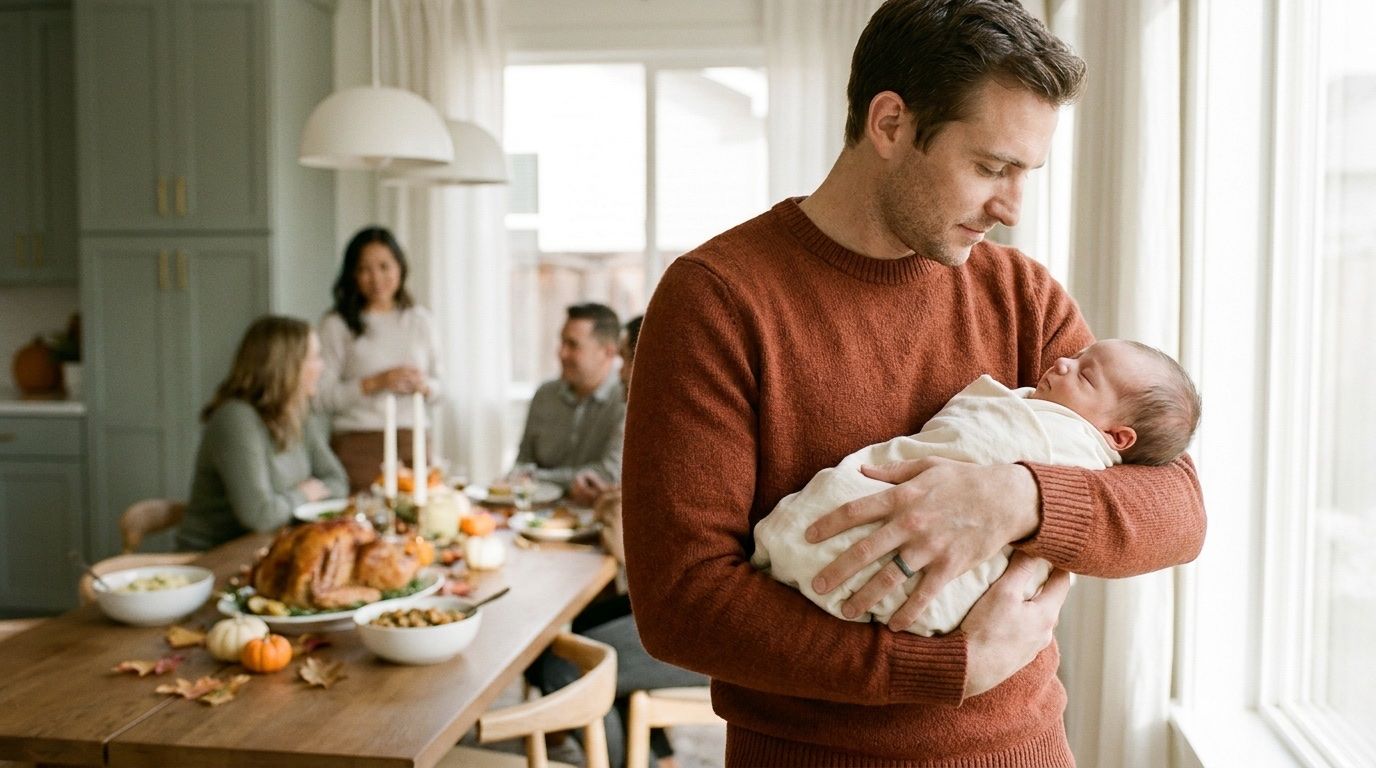
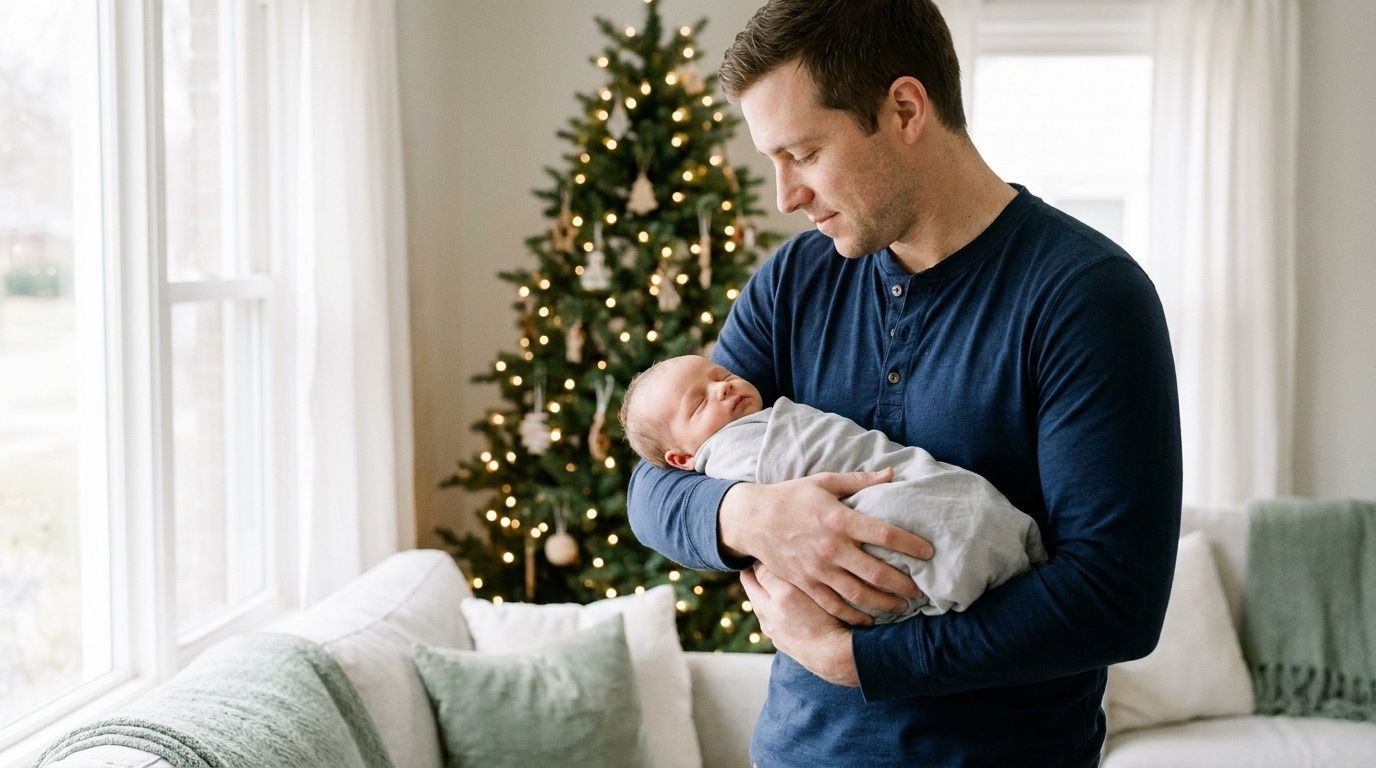
Christmas with a newborn lands in the middle of cold and flu season, with a baby too young for most vaccines, a partner still recovering from the birth, and relatives who all want a turn holding the baby. Your jobs as dad are simple to name: keep the germs out, keep the baby sleeping safely wherever you are, get everyone there and back, and protect your partner’s rest. This guide covers each one, with the rules from the American Academy of Pediatrics (AAP), the CDC and the FAA.
Hosting or traveling for Thanksgiving first? See our Thanksgiving with a newborn guide for the kitchen, the food and the travel days.
A note before you start: this is general guidance, not medical advice for your baby. If your baby was born early or has a health condition, ask your pediatrician what changes for you.
The short answer
- Know the fever rule. Under 3 months, 100.4°F (38°C) or higher means calling the pediatrician right away, holiday or not.
- Germs are the main risk. Sick people stay away, everyone washes their hands, and nobody kisses the baby.
- Visitors get their shots early. Tdap and flu at least two weeks before meeting the baby, per the CDC.
- No puffy coat in the car seat. Thin layers, harness snug, coat or blanket on top.
- A safe sleep spot at every house. A bare play yard or crib, baby on their back.
- Keep the day small. One house, a short visit and an exit plan.
Make the plan with your partner first
Decide how Christmas will go before your families decide for you. The AAP’s advice to new parents is plain: “New mothers need plenty of rest after childbirth to get their strength and energy back,” and “Don’t feel that you need to entertain visitors as well!” Recovery takes longer after a C-section, ACOG notes.
Agree on a few things together:
- Where. One house, or have people come to you. Driving between three houses in one day is how a newborn ends up overtired and screaming in the car.
- How long. Set an end time before you arrive, not when you are already exhausted.
- Who hosts. Not you. If people come to your place, they bring the food and they clean up. The AAP says to let family and friends help with meals, shopping and cleaning.
- A leaving signal. A word or a look that means “we’re going now, no debate.”
Your job here is to be the one who says no to family, so your partner doesn’t have to. ACOG tells partners that if you’re involved and supportive, your partner “may be less anxious and have less stress in the weeks after childbirth.” Turning down an invitation counts.
Visitors and germs: your rules at the door
December is a bad month for newborns and germs. The CDC says RSV “typically peaks between December and January,” and the AAP calls RSV “the most common cause of hospitalization in children under age 1 year.” Flu is circulating at the same time, and the CDC says babies younger than 6 months are too young for a flu vaccine.
What protects the baby:
- Sick people stay home. The AAP says to limit your baby’s exposure to crowds, other children and anyone with a cold. A cousin with “just a sniffle” counts.
- Hands get washed before anyone holds, feeds or changes the baby. The AAP says soap and water for at least 20 seconds.
- No kissing. Cold sores are a real danger: the AAP says the herpes virus behind them “is dangerous to babies under 6 months of age, especially newborns.” Anyone with a cold sore should not kiss the baby, full stop.
- No smoke or vapor near the baby, even if the smoker steps outside first. The AAP includes vaping and e-cigarettes in that.
Vaccines for visitors. Babies don’t get their own whooping cough shots until they are 2 months old, and the CDC says siblings and parents are the most common source of whooping cough in young babies. The CDC’s advice: “Anyone who needs the whooping cough or flu vaccines should get them at least two weeks before meeting the baby because it takes about two weeks to develop antibodies after vaccination.” Adults who already had a Tdap shot don’t need another one. The AAP also recommends annual flu and COVID shots for the whole family.
RSV protection for the baby. The CDC recommends that every baby is protected by one of two options: an RSV vaccine the mother got during pregnancy, or an RSV antibody shot for the baby. If your partner didn’t get the vaccine, the CDC recommends the antibody for babies under 8 months, given within a week of birth for babies born from October through March in most of the US. Ask your pediatrician if you’re not sure your baby is covered.
Send the rules before the 20th, so nobody hears them for the first time at the door. Something like:
We can’t wait for you to meet the baby. Since newborns can’t have most vaccines yet, we’re asking everyone: please stay home if you’re feeling at all sick, wash your hands when you arrive, and no kissing the baby this year. If you’re due for a Tdap or flu shot, please get it two weeks before you visit. Thank you for helping keep the baby healthy.
Then hold the line in person. That part is your job, not hers.
Fever on Christmas Day
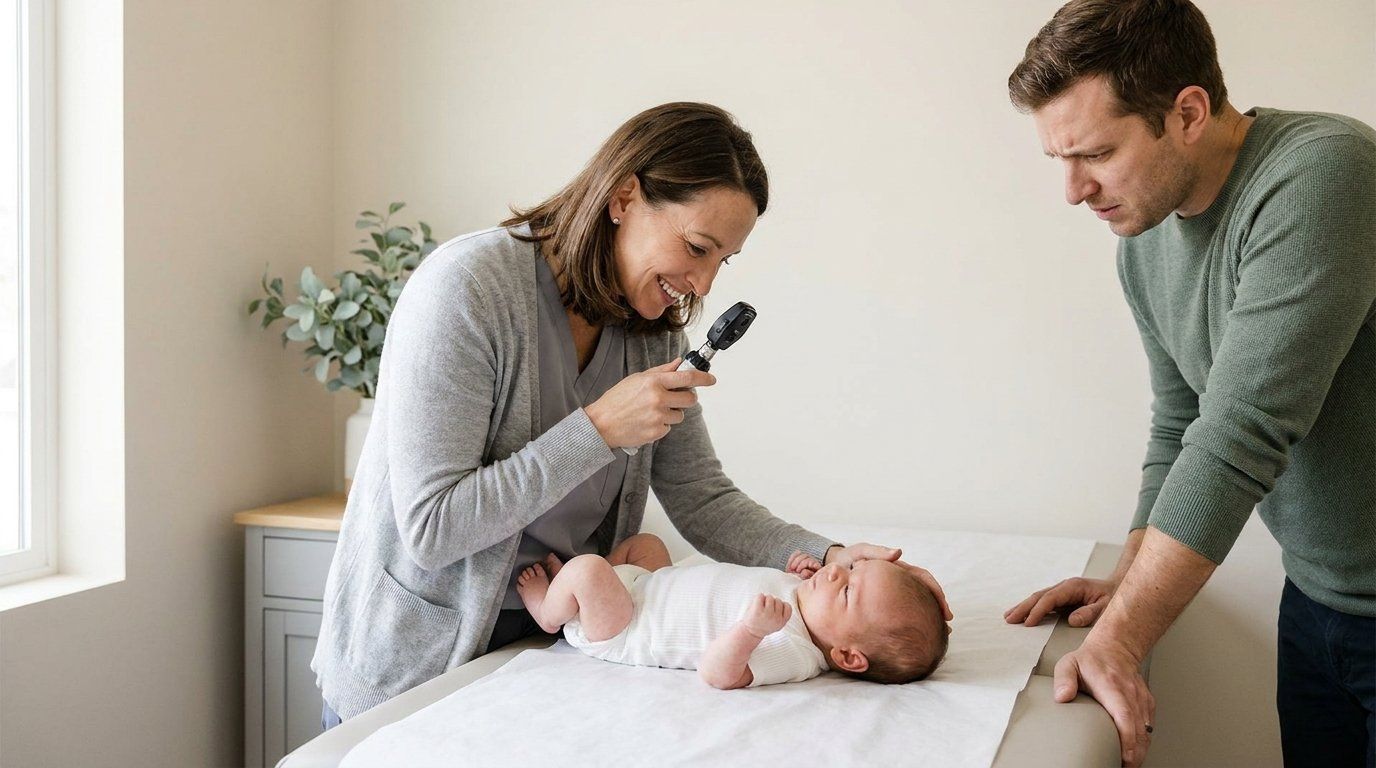
This is the one rule worth memorizing. The AAP says to call your child’s doctor right away if your baby “Is younger than 3 months (12 weeks) and has a temperature of 100.4°F (38.0°C) or higher.” The AAP’s RSV guidance gives the same 100.4°F threshold as a rectal temperature, so take it rectally.
Save your pediatrician’s after-hours number in your phone before you leave the house, and pack the thermometer. For other warning signs, see when crying means call the doctor.
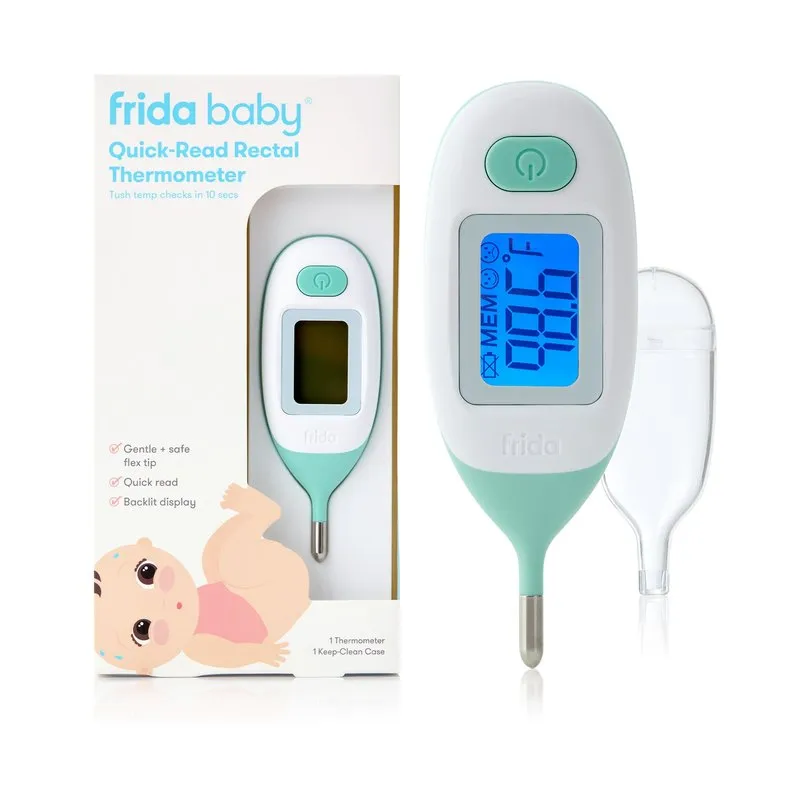
Frida Baby Quick-Read Digital Rectal Thermometer
A digital rectal thermometer with a 10-second read, a backlit display for night checks and memory for the last 10 readings. A flexible tip and stopper keep it from going in too far.
Pros
- Rectal: the most accurate way to check a baby, per the AAP
- Backlit screen for 3 a.m. checks
- Flexible tip with a stopper
Cons
- Label it for rectal use only, so it never ends up in a mouth
Driving to family: car seat, coats and breaks
No puffy coats under the harness. The AAP says bulky clothing, “including winter coats and snowsuits, should not be worn underneath the harness of a car seat.” In a crash the padding flattens, and the harness ends up too loose to hold the baby.
How to keep a newborn warm in the car instead:
- Thin layers. The AAP’s rule of thumb is one more layer than you are wearing.
- Harness first, warmth on top. Buckle the baby in, then put the coat on backwards over the straps, or tuck a blanket over the harness.
- Do the pinch test. The AAP says that if you can pinch the harness straps, they need tightening until they fit snugly against the baby’s chest.
- Keep the infant seat inside the house when you’re not using it, so it isn’t freezing when the baby goes in.
- Skip add-on padding. A car seat cover is fine only if nothing goes under the baby. The AAP warns that anything that didn’t come with the seat hasn’t been crash tested with it.
For the full winter routine, see how to dress a baby for winter.
Breaks on long drives. The AAP suggests stopping every 2 to 3 hours on a day trip and every 4 to 6 hours at night to change and feed the baby, and says “Never attempt to breastfeed in a moving car.” If you can, have an adult ride in the back seat next to the baby. For bottles on the road, see our 3 a.m. bottle rules.
The car seat is not a bed. The AAP says to bring a bassinet or play yard, “since it’s not safe for your baby to sleep in the car seat once you arrive.” If the baby falls asleep on the way, move them to a flat sleep space when you get there.
Flying with a newborn at Christmas
The AAP says it’s “generally safe to fly when your newborn is at least 7 days old,” but ideally you would wait until your baby is 2 to 3 months old. Part of the reason is germs: crowded airports and planes in December. The AAP’s advice is to delay travel for a few weeks when you can.
If you do fly:
- Buy the baby a seat if you can. Babies under 2 may fly on a lap, but the FAA “strongly discourages this practice” and recommends an approved car seat in the baby’s own seat. The AAP says turbulence is the leading cause of children’s injuries on airplanes. Buying a ticket is the only way to be sure you can use the car seat, the FAA says.
- Check the label. The car seat should say “This restraint is certified for use in motor vehicles and aircraft.”
- No carriers for takeoff and landing. The FAA doesn’t allow baby carriers during taxi, takeoff and landing.
- Feed during takeoff and landing. The AAP says a breast, a bottle or a pacifier then can ease ear pain.
- No Benadryl without asking your pediatrician first, the AAP says.
- Lap nap? If the baby sleeps on you during the flight, stay awake.
Your job: book the seat, carry the car seat, and handle security while your partner handles the baby.
Where the baby sleeps at Grandma’s
Sleeping away from home is where holiday plans and safe sleep rules collide. The rules don’t change at someone else’s house:
- Bring a play yard and keep it bare. The CPSC’s rule is “Bare is Best”: “nothing but a fitted sheet in a crib, bassinet or play yard.” Use the play yard’s own mattress. Grandma’s extra quilt doesn’t go in it.
- No couches, ever. The AAP says the risk of sleep-related death is up to 67 times higher when a baby sleeps with someone on a couch, soft armchair or cushion. After a big dinner, the couch nap with the baby on your chest is exactly the risk. If you feel yourself drifting, hand the baby over or put them down. More in staying safe when you’re exhausted.
- Alcohol and bed sharing don’t mix. The AAP says the risk is more than 10 times higher when a baby shares a bed with an adult who has had alcohol, drugs or medication that makes them harder to wake.
- Don’t overheat the baby. One more layer than you’d wear, and no hat indoors once you’re home from the hospital, the AAP says. A wearable blanket replaces loose blankets.
- Brief the grandparents. Safe sleep advice has changed since they had babies. The NIH’s Safe to Sleep campaign says everyone who cares for the baby, grandparents included, should learn the rules.
No play yard and stuck for the night? The AAP says that in an emergency, you can temporarily use a box, basket or dresser drawer with thin, firm padding, then move the baby to a proper sleep space as soon as you can. For the full rules, read safe sleep for newborns.
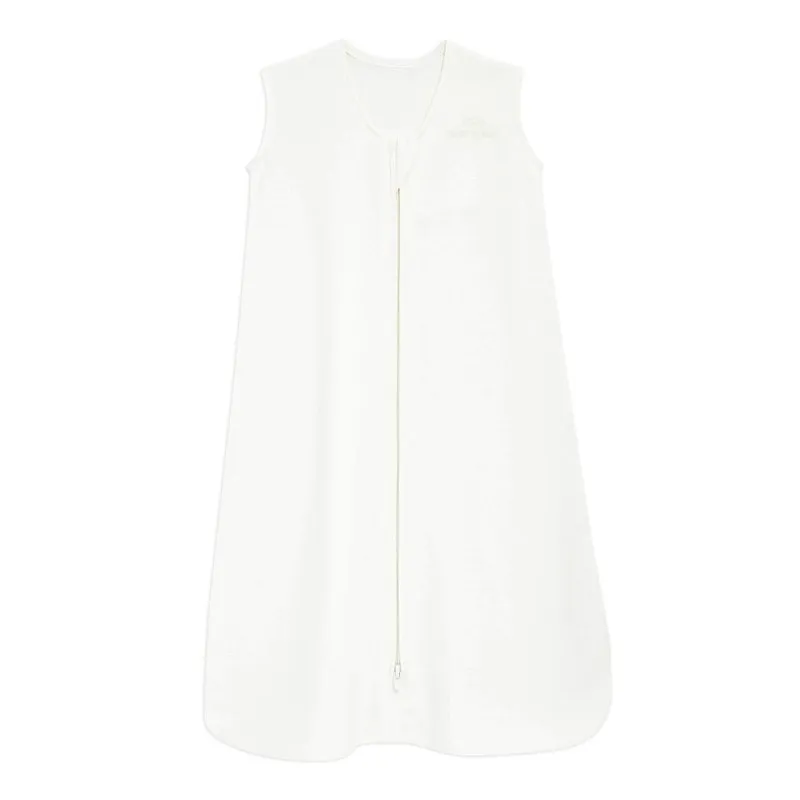
HALO SleepSack Wearable Blanket, 100% Cotton
A sleeveless wearable blanket in breathable 100% cotton (0.5 TOG) that replaces loose blankets in the crib. Not weighted. HALO says it is approved as hip healthy by the International Hip Dysplasia Institute.
Pros
- Replaces loose blankets, which the AAP says to keep out of the crib
- Not weighted
- Inverted zipper for easier diaper changes
Cons
- 0.5 TOG suits a warm room (75 to 77°F, per HALO); pick a thicker TOG for cooler rooms
Holiday house hazards
A newborn can’t crawl to the tree or grab an ornament yet. The real risks at this age are in adult hands and in what other people leave around.
- Hot drinks. The AAP says to avoid carrying your baby and hot liquids “like coffee, tea or soup at the same time.” Christmas morning coffee goes on the table first.
- Fireplaces. The AAP warns that gas fireplaces with glass doors get extremely hot and stay hot long after they’re off.
- Candles. Never leave a burning candle unattended, the AAP says, and the CPSC recommends flameless candles whenever possible.
- Button batteries. They hide in string lights, flameless candles, musical ornaments and light-up toys, the AAP says. If a child swallows one, Poison Control says to go to an emergency room and call the National Battery Ingestion Hotline (800-498-8666) on the way. Damage can start within 2 hours.
- What guests leave behind. Poison Control’s advice for hosts: give visitors a safe place for hearing aid batteries, and clear drinks and cigarette butts right after a party.
- Wrapping and gifts. Plastic wrap, ribbons and bows are suffocation and choking hazards, and the CPSC says to throw packaging away as soon as gifts are opened. Toys with small parts are for children 3 and up.
- Plants. Poinsettias are not the danger people think: Poison Control says they “can be irritating” but are “not fatal if eaten.” The berries of holly and mistletoe are the ones the AAP flags. Poison Control is 1-800-222-1222.
Your job: no coffee and baby in the same arms, and a quick sweep of the room after the guests leave.
Getting through the day itself
- Feed on cues, not the schedule. The AAP says to watch the baby, not the clock, for hunger cues, and that crying is a late sign of hunger. A busy day throws the timing off, so feed early instead of waiting for a meltdown.
- Find a quiet room. Being passed around a loud house is a lot for a newborn, and the AAP lists being overstimulated as a common reason babies cry. Take the baby somewhere quiet for a few minutes before it turns into a crying fit. Our guide on how to soothe a crying newborn has the techniques.
- Take a shift so your partner eats. Hot food, eaten with two hands, is a real gift on Christmas Day.
- Keep the traditions small. A first ornament, one family photo, a letter to the baby to open years from now. That’s plenty for year one.
- Watch your own tank. ACOG says all new parents can have postpartum depression and anxiety, not only the parent who gave birth, and that exhaustion is a major contributor. If you feel flat or on edge well past the holidays, read about postpartum depression in dads.
If you’re still shopping, see our gifts for new moms from their husbands, and send the grandparents to our gifts from baby to dad.
FAQ
Is it safe to take a newborn to a Christmas gathering?
There is no official cutoff, but the risk grows with the crowd. The AAP says to limit a baby’s exposure to crowds, other children and anyone with a cold, and the CDC says RSV typically peaks between December and January. A small gathering of healthy adults who are up to date on their shots, wash their hands and don’t kiss the baby is far lower risk than a big party.
Should family get vaccinated before meeting the baby?
Yes. The CDC says anyone who needs a whooping cough (Tdap) or flu vaccine should get it at least two weeks before meeting the baby, because it takes about two weeks to build antibodies. Adults who already had Tdap don’t need another. The AAP also recommends annual flu and COVID shots for the whole family.
Can a newborn fly for Christmas?
The AAP says it’s generally safe once the baby is at least 7 days old, but ideally wait until 2 to 3 months. Babies under 2 can fly on a lap, but the FAA strongly discourages it and recommends an approved car seat in the baby’s own seat.
Can a newborn wear a winter coat in the car seat?
No. The AAP says bulky coats and snowsuits should not go under the car seat harness. Dress the baby in thin layers, buckle them in snugly, then put the coat on backwards over the straps or add a blanket on top.
What should I do if my baby gets a fever on Christmas Day?
If your baby is under 3 months and has a temperature of 100.4°F (38°C) or higher, call the pediatrician right away, the AAP says. Use the practice’s after-hours line if the office is closed.
Are poinsettias poisonous to babies?
Not seriously. Poison Control says poinsettias can be irritating but are not fatal if eaten, though a leaf can still be a choking hazard. The AAP flags holly and mistletoe berries instead. Poison Control: 1-800-222-1222.
Sources
- Fever: When to Call the Pediatrician, RSV: When It’s More Than Just a Cold, Cold Sores in Children, Winter Car Seat Safety Tips, Is it safe for my baby to travel in a car seat for hours at a time?, Flying With Baby, How to Keep Your Sleeping Baby Safe, Burn Treatment and Prevention, Holiday Decoration Safety, How Often and How Much Should Your Baby Eat?, How to Calm a Fussy Baby and Welcome to the World of Parenting, American Academy of Pediatrics (HealthyChildren.org)
- Immunizations to Protect Infants (RSV), Vaccines for Family and Caregivers and Caregivers of Infants and Young Children (flu), Centers for Disease Control and Prevention
- Kids Corner and Does the FAA require children on commercial flights to be in child restraint systems?, Federal Aviation Administration
- Safe Sleep and Holiday Safety, U.S. Consumer Product Safety Commission
- Ways to Reduce Baby’s Risk, Safe to Sleep campaign, National Institute of Child Health and Human Development
- Winter holiday poison safety, Button batteries and Are poinsettias poisonous?, National Capital Poison Center (Poison Control)
- A Partner’s Guide to Pregnancy and Postpartum Depression, American College of Obstetricians and Gynecologists
- Quick-Read Digital Rectal Thermometer, Frida, and SleepSack Wearable Blanket, 100% Cotton, HALO