Hobbies for Dads With Young Kids: Keep Yours, Share Some, Start New Ones
Hobbies for dads with young kids, the ones you can keep, share with a baby or toddler along, and start fresh. Plus the safety basics for hiking, water, grills and noise.
We choose everything we recommend independently. If you buy through our links, we may earn a commission. How we make money
In this guide
Hobbies for dads with young kids tend to go one of two ways: they quietly disappear, or they become a source of guilt every time you leave the house. Neither has to happen. Some hobbies survive in smaller pieces, some can bring the kids along, and a few are worth starting now. This guide covers why keeping something for yourself matters, the hobbies that work with a baby or toddler in tow, and the safety basics for each.
The short answer
- Should you keep a hobby? Yes. Enjoyable leisure time is linked to lower stress and better mood, and you’ll be a more patient dad for it.
- Easiest to share with a baby: walking and hiking with a carrier, reading aloud, cooking, gardening, and simple games once they’re toddlers.
- Hardest to keep: anything that needs long, fixed blocks of time. Shrink it or schedule it.
- Safety basics: shade for young babies, life jackets on the water, distance from the grill, and ear protection around loud noise.
Why keeping a hobby matters
It’s easy to feel that any time for yourself is time stolen from the family. The research suggests the opposite.
- Leisure and stress. In a study of about 1,400 American adults, people who did more enjoyable leisure activities had lower blood pressure, stress hormone levels, waist size and depression. A smaller study that tracked people through their days found they were in a better mood, less stressed and had a lower heart rate while doing leisure activities.
- Connection. Many hobbies come with people. The US Surgeon General’s 2023 advisory on loneliness reported that about half of US adults had measurable levels of loneliness, and a review of 148 studies found people with stronger social relationships had 50% better odds of survival. A running club, a weekly game night or a band all count.
These studies show links, not proof, but they point the same way: some time that’s yours is good for you, and that’s good for the people you live with.
Make it fair. Agree with your partner on a trade: you get Saturday morning on the bike, she gets Sunday afternoon to herself. A hobby that only one parent gets breeds resentment fast.
Hobbies you can share with a baby or toddler
The American Academy of Pediatrics’ report on play calls play with parents “a singular opportunity” to build a child’s social, emotional, language and self-control skills. Bringing your kid into your hobby is play, for both of you.
Hiking and walking
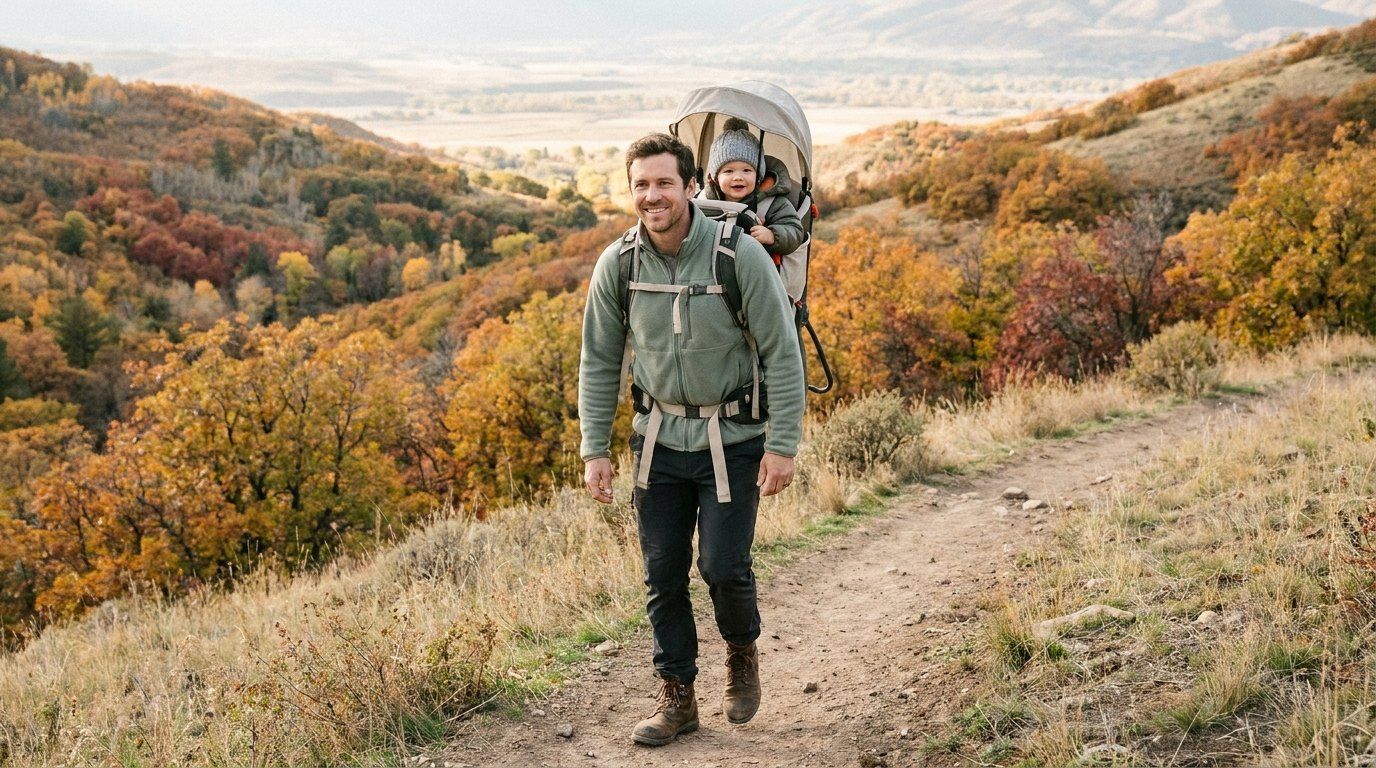
The easiest hobby to keep. A soft carrier works for walks with a young baby; a framed hiking carrier works once your child can sit up on their own. The AAP links more outdoor time with better motor development and a lower risk of obesity and nearsightedness.
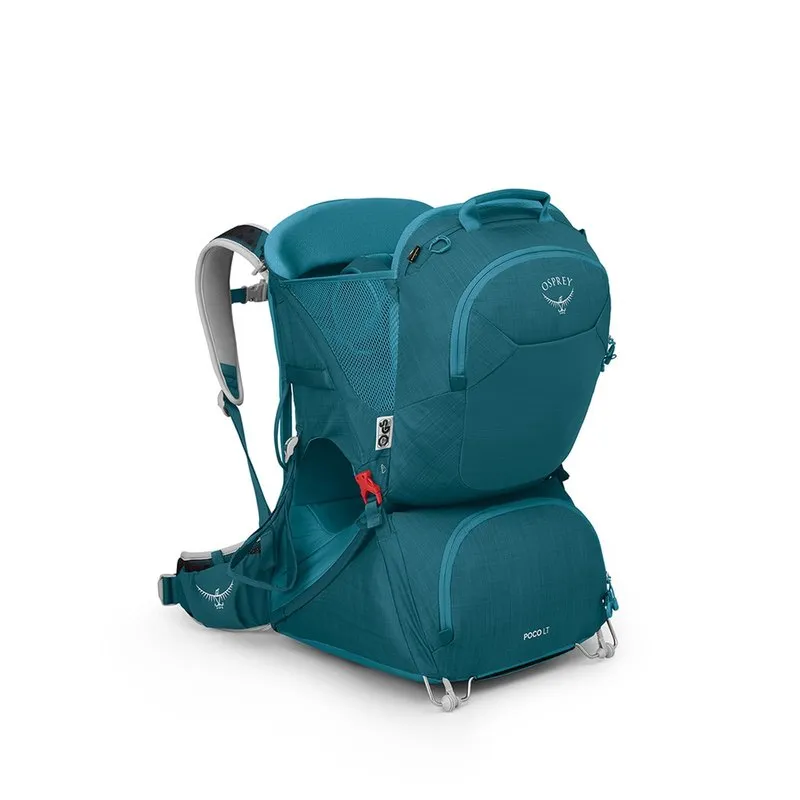
Osprey Poco LT Child Carrier
A framed hiking carrier with a built-in UPF 50 sunshade and 6 inches of torso adjustment, weighing 5.56 pounds. Osprey's manual says it's for children who can sit up unassisted, are at least six months old and weigh 16 to 40 pounds.
Pros
- Built-in sunshade
- Adjustable fit for different-size parents
- Sternum strap with a rescue whistle
Cons
- Only once your baby can sit up unassisted
- A big, pricey piece of gear for occasional hikers
Safety basics:
- Shade for babies under 6 months. The AAP says to keep them out of direct sunlight: find shade under a tree, an umbrella or the stroller canopy. If shade and protective clothing aren’t available, a small amount of sunscreen on exposed spots like the face is OK.
- Watch the heat. The AAP says a heat index of 90°F or higher can be dangerous for babies and young children.
- Check the carrier. Follow the maker’s age and weight limits; Osprey’s manual for the Poco LT, for example, says the child must be at least six months old and able to sit up unassisted. The CPSC suggests checking buckles and straps before each use and checking for recalls. One example: Deuter has recalled some Kid Comfort carriers sold in the US from 2023 to 2025 because the kickstand hinges can crack.
For soft carriers on shorter walks, see our guide to baby carriers for big and tall dads. For a run with the stroller, see the best strollers for tall dads.
Reading
The AAP recommends reading with your child from birth. It’s also a hobby you can keep: read your own book aloud to a newborn, since babies just want your voice. As they grow, switch to board books. The AAP’s advice is that shared reading should be fun, not forced: if your baby looks away or fusses, put the book down.
Cooking and grilling
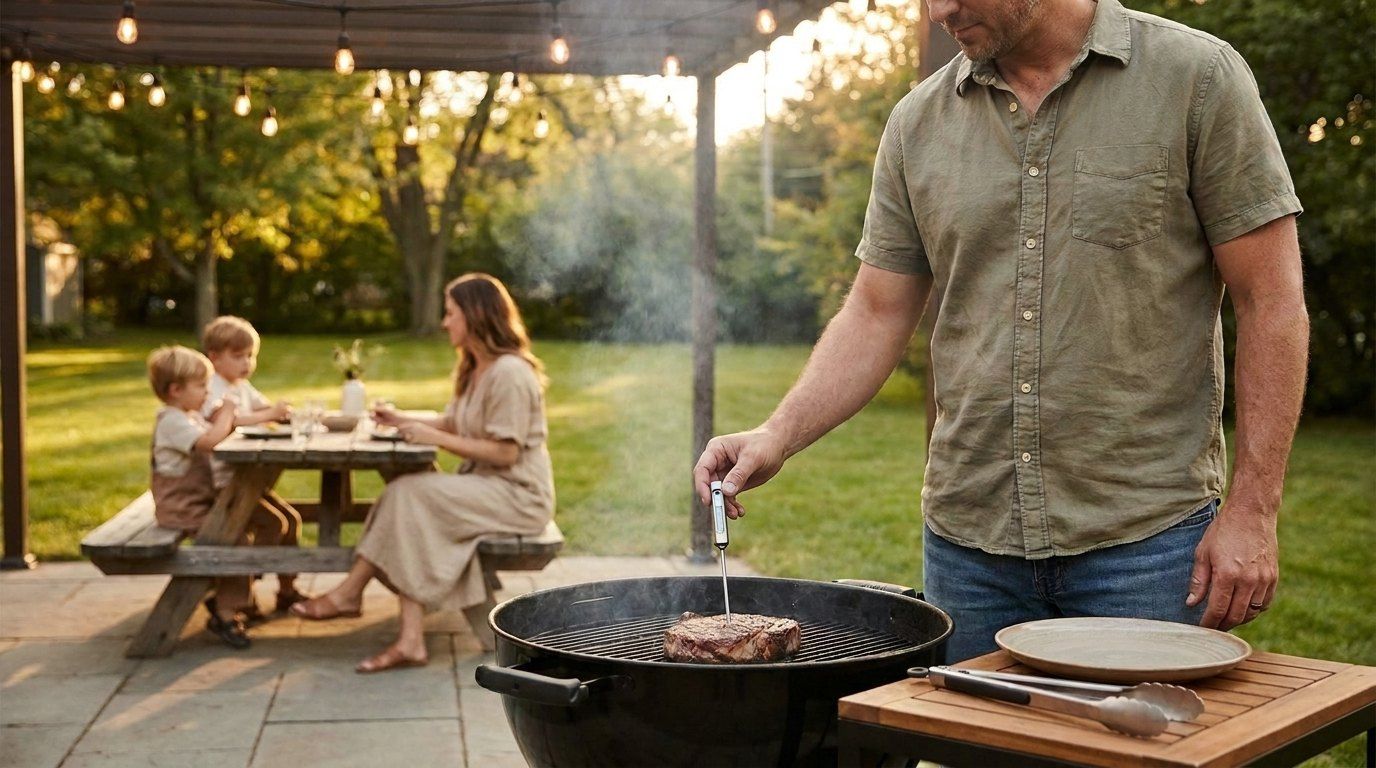
Cooking turns a chore into a hobby, and a toddler can “help” by washing vegetables. Grilling needs one firm rule: the AAP says to use a safety fence to keep young children away from the grill, place gas grills so kids can’t reach the knobs, and remember that a grill can burn a child long after you’ve finished cooking. The CPSC says never to leave a hot grill unattended.
Gardening
A garden works in short sessions and gets you outside. Toddlers love to dig and water. The AAP’s backyard safety advice includes keeping kids away from pesticides and garden chemicals, so store them locked up.
Fishing and boating
Fishing is one of the few hobbies a toddler can sit through, if you keep trips short. The water rules are firm:
- Life jackets are required. Federal law requires children under 13 to wear a US Coast Guard-approved life jacket on a moving boat (with exceptions below deck or in an enclosed cabin), and state laws may add more.
- Sized by weight. The AAP says child life jackets are approved by the child’s weight, and should fit snugly, not loose. The Coast Guard’s infant size is for children up to 33 pounds. A properly fitted jacket shouldn’t ride up over the chin or ears.
- No substitutes. The AAP says water wings and toys should never be used as life jackets, and that life jackets never replace an adult watching closely.
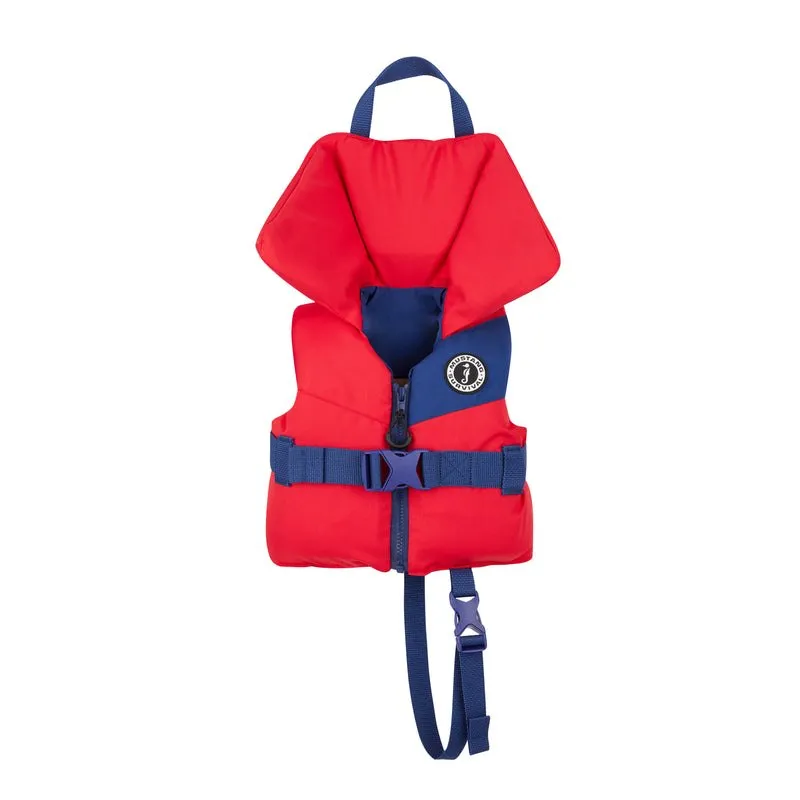
Mustang Survival Infant Lil Legends Foam Vest
A foam life vest for babies and toddlers up to 33 pounds, approved by the US Coast Guard and Transport Canada. Mustang also makes a Child version for 33 to 55 pounds.
Pros
- USCG approved, sized by weight as the AAP advises
- Foam, so it floats without inflating
- A Child size (33 to 55 lb) to move up to
Cons
- Kids outgrow it fast; check the weight range
Music, games and live events
Playing music, going to a game or watching fireworks can all be shared, with ear protection. The National Institute on Deafness and Other Communication Disorders says long or repeated exposure to sounds at or above 85 decibels can cause hearing loss; concerts and sporting events can reach 94 to 110 decibels. Its advice: protect the ears of children who are too young to protect their own.
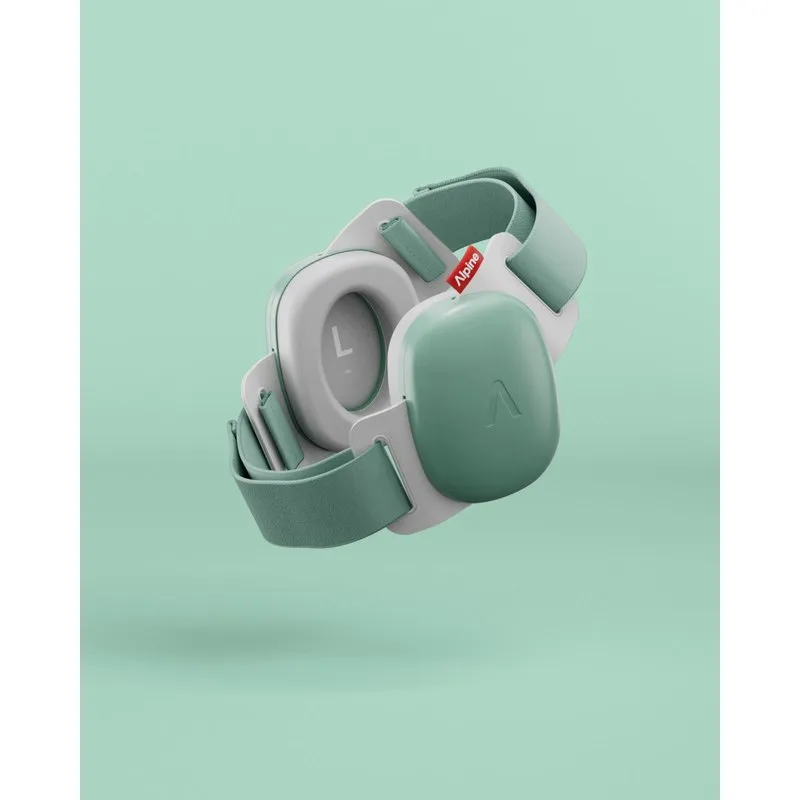
Alpine Muffy Baby Earmuffs
Soft earmuffs for babies and toddlers that Alpine says reduce noise by 24 dB, for children up to 5 years old. The headband sits on the forehead, just below the soft spot.
Pros
- Made for small heads
- Light and soft
- Useful at concerts, games or near power tools
Cons
- Alpine doesn't give a minimum age
- Earmuffs reduce noise but don't make a loud place safe for hours
The same goes for DIY: power tools are loud, so keep the baby out of the workshop and wear your own hearing protection.
Board games (toddler years)
Once your child is about 2, simple cooperative games turn family time into game night. Save the strategy games for after bedtime with your friends.
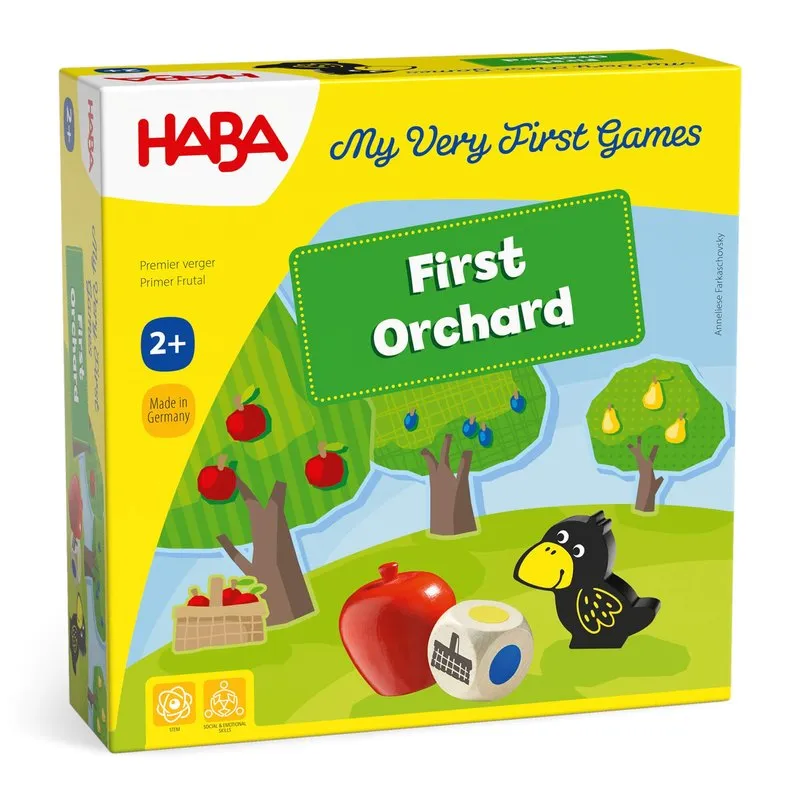
HABA My Very First Games: First Orchard
A cooperative board game for toddlers ages 2 and up. HABA lists 1 to 4 players and about 10 minutes a game.
Pros
- A first board game for ages 2 and up
- Cooperative, so nobody loses alone
- Short enough for a toddler's attention
Cons
- For ages 2 and up, so it waits until the toddler years
Rough-and-tumble play
Not a hobby in the usual sense, but it’s the one dads are known for. A review of 16 studies found weak to moderate links between father-child physical play and children’s social skills, emotional skills and self-control. One study added an important detail: the benefits depended on dad staying in charge of the game. Keep it playful, and stop when it stops being fun.
Hobbies that are harder to keep (and how)
- Team sports with fixed schedules. Look for a league with one evening a week, or switch to pickup games you can join when you’re free.
- Long rides, runs or rounds of golf. Shorten them, go early before the house wakes up, or bring the family along for part of it.
- Gaming. Pick games you can pause, and keep them for after bedtime.
For fitting exercise into a busy week, see workouts for busy dads.
FAQ
What are good hobbies for dads with young kids?
Hiking or walking with a carrier, reading aloud, cooking, gardening, fishing, music and simple board games once your kids are toddlers. Hobbies that work in short pieces and let the kids tag along are the easiest to keep.
Is it selfish for a dad to have hobbies?
No. Enjoyable leisure time is linked to lower stress and better mood, and social hobbies help with loneliness. Agree on a fair trade of free time with your partner so you both get some.
When can I take my baby hiking in a backpack carrier?
When they can sit up unassisted and meet the carrier’s own limits. Osprey’s manual for its Poco LT, for example, says at least six months old and 16 to 40 pounds. Use a soft carrier before that.
Does my baby need a life jacket on a boat?
Yes. Federal law requires children under 13 to wear a Coast Guard-approved life jacket on a moving boat, with a few exceptions, and the AAP says to choose one by your child’s weight and make sure it fits snugly.
Do babies need ear protection at concerts or games?
It’s a good idea. Concerts and sporting events can reach 94 to 110 decibels, well above the 85-decibel level the NIDCD says can damage hearing over time.
Sources
- The Power of Play: A Pediatric Role in Enhancing Development in Young Children, Yogman et al., Pediatrics, 2018
- Measurement of father-child rough-and-tumble play and its relations to child behavior, StGeorge and Freeman, Infant Mental Health Journal, 2017
- Rough-and-tumble play and the regulation of aggression: an observational study of father-child play dyads, Flanders et al., Aggressive Behavior, 2009
- Association of enjoyable leisure activities with psychological and physical well-being, Pressman et al., Psychosomatic Medicine, 2009
- Real-time associations between engaging in leisure and daily health and well-being, Zawadzki et al., Annals of Behavioral Medicine, 2015
- Social relationships and mortality risk: a meta-analytic review, Holt-Lunstad et al., PLoS Medicine, 2010
- New Surgeon General Advisory Raises Alarm about the Devastating Impact of the Epidemic of Loneliness and Isolation, U.S. Department of Health and Human Services, 2023
- How to Share Books With Your Baby, Sun Safety, Protecting Children from Extreme Heat, Playing Outside, Life Jackets and Life Preservers, Backyard Safety and Safety for Your Child: 2 to 4 Years, American Academy of Pediatrics (HealthyChildren.org)
- Lifejacket Wear, U.S. Coast Guard Boating Safety
- Noise-Induced Hearing Loss, National Institute on Deafness and Other Communication Disorders
- Summer Grilling Safety and Baby carrier safety tips, U.S. Consumer Product Safety Commission
- Kid Comfort Safety Recall, deuter
- Product pages: Osprey Poco LT, Mustang Survival Infant Lil Legends, Alpine Muffy Baby and HABA First Orchard