Vasectomy Recovery: A Dad's Day-by-Day Guide
What vasectomy recovery is really like, day by day: rest and ice for the first days, when you can lift your kid, go back to work, exercise and have sex, when it's actually effective, and the warning signs to call about.
We choose everything we recommend independently. If you buy through our links, we may earn a commission. How we make money

In this guide
Plenty of dads decide on a vasectomy once the family feels complete. It’s a quick procedure, and the recovery is usually short, but it does mean a few days of not picking up your kid, not hitting the gym and sitting on an ice pack. This guide walks through recovery day by day, using what Mayo Clinic, the Cleveland Clinic, Kaiser Permanente and the NIH say, and points out where they differ. Your urologist’s own instructions come first.
A note before you start: this is general information, not medical advice. Follow your surgeon’s instructions, which may differ from these.
The short answer
- Day of the procedure: about 15 to 20 minutes under local anesthetic; you go home the same day. Have someone drive you.
- First 24 hours: rest, lie down as much as you can, ice and snug underwear.
- Days 2 to 3: light activity; many men are back at a desk job. Keep icing and supporting.
- About a week: most of the soreness is gone; no baths, heavy lifting or sex until about here (sources differ).
- About 2 weeks: bruising and swelling are usually gone.
- About 2 to 3 months: semen test. Keep using birth control until it says you’re clear.
Before the procedure: get set up
Talk it through first. The Cleveland Clinic says to talk with your partner and a provider, and to be sure you don’t want more biological children. A vasectomy is meant to be permanent. Mayo Clinic says reversal “is harder to do than a vasectomy,” and urologists counsel that restoring fertility “is possible but not guaranteed.” The NIH notes that men who get a vasectomy before 30 are the most likely to later want it reversed.
Prep list:
- A ride home. Mayo Clinic says to arrange one; ask your doctor when you can drive.
- Supportive underwear. Tight-fitting underwear, compression shorts or an athletic supporter, to support the scrotum and limit swelling.
- Ice packs. Two that you can rotate from the freezer.
- Medicines. Your surgeon may ask you to stop aspirin, ibuprofen or naproxen about a week before, Mayo Clinic says.
- Shaving. Follow your surgeon’s instructions; some ask you to trim or shave beforehand.
- Cover at home. You won’t be lifting your child for a couple of days, so line up help, especially if you have a baby or toddler.
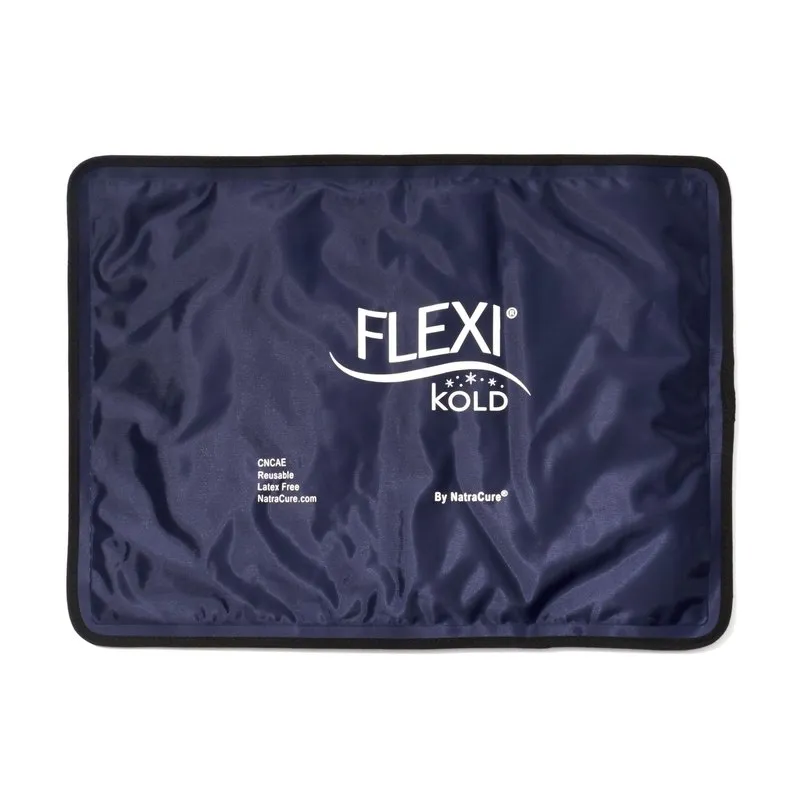
NatraCure FlexiKold Gel Ice Pack
A reusable gel cold pack in a thick nylon shell with double-seamed edges. NatraCure says it stays soft and moldable straight from the freezer, so it shapes to the body instead of sitting like a brick. Comes in half and standard sizes.
Pros
- Stays flexible when frozen
- Reusable: keep two in the freezer and rotate
- Durable nylon shell
Cons
- Always put a thin cloth between the pack and your skin
- Ask your doctor before cold therapy if you have a wound or circulation problem
The procedure
It’s usually done with a local anesthetic, so you’re awake and numb, and you go home the same day. Mayo Clinic says it usually takes about 15 to 20 minutes. Many urologists use a no-scalpel technique, which the 2026 American Urological Association guideline recommends; ACOG says it means less pain and a shorter recovery, and the NIH says no stitches are needed because the openings are so small.
Vasectomy recovery: day by day
Day 0 to 1: rest
- Rest for 24 hours. Mayo Clinic says “You’ll need to rest for 24 hours after surgery.” Kaiser Permanente: “Lie down as much as you can for the first 24 hours.”
- Ice. Mayo Clinic says to use ice packs for the first 2 to 3 days, over clothing, a towel or a sheet. Kaiser suggests 10 to 20 minutes at a time, every 4 to 6 hours, with a thin cloth between the ice and your skin.
- Support. Snug underwear or compression shorts for 2 to 3 days, Kaiser says; Mayo Clinic says at least three days.
- Pain. Once the numbing wears off, most people describe the pain as moderate, the Cleveland Clinic says. Mayo Clinic says acetaminophen can help unless your surgeon says otherwise, and for most people the pain is minor and gone in a few days.
- Showering. Mayo Clinic says you can shower the day after, without scrubbing the area.
Days 2 to 3: light activity
- Back to most everyday activities within about 48 to 72 hours, the Cleveland Clinic says. Mayo Clinic says you can probably do light activity after two or three days.
- Walking. Kaiser suggests walking a little more each day after the first day.
- Work. Kaiser says you can probably return to work or your routine the day after; if your job involves physical labor or lifting, it may take 2 or 3 days. The Cleveland Clinic says most people are back at work in less than a week.
- Lifting. Mayo Clinic says not to lift objects over 10 pounds for at least 48 hours. The Cleveland Clinic gives the same 10-pound line, “about a gallon of water.”
Dad’s job, reversed: Kaiser Permanente lists “a child” among the things to avoid lifting, along with heavy grocery bags, backpacks, pet food bags and the vacuum. Your partner (or a grandparent) does the kid lifting for these days. Get on the floor to play instead.
About a week
- Baths and swimming. Mayo Clinic says no baths for one week; Kaiser says about 5 days.
- Exercise. Kaiser says to avoid strenuous activities like cycling, jogging or weight lifting for about 1 week, or until your doctor says it’s OK. The Cleveland Clinic is more cautious about hard exercise like powerlifting, contact sports and mountain biking: “at least a month.” Ask your urologist.
- Sex. The Cleveland Clinic says no sexual activity for at least seven days; Mayo Clinic says 10 days. Ejaculating too soon can be painful or cause blood in the semen.
- Recovery. The NIH and MedlinePlus say most men fully recover in less than a week; the Cleveland Clinic says most report a full recovery in 8 to 9 days, and within 10.
1 to 2 weeks
The NIH says discomfort, bruising and some swelling usually go away within 2 weeks. A pulling feeling in the scrotum when you get up quickly, some bruising and some blood in the semen are listed by Mayo Clinic as possible side effects.
When does a vasectomy start working?
Not right away. ACOG says it takes about 2 to 4 months for semen to be free of sperm, and “A couple must use another method of birth control or avoid sexual intercourse until a sperm count confirms that no sperm are present.” The NIH puts it at 15 to 20 ejaculations, or about 3 months, and notes that 1 in 5 men still have sperm then and need longer.
The semen test. “A semen analysis is the only way to ensure there’s no sperm in your semen,” the Cleveland Clinic says. The 2026 AUA guideline, as summarized in the urology press, says testing can be done as early as 8 weeks, at least one sample is needed, and mail-in tests are acceptable but only count as a pass if they find no sperm at all.
How effective is it? Very. Mayo Clinic calls it “nearly 100% effective.” The CDC’s contraception table lists 0.15% of couples having an unintended pregnancy in the first year with male sterilization. The NIH says about 11 in 1,000 vasectomies fail over 2 years, half of them in the first 3 months, which is why the test matters.
For birth control in the meantime, see sex after baby.
What a vasectomy doesn’t change
- Your sex drive and function. The NIH says it “does not decrease your sex drive because it does not affect the production of the male hormone testosterone,” and doesn’t affect erections or ejaculation.
- The amount of fluid. ACOG says sperm make up only about 5% of semen, so there’s little change.
- Cancer risk. The NIH says research shows it doesn’t increase cancer risk, and the 2026 AUA guideline found no causal link with prostate cancer or heart disease.
- STI protection. It doesn’t protect against sexually transmitted infections, MedlinePlus notes.
Possible complications
Most recoveries are uneventful. Things to know about:
- Bleeding or a blood collection (hematoma) inside the scrotum, causing painful swelling.
- Infection, with fever, redness and tenderness.
- Ongoing pain in about 1% to 2% of men, Mayo Clinic and the Cleveland Clinic say; the Cleveland Clinic says it’s treatable.
- A sperm granuloma, a pea-sized lump the Cleveland Clinic says isn’t dangerous and is almost always absorbed.
- A feeling of pressure (congestion) 2 to 12 weeks later, which usually resolves on its own.
When to call your doctor
Call right away for:
- Fever over 100.4°F (38°C), or chills.
- Bleeding through the bandage or blood oozing from the site.
- Signs of infection: a change in skin color, a foul smell, discharge, or pain or swelling that gets worse.
- Pain that pain medicine doesn’t help.
- Not being able to urinate.
Call 911 if you think you need emergency care, including signs of a blood clot in your leg, Kaiser Permanente says.
Does insurance cover a vasectomy?
Not necessarily for free. HealthCare.gov says plans aren’t required to cover “services for male reproductive capacity, like vasectomies” under the Affordable Care Act’s birth control rule. KFF says plans may cover it, typically with cost-sharing. As of June 2025, nine states (California, Illinois, Maryland, New Jersey, New Mexico, New York, Oregon, Vermont and Washington) required state-regulated plans to cover it at no cost, but that doesn’t apply to self-insured employer plans. Check with your insurer before booking.
Recovery with kids at home
- Book it for a long weekend or when your partner or family can cover the lifting for 2 to 3 days.
- Prep the house: snacks, the ice packs in the freezer, the remote, a phone charger, and the kids’ stuff within reach so nobody has to carry anything heavy.
- Play low: floor games, books on the couch, letting them climb on you carefully (not on your lap). See hobbies for dads with young kids for later.
- Talk with your partner about the decision and the timing; see marriage after baby.
FAQ
How long is vasectomy recovery?
Most men fully recover in less than a week, the NIH says, and the Cleveland Clinic says most feel fully recovered within 10 days. Bruising and swelling usually go away within 2 weeks.
When can I go back to work after a vasectomy?
Often the next day for a desk job, Kaiser Permanente says, and 2 to 3 days if your job involves physical labor or lifting. Most people are back at work in less than a week.
When can I lift my child after a vasectomy?
Avoid lifting more than about 10 pounds for at least the first 48 hours, Mayo Clinic says, and Kaiser Permanente specifically lists a child among the things to avoid lifting. Ask your doctor when it’s OK for your child’s weight.
When can I have sex after a vasectomy?
The Cleveland Clinic says after at least seven days, Mayo Clinic says 10. Use other birth control until a semen test confirms there’s no sperm, usually about 2 to 3 months after the procedure.
How long until a vasectomy is effective?
About 2 to 4 months, ACOG says, or 15 to 20 ejaculations. A semen analysis is the only way to confirm it, and you should keep using birth control until it does.
How painful is vasectomy recovery?
Most people describe moderate pain once the anesthetic wears off, which fades over a few days with ice, support and pain relievers your surgeon approves. About 1% to 2% of men have ongoing pain, which is treatable.
Does a vasectomy affect testosterone or sex drive?
No. The NIH says a vasectomy doesn’t affect testosterone, sex drive, erections or ejaculation.
Sources
- Vasectomy, Mayo Clinic
- Vasectomy, Cleveland Clinic
- Vasectomy: what to expect at home, Kaiser Permanente
- NIH National Institute of Child Health and Human Development: How is a vasectomy done?, How effective is vasectomy?, What are the risks?, Sex life and Other FAQs
- Vasectomy, MedlinePlus
- Sterilization for Women and Men and Postpartum Birth Control, American College of Obstetricians and Gynecologists
- Effectiveness of family planning methods, CDC (MMWR)
- Vasectomy: AUA Guideline (2026), J Urol, and 2026 AUA vasectomy guideline: key updates, Urology Times
- Birth control benefits, HealthCare.gov; A spotlight on vasectomy, KFF
- FlexiKold Gel Ice Pack, NatraCure