Do Dads Need Supplements? What the Evidence Says
The best supplements for men over 30, judged by the evidence: what the FDA does and doesn't check, which seals mean something, what research says about vitamin D, fish oil, multivitamins, magnesium, creatine and melatonin, and which to skip.
We choose everything we recommend independently. If you buy through our links, we may earn a commission. How we make money

Our quick picks
- Best if you rarely get sunNature Made Vitamin D3 1000 IUCheck price
USP Verified, a modest dose well under the upper limit.
- Best if you don't eat fishNature Made Fish Oil 1200 mgCheck price
USP Verified, clear EPA and DHA amounts.
- Best for liftingThorne CreatineCheck price
NSF Certified for Sport, plain creatine monohydrate.
In this guide
- The short answer
- What the FDA does and doesn’t check
- The seals worth looking for
- Start with food
- Multivitamins: fine as a backup, not a shield
- Vitamin D: only if you’re low or at risk
- Fish oil (omega-3s): eat fish if you can
- Magnesium: get it from food
- Creatine: well studied, if you train
- Caffeine and energy drinks
- Melatonin: not for long-term insomnia
- What to skip
- Before you start any supplement
- The real fix: sleep
- FAQ
- Sources
New dads are tired, short on time and eating whatever’s within reach, so a cabinet of pills that promise energy, focus and vitality is tempting. The honest answer: most dads don’t need much. A few supplements have good evidence for specific situations, many have little, and some are risky. This guide goes through what the evidence says, which seals on the bottle mean something, and the few products we’d consider.
A note before you start: this is general information, not medical advice. Talk to your doctor or pharmacist before starting a supplement, especially if you take any medication. We picked products by evidence and third-party testing, not by marketing claims.
The short answer
- Sleep and food first. No pill fixes 4 hours of sleep or a diet of leftovers.
- Probably worth considering: vitamin D if you rarely see the sun or are low; fish oil if you never eat fish; creatine if you lift.
- Not much benefit for most men: a multivitamin (fine as a backup, but don’t expect it to prevent disease), magnesium for sleep.
- Skip: testosterone boosters, “energy” blends and anything sold for sexual enhancement or bodybuilding.
- Buy tested products: look for USP Verified or NSF Certified on the label.
What the FDA does and doesn’t check
Most men assume a supplement on a store shelf has been tested by someone. It hasn’t, necessarily. The FDA says it “does NOT have the authority to approve dietary supplements for safety and effectiveness, or to approve their labeling, before the supplements are sold to the public.” Companies can often bring a product to market without even notifying the FDA, so its role “primarily begins after the product enters the marketplace.”
That’s why so many labels carry the line: “This statement has not been evaluated by the Food and Drug Administration. This product is not intended to diagnose, treat, cure, or prevent any disease.”
Advertising is the FTC’s job, and it says health claims need “competent and reliable scientific evidence,” and that testimonials “more dramatic than users can generally expect are likely to be deceptive.”
And “natural” doesn’t settle anything: the NIH says “the term natural doesn’t always mean safe.”
The seals worth looking for
Independent groups test supplements and let products that pass display a seal. The NIH says such a seal indicates the product “was properly manufactured, contains the ingredients listed on the label, and does not contain harmful levels of contaminants.” It doesn’t mean the supplement works.
- USP Verified: USP checks that a product contains the listed ingredients in the declared amounts, doesn’t contain harmful levels of contaminants like heavy metals, and was made under FDA Good Manufacturing Practices.
- NSF Certified (NSF/ANSI 173): NSF checks that “what’s on the label is in the bottle.” Its Certified for Sport program also screens for 280 substances banned in sports, including hidden stimulants and steroids.
- ConsumerLab: a private tester whose detailed results are for paying members.
Start with food
The NIH says “supplements can’t take the place of the variety of foods that are important to a healthy eating routine,” and that nutritional needs “should be met primarily through the diet.” The 2025 to 2030 Dietary Guidelines for Americans sum it up: “eat real food.” They point to healthy fats from foods like eggs, omega-3-rich seafood, nuts and olives, say to avoid sugary drinks including energy drinks, and note that supplements may be needed when diet falls short, “under medical supervision.”
If the first months of fatherhood have changed how you eat, see new dad weight gain.
Multivitamins: fine as a backup, not a shield
The U.S. Preventive Services Task Force says there’s not enough evidence to judge whether multivitamins prevent heart disease or cancer (an “I” statement). It recommends against beta-carotene and vitamin E supplements for that purpose, noting that beta-carotene raised lung cancer risk in people who smoke.
The NIH adds that “No U.S. government health agency, private health group, or health professional organization promotes regular use” of multivitamins, that they have no standard definition, and that stacking a multivitamin with single-nutrient supplements makes it more likely you’ll get too much.
If your diet really is limited for a while, a basic multivitamin is a reasonable backup. Just don’t expect more from it.
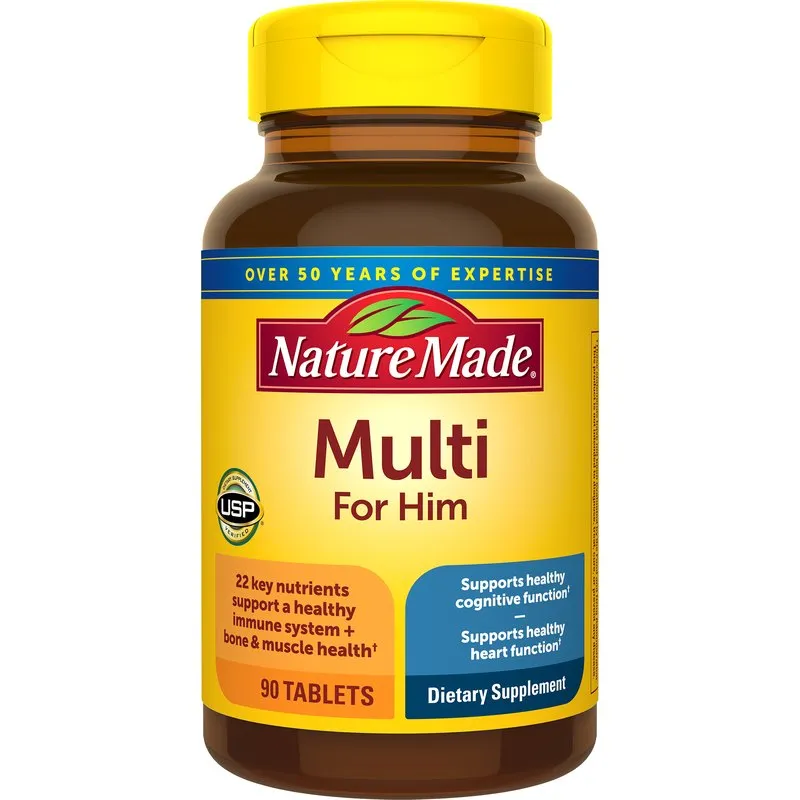
Nature Made Multi for Him Tablets
A once-daily men's multivitamin with 22 nutrients, carrying the USP Verified Mark. The USPSTF says there isn't enough evidence that multivitamins prevent heart disease or cancer, so think of it as a backup for a limited diet, not a health booster.
Pros
- USP Verified for content and manufacturing
- One tablet a day
- Covers gaps if your diet is limited
Cons
- No proven benefit for preventing heart disease or cancer
- Adding other single-nutrient supplements on top can push you over safe limits
Vitamin D: only if you’re low or at risk
The recommended amount for men 19 to 70 is 600 IU (15 mcg) a day, and the upper limit is 4,000 IU (100 mcg) from all sources combined, the NIH says. Most people in the U.S. have adequate vitamin D, but “almost one out of four” have levels too low or inadequate. You’re more likely to be low if you rarely get sun or have darker skin. Very few foods naturally contain it; fatty fish like salmon and trout are among the best.
Too much comes almost entirely from supplements: “You cannot get too much vitamin D from sunshine.” High doses can also interfere with some medicines, including statins.
The USPSTF found not enough evidence to recommend routine vitamin D blood tests for adults without symptoms. If you think you’re low, ask your doctor at your next checkup (men’s health screenings by age).
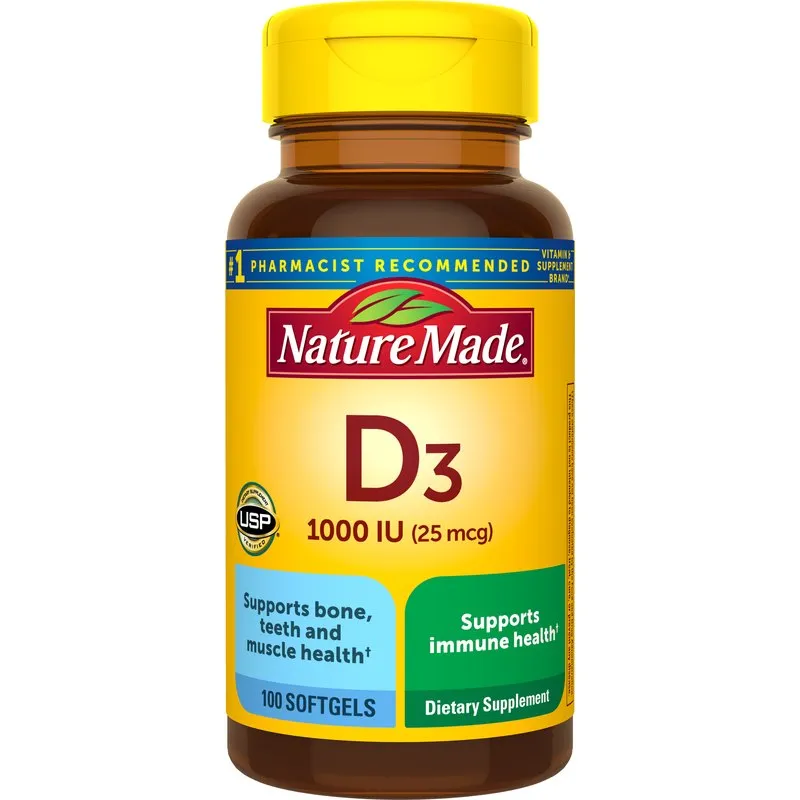
Nature Made Vitamin D3 1000 IU (25 mcg) Softgels
A one-a-day vitamin D3 softgel with 1000 IU (25 mcg), carrying the USP Verified Mark, which means USP tested that it contains what the label says and meets its quality standards. The adult recommended amount is 600 IU a day, and the upper limit from all sources is 4,000 IU, the NIH says.
Pros
- USP Verified for content and purity
- Modest dose, well under the 4,000 IU upper limit
- One small softgel a day
Cons
- Only useful if you're low or at risk: most Americans get enough
- High-dose vitamin D can interact with some medications, so check with your doctor
Fish oil (omega-3s): eat fish if you can
The FDA says “Strong evidence shows that eating fish, as part of a healthy eating pattern, may have heart health benefits,” and recommends at least 8 ounces of seafood a week. The NIH says the evidence for eating seafood “is stronger than the evidence for omega-3 supplements.”
The supplement evidence is mixed. In the large VITAL trial, an omega-3 supplement “did not significantly reduce the rate of major cardiovascular events” over about 5 years, and two large trials found high doses (4 g a day) slightly raised the risk of atrial fibrillation in people with or at high risk of heart disease. The American Heart Association doesn’t recommend omega-3 supplements for people without a high risk of heart disease, the NIH notes. Side effects are usually mild (fishy taste, heartburn), but fish oil can affect blood clotting with warfarin.
If you genuinely don’t eat fish, a tested fish oil is a reasonable choice. Two meals of salmon or tuna a week is the better-supported one.
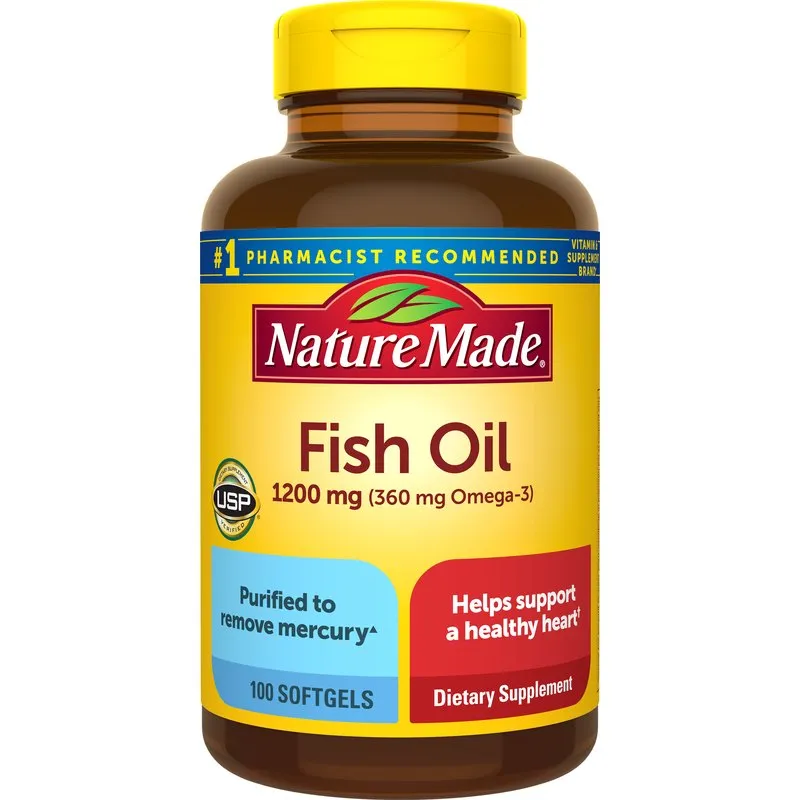
Nature Made Fish Oil 1200 mg Softgels
A fish oil softgel listed in USP's Verified product finder. Nature Made lists 2,400 mg of fish oil with 720 mg of total omega-3s (600 mg EPA and DHA) in a two-softgel serving. The NIH says the evidence for eating seafood is stronger than for omega-3 supplements, so this is for men who rarely eat fish.
Pros
- USP Verified
- Clear EPA and DHA amounts on the label
- An option if you rarely eat fish
Cons
- Eating fish twice a week is the better-supported choice
- Use caution with blood thinners, Nature Made and the NIH say
- Look-alike listings have different doses: check the label
Magnesium: get it from food
Men need about 400 to 420 mg a day, and the NIH says 48% of Americans get less than they should from food. Good sources are leafy greens, beans, nuts, seeds and whole grains. Supplements have an upper limit of 350 mg a day, and high doses often cause diarrhea. Despite the internet’s enthusiasm, the NIH says there’s very little research on magnesium for insomnia, “so there isn’t enough rigorous scientific evidence” to say it works.
Creatine: well studied, if you train
The NIH calls creatine “one of the most thoroughly studied and widely used dietary supplements” for exercise, and says it helps with “repeated short bursts of high-intensity, intermittent activity,” like sprints or lifting. It’s considered safe for healthy adults in the short term, with evidence of safety over several years, and the most consistent side effect is weight gain. Creatine monohydrate is the best-studied form, and other forms “have not been proven” better. The usual maintenance dose is 3 to 5 g a day.
The International Society of Sports Nutrition, a sports nutrition society, calls creatine monohydrate the most effective supplement for high-intensity exercise capacity. Note that its position stand was written at the request of a supplement industry group.
Only worth it if you’re actually training. For ideas, see workouts for busy dads.
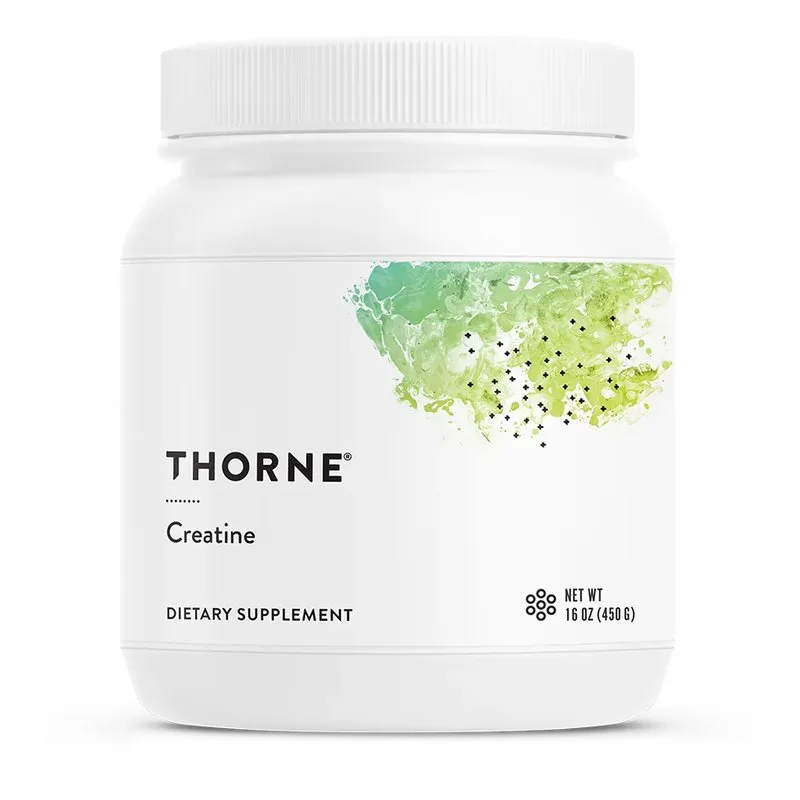
Thorne Creatine
Creatine monohydrate powder, 5 g per scoop, NSF Certified for Sport, which means NSF tested it for contents, contaminants and substances banned in sports. Creatine monohydrate is the most studied form, and the NIH says it helps with short bursts of high-intensity exercise.
Pros
- NSF Certified for Sport
- Plain creatine monohydrate, the best-studied form
- Unflavored powder you mix into any drink
Cons
- Only worth it if you actually lift or train hard
- It often causes a little weight gain from water, the NIH says
Caffeine and energy drinks
Coffee is how most new dads get through the day. The FDA says that for most adults, 400 mg a day, “about two to three 12-fluid-ounce cups of coffee,” is not generally linked to negative effects. A brewed coffee has roughly 113 to 247 mg. Watch for caffeine hiding in energy drinks, bars and supplements. The CDC suggests avoiding caffeine in the afternoon or evening if you’re trying to sleep.
Melatonin: not for long-term insomnia
The NIH says there isn’t enough strong evidence to recommend melatonin for chronic insomnia, and that its long-term safety isn’t known. Labels are unreliable: a 2023 study found 22 of 25 melatonin gummy products were inaccurately labeled, with amounts from 74% to 347% of what the label said, and one had none. An earlier study of products bought in Canada found some contained serotonin, a controlled substance.
If you use it, keep it out of reach: the NIH reports about 11,000 emergency room visits for children 5 and younger who swallowed melatonin unsupervised.
What to skip
Testosterone boosters. A 2020 review of 50 products sold as testosterone boosters found 109 ingredients; for 61.5% of them there was no data at all on testosterone, and only 24.8% had data showing an increase. The NIH says there’s no support for the effectiveness of tribulus, a common ingredient. Worse, the FDA says bodybuilding products are “among those most often adulterated” with hidden steroids or prescription drugs, and warns to be especially wary of products for sexual enhancement, energy, weight loss and bodybuilding, including on Amazon, eBay and Walmart.
Ashwagandha. The NIH says it may be safe short-term (up to 3 months) but there are rare reports of liver injury, it may interact with diabetes and blood pressure medicines, and it might not be safe for men with prostate cancer or thyroid problems.
Fertility supplements for dads. If you’re trying for another baby, the large FAZST trial of 2,370 couples found folic acid and zinc for men did not improve semen quality or live birth rates, and increased sperm DNA fragmentation. The researchers concluded the findings “do not support” their use.
Before you start any supplement
The FDA says “Combining dietary supplements and medications could have dangerous and even life-threatening effects.” Some examples it gives: several supplements thin the blood alongside aspirin or warfarin, and St. John’s wort makes some heart, depression and other drugs less effective. Tell your doctor or pharmacist everything you take, stop supplements before surgery if asked, and if you have a bad reaction, stop and report it to the FDA.
The real fix: sleep
The CDC says adults need 7 or more hours of sleep, and that enough sleep helps you get sick less, stay at a healthy weight and improve your mood. With a newborn, the most effective “supplement” is a shift system that gets each parent one long block of sleep. See night feeds for dads.
FAQ
What supplements should men over 30 take?
Most men who eat a varied diet don’t need many. Vitamin D may help if you rarely get sun or have been told you’re low, fish oil if you never eat fish, and creatine if you lift weights. Choose USP Verified or NSF Certified products, and check with your doctor if you take medication.
Do new dads need vitamins?
Not usually. The NIH says supplements can’t replace a varied diet. A basic multivitamin is a reasonable backup if your eating has gone off the rails, but the USPSTF found not enough evidence that multivitamins prevent heart disease or cancer.
Are supplements approved by the FDA?
No. The FDA doesn’t approve dietary supplements for safety or effectiveness before they’re sold. Third-party seals like USP Verified and NSF Certified show a product contains what the label says, but not that it works.
Do testosterone boosters work?
The evidence is thin. A 2020 review found no data on testosterone for 61.5% of the ingredients in popular boosters, and the FDA warns that bodybuilding and sexual-enhancement supplements are among the most often contaminated with hidden drugs.
Is creatine safe?
The NIH says creatine is considered safe for short-term use by healthy adults, with evidence of safety over several years. The most common side effect is weight gain from water. It helps with short bursts of high-intensity exercise.
Does melatonin help new dads sleep?
The NIH says there isn’t enough evidence to recommend it for chronic insomnia, and many gummy products are inaccurately labeled. Consistent sleep shifts with your partner help more.
Should men take supplements to improve fertility?
A large trial found folic acid and zinc did not improve semen quality or live births. Talk to a doctor if you’re having trouble conceiving.
Sources
- U.S. Food and Drug Administration: FDA 101: Dietary Supplements, Questions and Answers on Dietary Supplements, Mixing Medications and Dietary Supplements, Spilling the Beans: How Much Caffeine Is Too Much?, Avoiding Products Contaminated With Hidden Ingredients and Advice About Eating Fish
- Health Products Compliance Guidance, Federal Trade Commission
- NIH Office of Dietary Supplements: What You Need to Know, Multivitamin/mineral supplements, Vitamin D (consumer) and (health professional), Omega-3 fatty acids, Magnesium, Exercise and athletic performance and Ashwagandha
- NIH National Center for Complementary and Integrative Health: Using Dietary Supplements Wisely, Omega-3 supplements, Melatonin, Magnesium supplements for sleep and Ashwagandha
- U.S. Preventive Services Task Force: Vitamin, mineral and multivitamin supplementation to prevent CVD and cancer and Vitamin D deficiency screening
- Dietary Guidelines for Americans, 2025–2030, USDA and HHS; About sleep, CDC
- USP Verified Mark and USP Verified products; Supplement and vitamin certification, NSF; About ConsumerLab
- Clemesha CG, et al. ‘Testosterone Boosting’ Supplements Composition and Claims Are not Supported by the Academic Literature. World J Mens Health, 2020. Kreider RB, et al. International Society of Sports Nutrition position stand: safety and efficacy of creatine supplementation in exercise, sport, and medicine. J Int Soc Sports Nutr, 2017. Schisterman EF, et al. Effect of Folic Acid and Zinc Supplementation in Men on Semen Quality and Live Birth Among Couples Undergoing Infertility Treatment. JAMA, 2020. Cohen PA, et al. Quantity of Melatonin and CBD in Melatonin Gummies Sold in the US. JAMA, 2023. Erland LAE, Saxena PK. Melatonin Natural Health Products and Supplements: Presence of Serotonin and Significant Variability of Melatonin Content. J Clin Sleep Med, 2017.
- Product pages: Vitamin D3 1000 IU, Fish Oil 1200 mg and Multi for Him, Nature Made; Creatine, Thorne, and its NSF Certified for Sport listing