Marriage After Baby: A Dad's Guide to Staying a Team
What research says happens to a marriage after the first baby, why the fights start (sleep, chores, expectations), and what dads can do to keep the relationship strong, plus when to get help.
We choose everything we recommend independently. If you buy through our links, we may earn a commission. How we make money
In this guide
If your marriage feels harder since the baby arrived, you’re in very good company. Researchers have studied couples through the first baby for decades, and the pattern is consistent: relationship satisfaction tends to dip after the birth, for dads as much as moms. The good news is that the dip isn’t universal, it isn’t a sign you married the wrong person, and the things that protect a relationship are mostly within a dad’s control. This guide covers what the research found, why the fights start, and what to do about it.
The short answer
- A dip is normal. Most studies find satisfaction drops after the first baby, for both parents.
- It’s not inevitable. Some couples stay steady or get closer.
- Sleep and chores drive the fights. Take shifts and agree on who does what before resentment builds.
- Small things protect you: a few minutes a day to check in, fondness, and noticing her.
- Get help early if you’re stuck. Couples therapy and postpartum depression treatment both work.
What happens to a marriage after a baby
The dip is real, and it’s for both of you. A study that followed 218 couples through their first 8 years of marriage found that the 132 couples who had a baby showed a “sudden deterioration” in how their relationship was going after the birth. The decline was “small to medium in size” and tended to persist, and “Mothers and fathers showed similar amounts of change after birth.”
But marriage gets harder over time anyway. The same study found couples without children declined too, just more gradually. A review of 37 studies found “small declines” in satisfaction for both men and women up to 11 months after the birth, and moderate declines in studies that followed couples to 12 to 14 months. It also found that newlyweds who didn’t become parents declined by a similar amount over a similar time, so the baby isn’t the whole story.
About that “two-thirds” figure. You’ll often read that two-thirds of couples become less happy after a baby. It comes from a University of Washington study of 82 newlywed couples: among the 43 couples who had a baby, 67% of wives reported a decline in marital satisfaction and 33% reported it stable or improved. Among the childless couples, 51% of wives reported a decline too. It’s a small study, but the finding that matters is the other one.
What predicted a happy marriage after the baby. In that study, what predicted mothers’ steady or rising satisfaction was “the husband’s expression of fondness toward her, the husband’s high awareness for her and their relationship, and her awareness for her husband.” What predicted decline was the husband’s negativity, his disappointment in the marriage, or either partner describing their life as “chaotic.”
Dad’s job: that’s the most useful finding in this whole field. Fondness and paying attention to her are things you control.
Why new parents fight: sleep
Exhausted people fight more and make up less. In a small study of 21 couples with newborns, “Greater objectively measured total sleep time was associated with greater relationship satisfaction.” The same study found each parent underestimated how badly the other was sleeping.
Outside of new parents, a UC Berkeley study found couples “reported more conflict in their romantic relationships following poor nights of sleep,” and that “Conflict resolution occurred most when both partners were well rested.”
The fix is unglamorous: the AAP suggests taking shifts with diaper changes, bottle feeds and settling the baby, because “Even just a few extra hours in bed can help parents cope better.” See night feeds for dads for how to split the nights.
Dad’s job: don’t argue about anything important after 10 p.m. or before coffee. Save it for when you’ve both slept.
Why new parents fight: chores and expectations
The gap shows up after the baby. In a study of 182 dual-earner couples, there was no gender gap in total work before the birth, but after it, women did “more than 2 hours of additional work per day compared to an additional 40 minutes for men.” Parents also overestimated how much work they were doing.
Expectations matter more than hours. Another study found mothers “experienced unmet expectations with fathers doing less than mothers expected,” while fathers found mothers doing more than they’d expected. Those violated expectations were “a stronger predictor of depression and relationship satisfaction” than the actual division of work.
The national numbers. In 2025, among adults living with children under 6, women spent 2.8 hours a day on primary childcare and men 1.7 hours, the Bureau of Labor Statistics found. Dads do far more than they used to (Pew found fathers’ weekly childcare time roughly tripled between 1965 and 2016), but the gap is still there.
Dad’s job: sit down once and write the list together: night shifts, bottles, laundry, dishes, appointments, the baby’s stuff. Agree who owns each one. Owning a job means remembering it without being asked.
How to stay a team
These come from practitioners at the Gottman Institute, the couples researchers behind the studies above, and from the AAP:
- Check in every day. The Gottman Institute suggests 15 minutes a day to check in with each other, and says fondness and appreciation keep a friendship going “during moments of exhaustion.”
- Turn toward her bids. A “bid” is any attempt to get your attention or connection. In the Gottman lab, couples who stayed married turned toward each other’s bids 86% of the time; couples who divorced, 33%. Put the phone down when she starts a sentence.
- Start hard talks softly. “Discussions will end on the same note they begin.” Describe the situation instead of blaming (“I seem to be the only one chasing after the baby today”) and say what you feel and what you need.
- Complain, don’t criticize. “A complaint focuses on a specific behavior, but criticism attacks a person’s very character.”
- Take a break when it’s going nowhere. Say the conversation isn’t productive, take 20 minutes to calm down, and come back to it.
- Make time for each other. The AAP says “Children of couples who have a strong and loving relationship are more likely to adjust well to the new baby.”
Does a class help? The Gottman Institute runs a “Bringing Baby Home” workshop for new parents. Two small randomized trials by the program’s developers found less hostility during conflict, and in one, fathers reported more involvement in parenting and feeling more appreciated by their wives. The Institute’s own marketing claims more than that; treat those claims with care. The program’s book is a practical place to start:
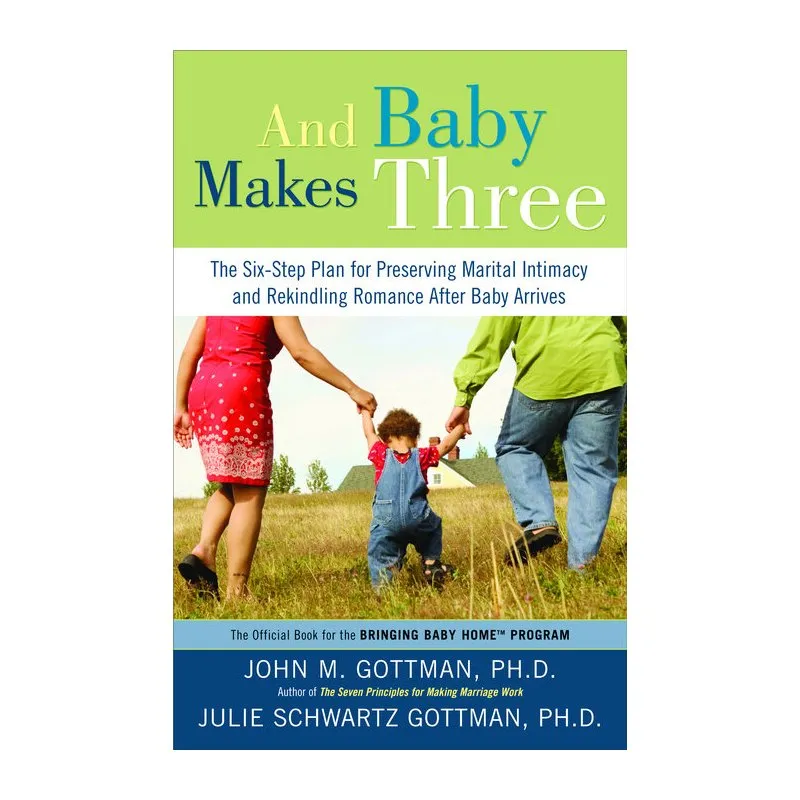
And Baby Makes Three by John Gottman and Julie Schwartz Gottman
A 272-page book by relationship researchers John and Julie Gottman, based on their Bringing Baby Home program for new parents. It lays out a six-step plan for couples to protect their relationship after the baby arrives, with exercises you can do together.
Pros
- Written by the researchers behind the Bringing Baby Home studies
- Practical exercises for couples, not just theory
- Works for both partners to read
Cons
- Published in 2008, before some newer research
- Not a substitute for couples therapy if things are serious
When you feel left out
Many new dads feel sidelined. The AAP says “You also may feel a little left out during the first few weeks, since much of the attention is on your new baby and the mom,” and that getting involved with the baby eases that. ACOG notes the adjustment “can be a difficult time for both partners.” For bonding tips, see dad not bonding with baby.
Sex usually takes a back seat for a while. ACOG says it’s normal for new parents to have little interest, “even several months after childbirth.” That’s covered in sex after baby.
When it’s more than a rough patch
Depression can look like a marriage problem. ACOG says “all new parents can have postpartum depression and anxiety, not just the parent who gave birth,” and that people with it may feel angry with the baby or their partner. The AAP says a father’s depression “can affect outcomes for mother and baby.” If either of you is persistently down, irritable or numb, see postpartum depression in dads and how to support your partner postpartum.
Couples therapy. ACOG lists couples therapy as one option for postpartum depression. Marriage and family therapists are licensed in all 50 states, and the AAMFT says the median length of therapy is 12 sessions. Ask whether a therapist takes your insurance, and check whether your job offers an employee assistance program, which many therapists work with.
If anyone is unsafe. If you or your partner feel afraid at home, the National Domestic Violence Hotline is open 24/7 at 1-800-799-7233. In an emergency, call 911.
Dad’s job: be the one to suggest help. Saying “I want us to be OK, let’s talk to someone” is not admitting failure.
FAQ
Is it normal for a marriage to struggle after a baby?
Yes. Studies consistently find relationship satisfaction dips after the first baby, for both mothers and fathers, with the drop usually small to medium in size. Some couples stay steady or grow closer, and the dip is not a sign the marriage is failing.
Do two-thirds of couples become unhappy after having a baby?
That figure comes from a University of Washington study of 82 newlywed couples, where 67% of wives who became mothers reported a decline in marital satisfaction. But 51% of wives without children also reported a decline over the same years, and a third of new mothers reported stable or improved satisfaction.
How do you keep a marriage strong after a baby?
Protect each other’s sleep with shifts, agree on who owns which chores, check in for a few minutes every day, and keep showing fondness and appreciation. In one study, a husband’s fondness and awareness of his wife predicted her marital satisfaction staying steady after the baby.
Why do new parents fight so much?
Mostly sleep loss and the division of work. Research links poor sleep with more conflict and less resolution, and unmet expectations about who does what predict lower satisfaction more strongly than the actual split of chores.
When should we see a couples therapist?
When the same fights keep repeating, you feel distant for weeks, or either of you may be depressed. Marriage and family therapists are licensed in all 50 states, and the median course is 12 sessions. If anyone feels unsafe, call the National Domestic Violence Hotline at 1-800-799-7233.
Is it normal for dads to feel left out after the baby?
Yes. The AAP says new dads may feel left out in the first weeks, since attention goes to the baby and mom, and that getting actively involved with the baby helps.
Sources
- Doss BD, et al. The effect of the transition to parenthood on relationship quality: an 8-year prospective study (full text). J Pers Soc Psychol, 2009.
- Mitnick DM, Heyman RE, Smith Slep AM. Changes in relationship satisfaction across the transition to parenthood: a meta-analysis. J Fam Psychol, 2009.
- Shapiro AF, Gottman JM, Carrère S. The baby and the marriage: identifying factors that buffer against decline in marital satisfaction after the first baby arrives. J Fam Psychol, 2000, and the University of Washington news release.
- Insana SP, et al. Perception of partner sleep and mood: postpartum couples’ relationship satisfaction. J Sex Marital Ther, 2011. Gordon AM, Chen S. The role of sleep in interpersonal conflict, 2014, and UC Berkeley news release.
- Yavorsky JE, Kamp Dush CM, Schoppe-Sullivan SJ. The production of inequality: the gender division of labor across the transition to parenthood (full text). J Marriage Fam, 2015. Biehle SN, Mickelson KD. First-time parents’ expectations about the division of childcare and play. J Fam Psychol, 2012.
- Shapiro AF, Gottman JM, Fink BC. Short-term change in couples’ conflict following a transition to parenthood intervention (full text), Couple Family Psychol, 2015, and Father’s involvement when Bringing Baby Home, Psychol Rep, 2020.
- American Time Use Survey, 2025, Bureau of Labor Statistics; Fathers’ Day facts, Pew Research Center
- A Special Message to Fathers, Welcome to the World of Parenting and Preparing Your Family for a New Baby, American Academy of Pediatrics (HealthyChildren.org)
- A Partner’s Guide to Pregnancy and Postpartum Depression, American College of Obstetricians and Gynecologists
- Marriage and Family Therapists, American Association for Marriage and Family Therapy; Get help, Office on Women’s Health
- The Gottman Institute (practitioner articles): Turn toward instead of away, Softened startup, The Four Horsemen and antidotes, Self-soothing tips, Relationship tips for new parents, Bringing Baby Home
- And Baby Makes Three, Harmony